
Boom and Bust: The Abandoned Ghost Towns of Colorado
At every turn, the state of Colorado shares evidence of its storied new frontier history—steeped in adventure, optimism, romanticism, hard survival, and often tragedy. Ghost towns tell these tales the best.
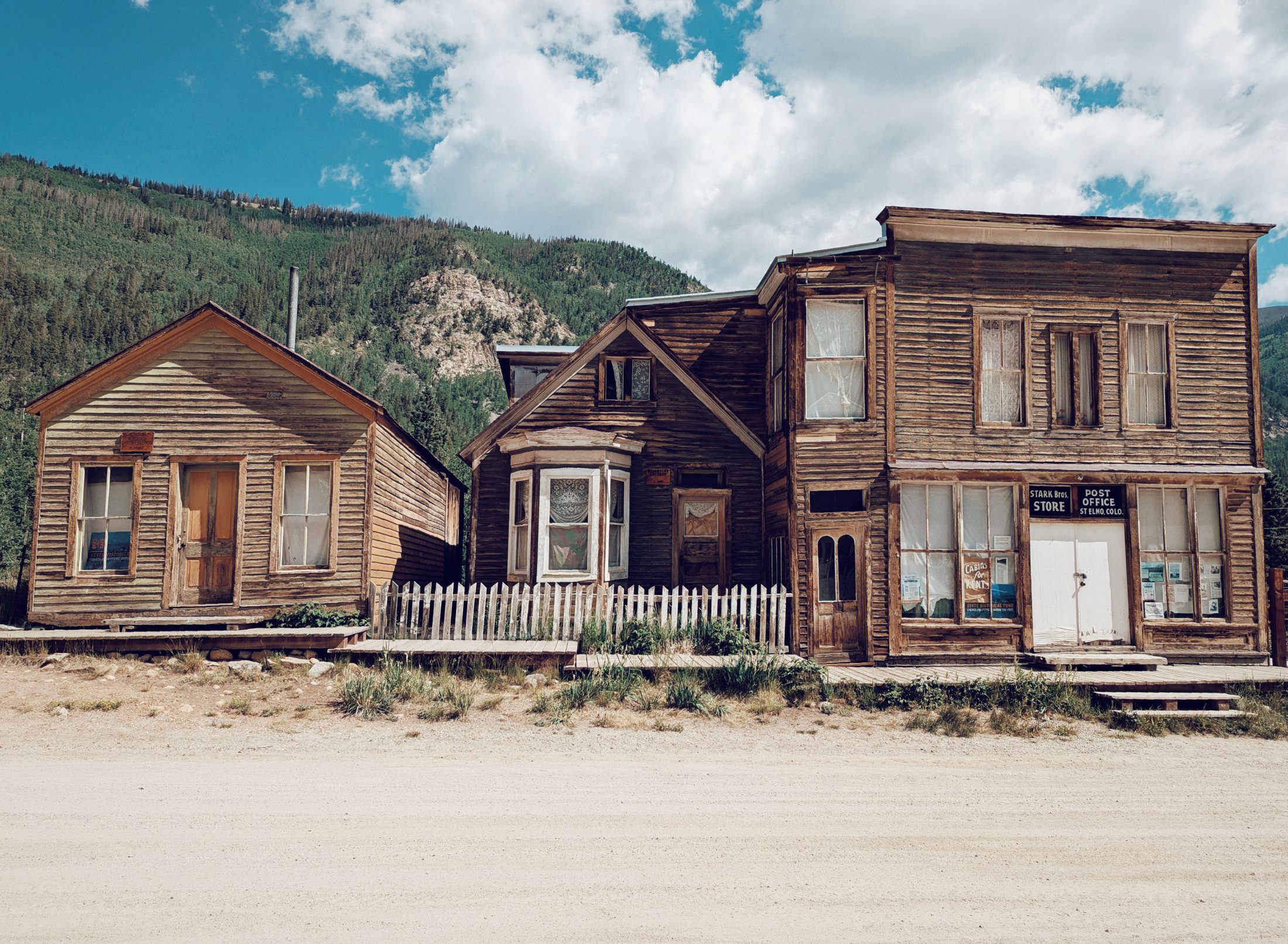
St. Elmo | Iron City Cemetery | Independence | Vicksburg
St. Elmo
Stepping off the creaky boardwalk into the dusty street, I almost bump into a young boy. His parents are just ahead, peering through the streaked windows of a weathered wooden cabin. I climb up the steps to a well-preserved structure with a bell tower perched on top that resembles a church. The inside is sectioned off—behind the barrier is a cast iron potbelly stove, a roll top desk, and a room beyond that I can’t quite see into.
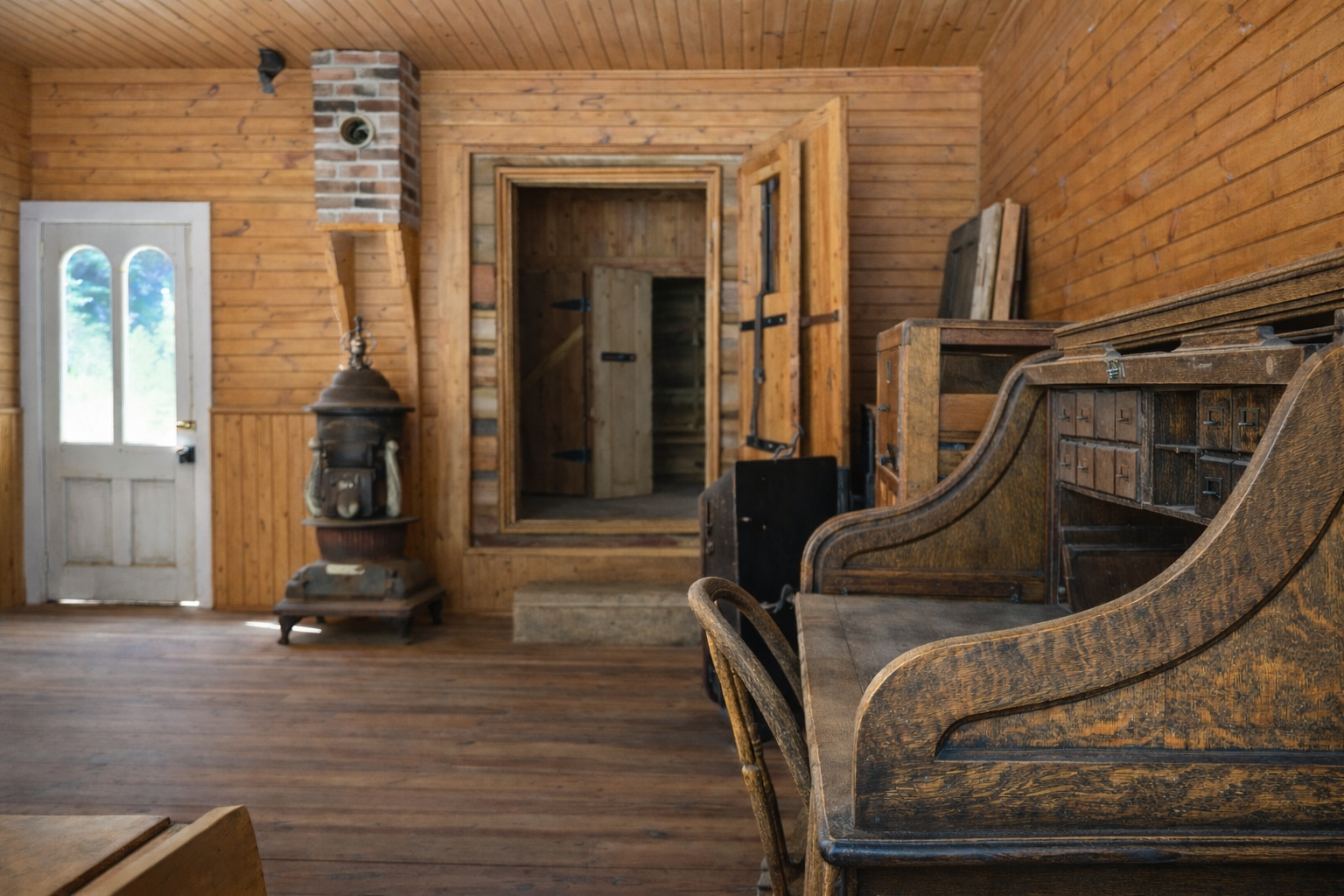
The boy follows me with curious eyes, then asks me pointedly if I believe in ghosts. We are exploring a ghost town, after all, and the question is a reasonable one. I rattle off a sufficiently vague response, something to the effect of being open-minded and questioning everything. There are a lot of things that we don’t understand about this world yet… Truth is, I don’t believe in ghosts, but I don’t want my opinion to turn off the curiosity of youth. He nods and says that he hasn’t decided yet either.
What first appeared to be a church is actually the former town hall and jailhouse that served the mining community of St. Elmo during its boom years. The building was one of several that burned down by fire in 2002. The fire was just one of many that devastated portions of the town in the years since its founding in 1880. Funds were raised, and the town hall was rebuilt by Buena Vista Heritage, painstakingly preserving even the smallest of details. Thanks to their efforts, this portion of history can live on for a while longer.
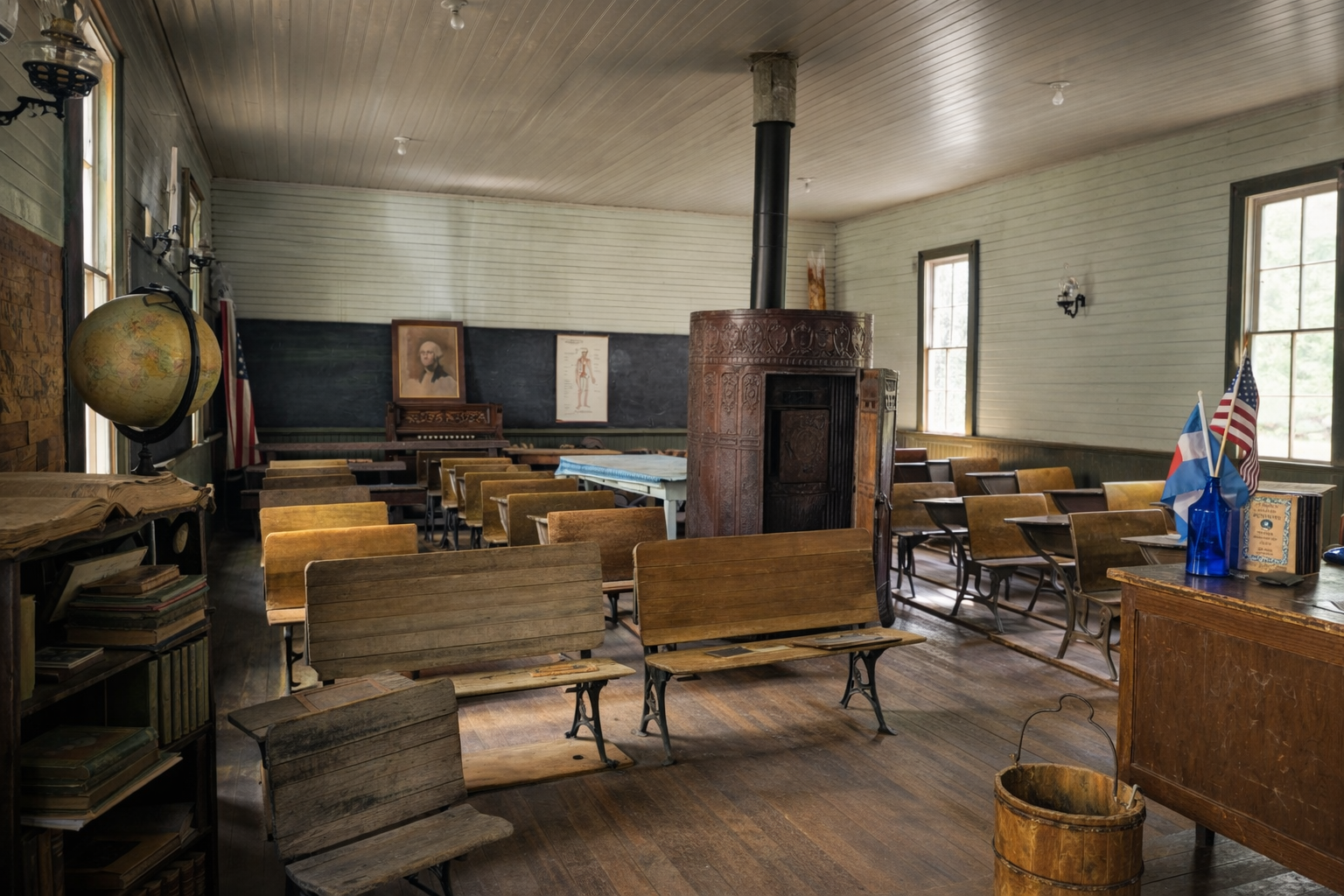
The town of St. Elmo never had a dedicated church building. This isn’t to indicate that the townsfolk weren’t spiritually minded. Rather, religious services may have been held in the schoolhouse across the river, or in private homes. The little schoolhouse itself sits in the shade of an aspen grove just up the hillside. Spectators can peer through a glass window from the cloak closet into the well-preserved space. A giant barrel stove sits right in the center of the single room, and it’s not hard to imagine the town’s children learning to read and write while trying to keep warm on a cold, Colorado winter day.
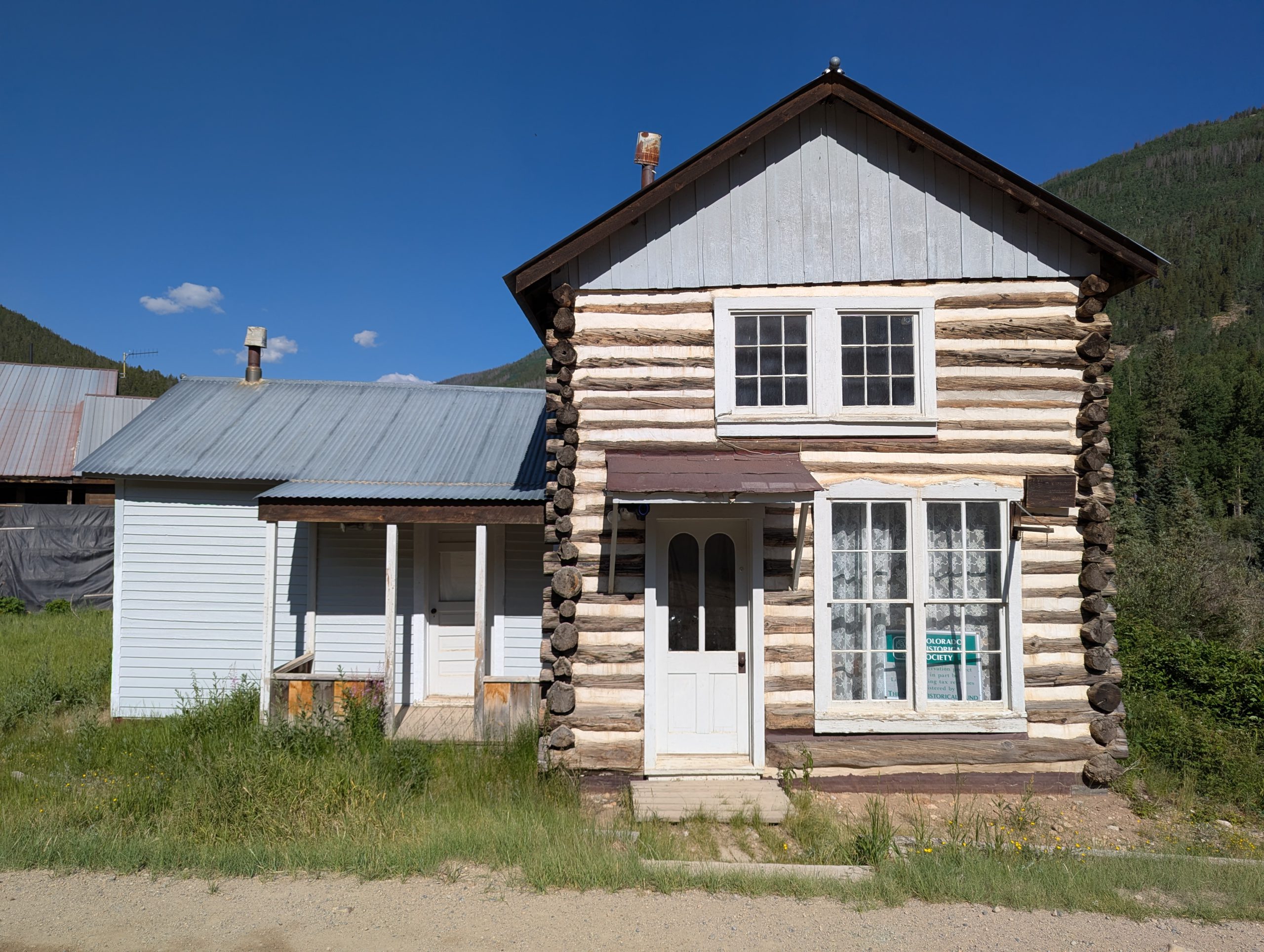
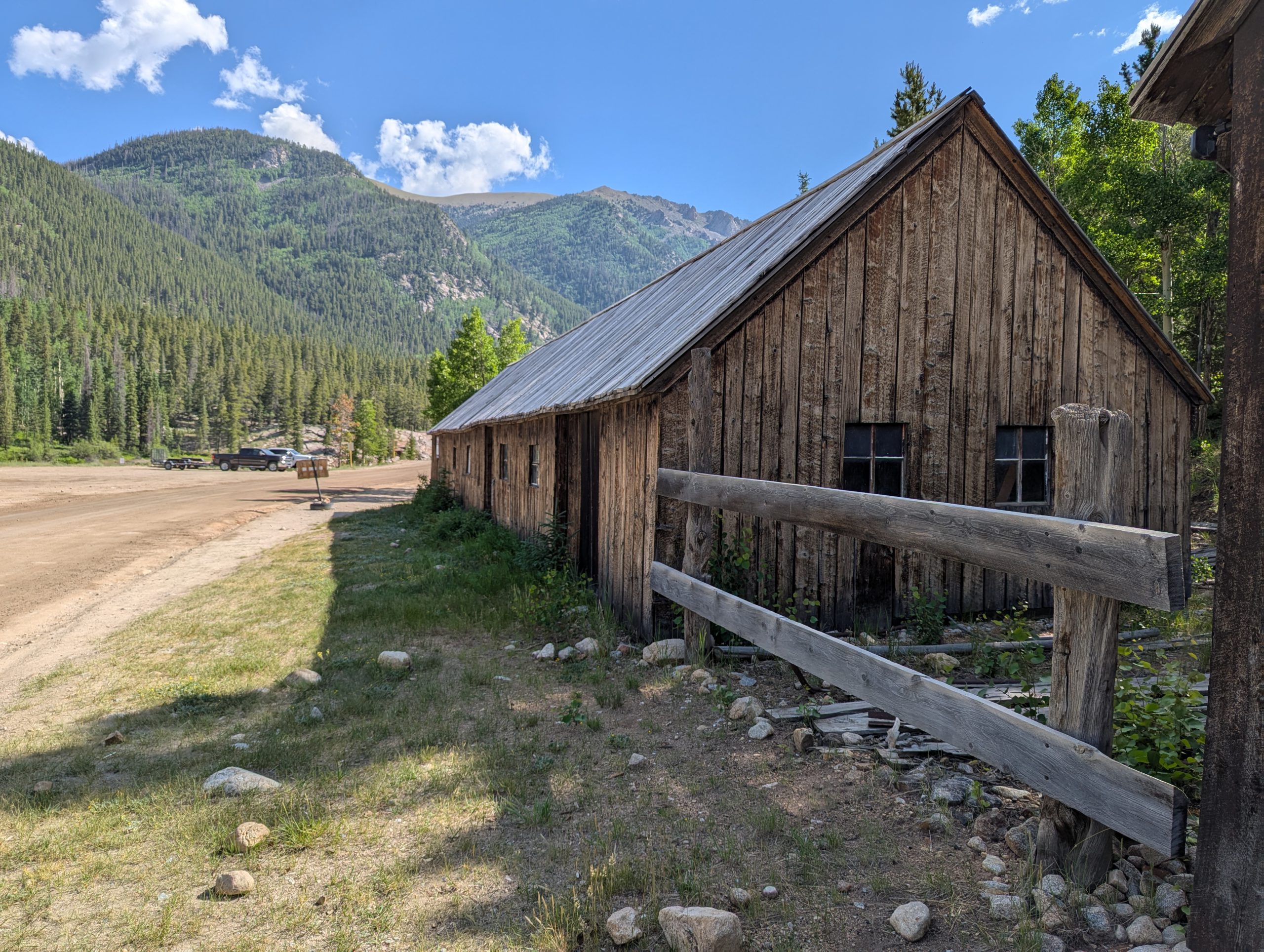
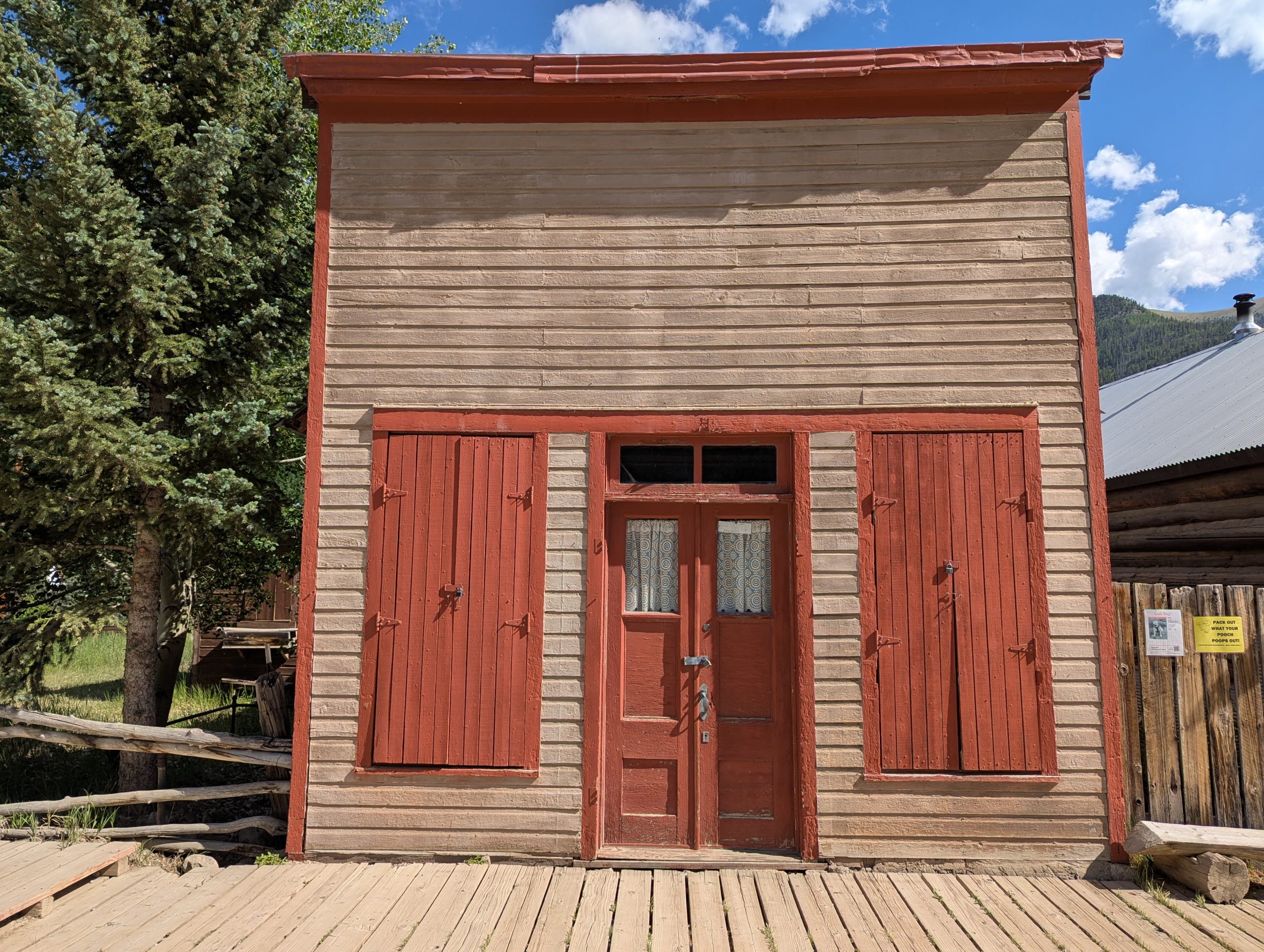
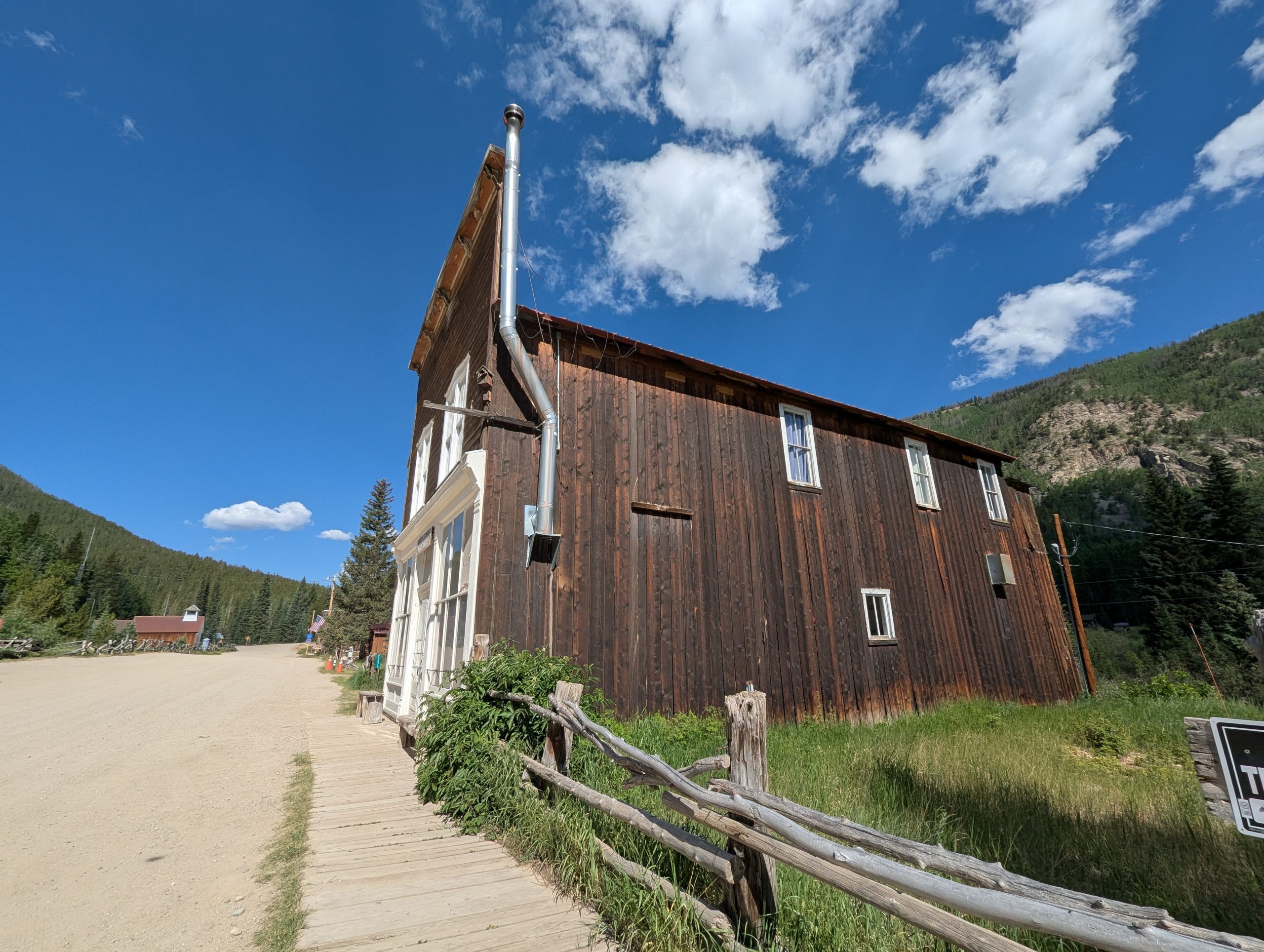
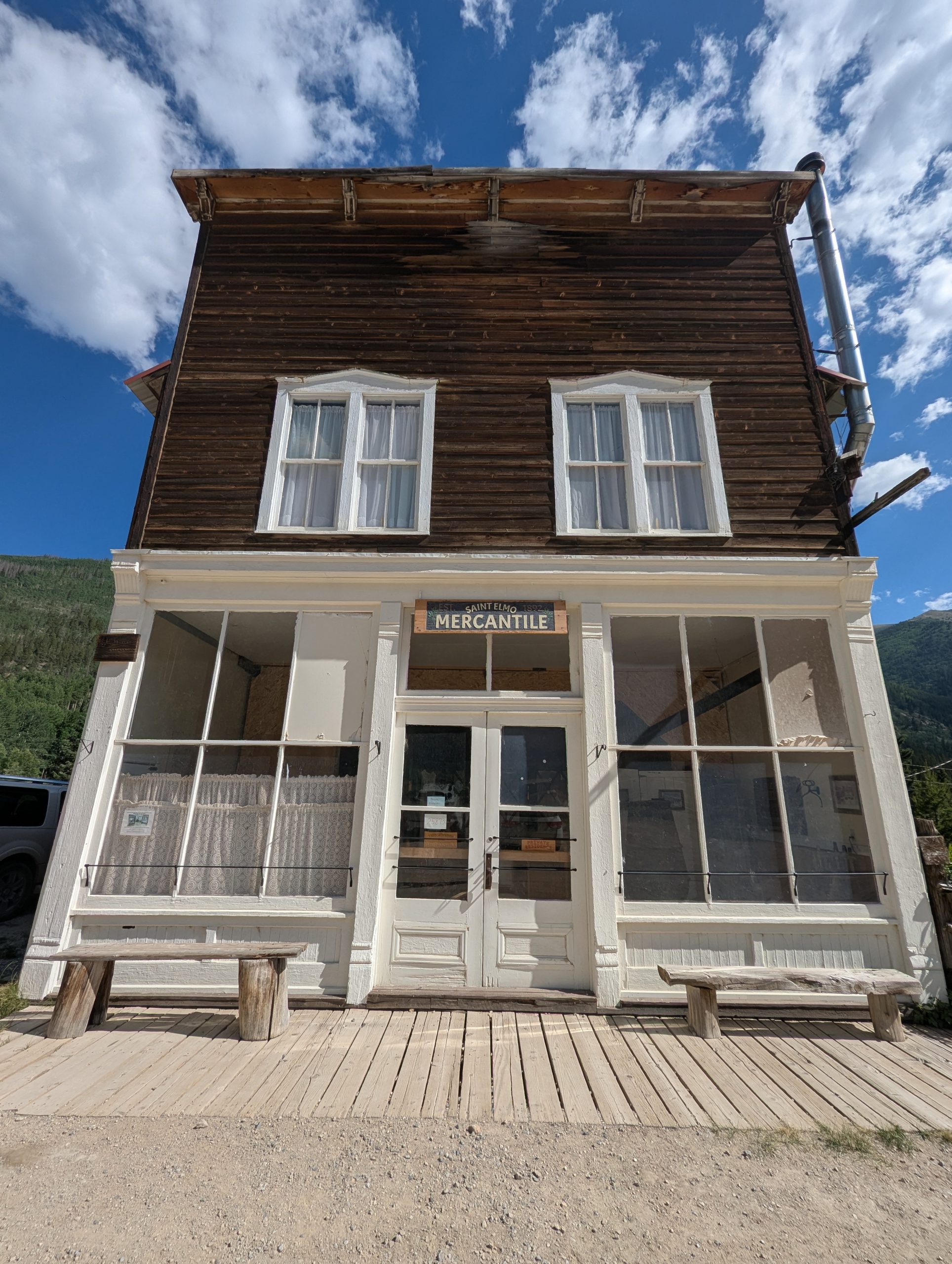
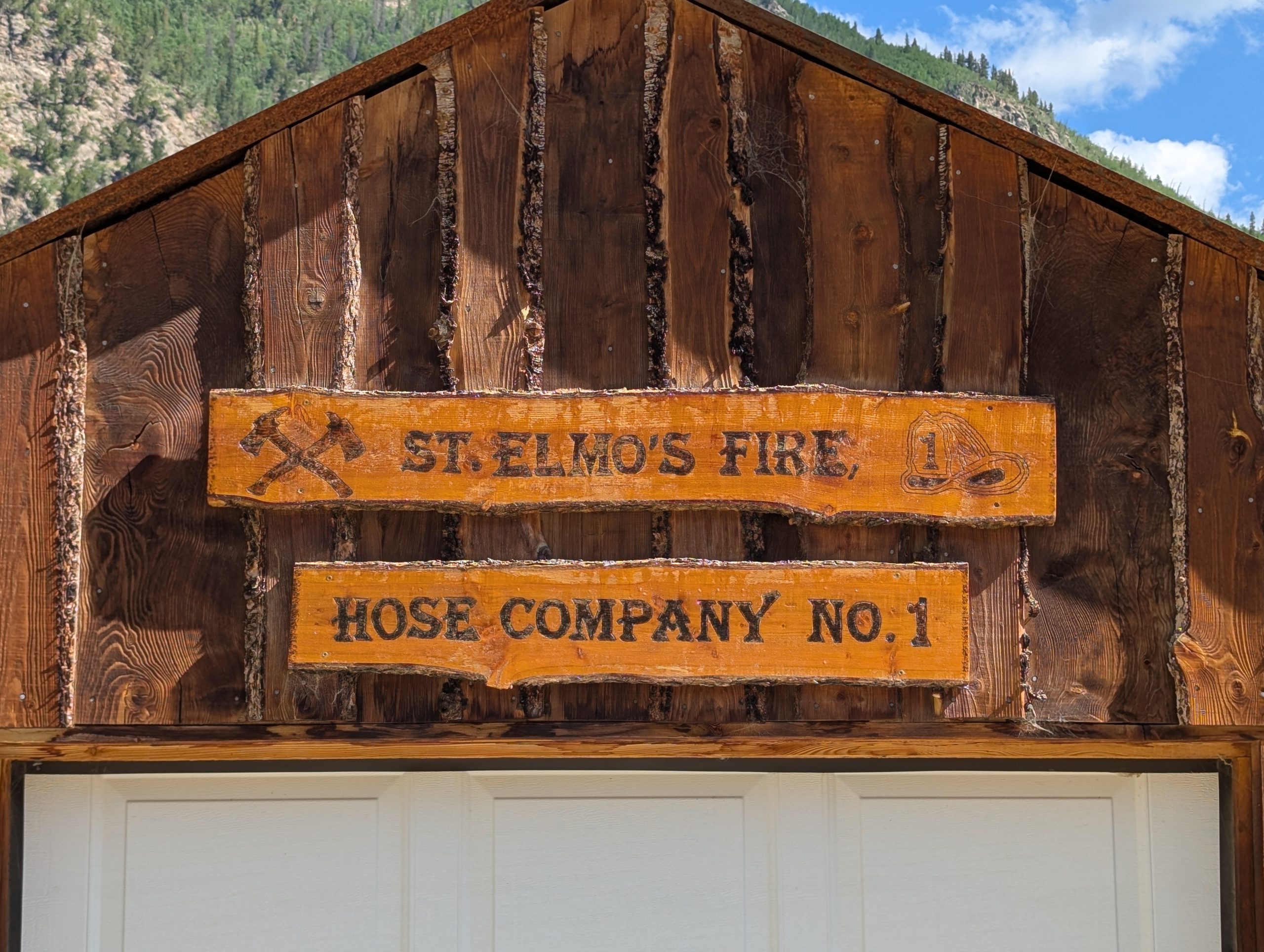
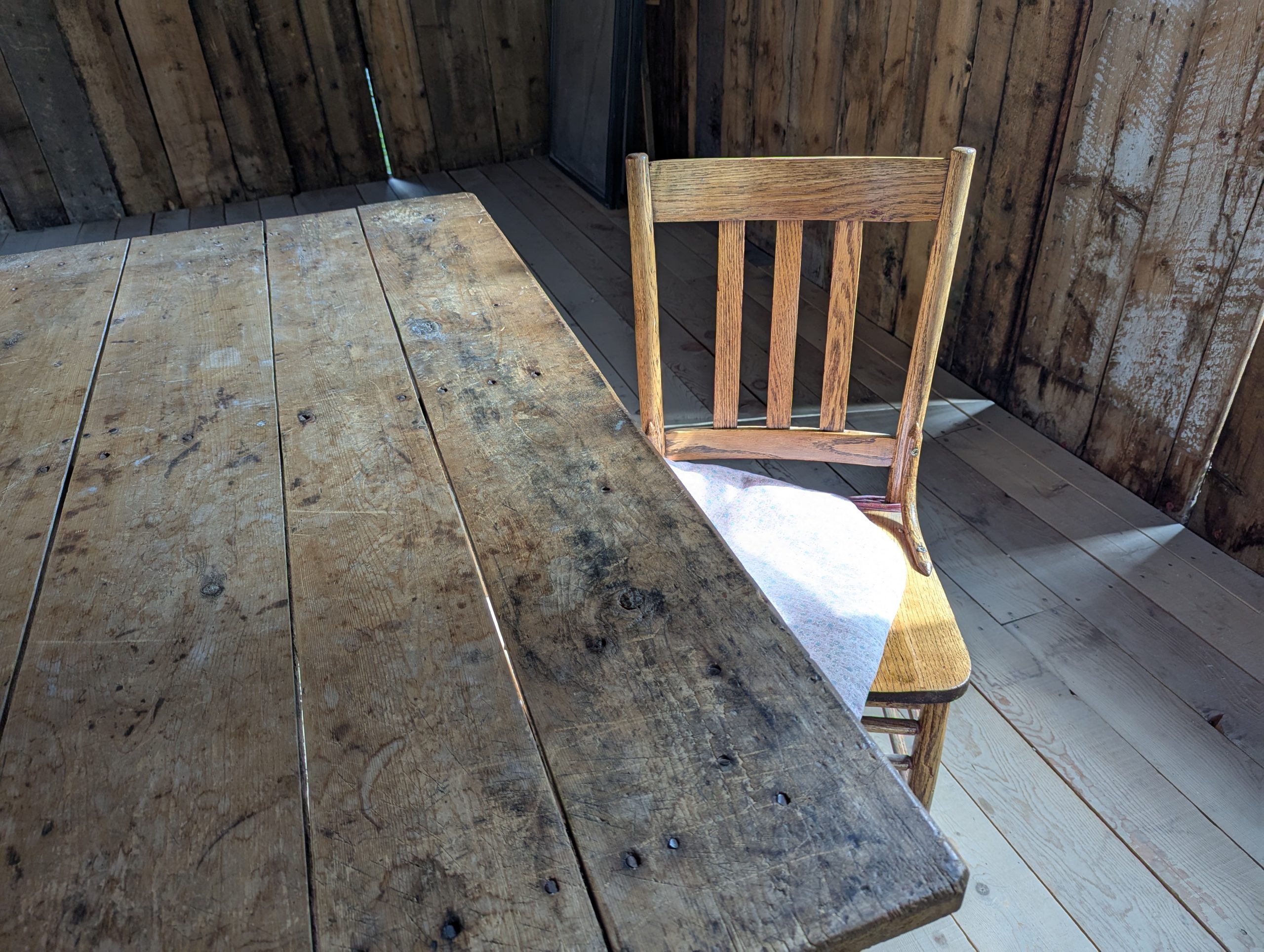
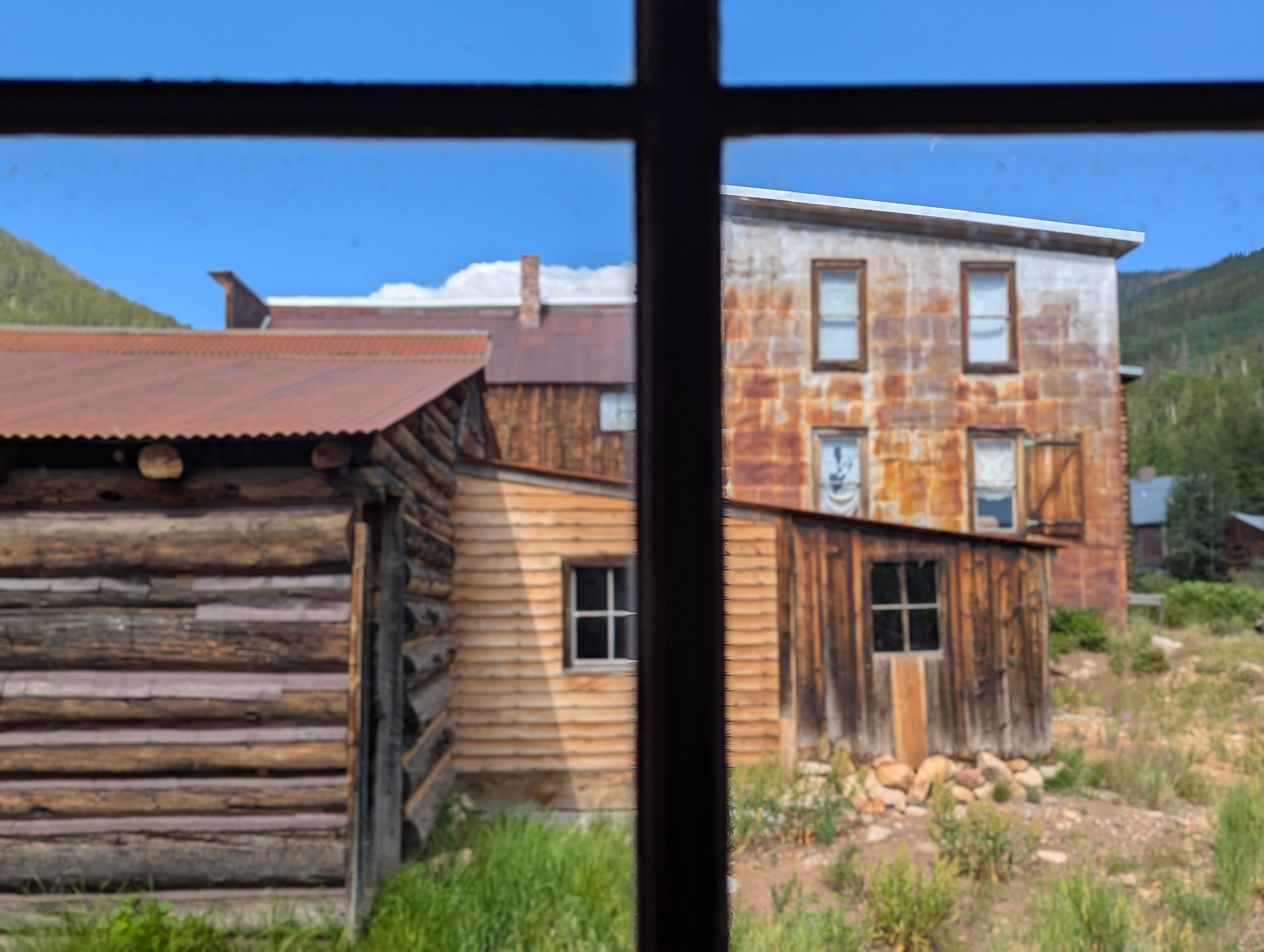
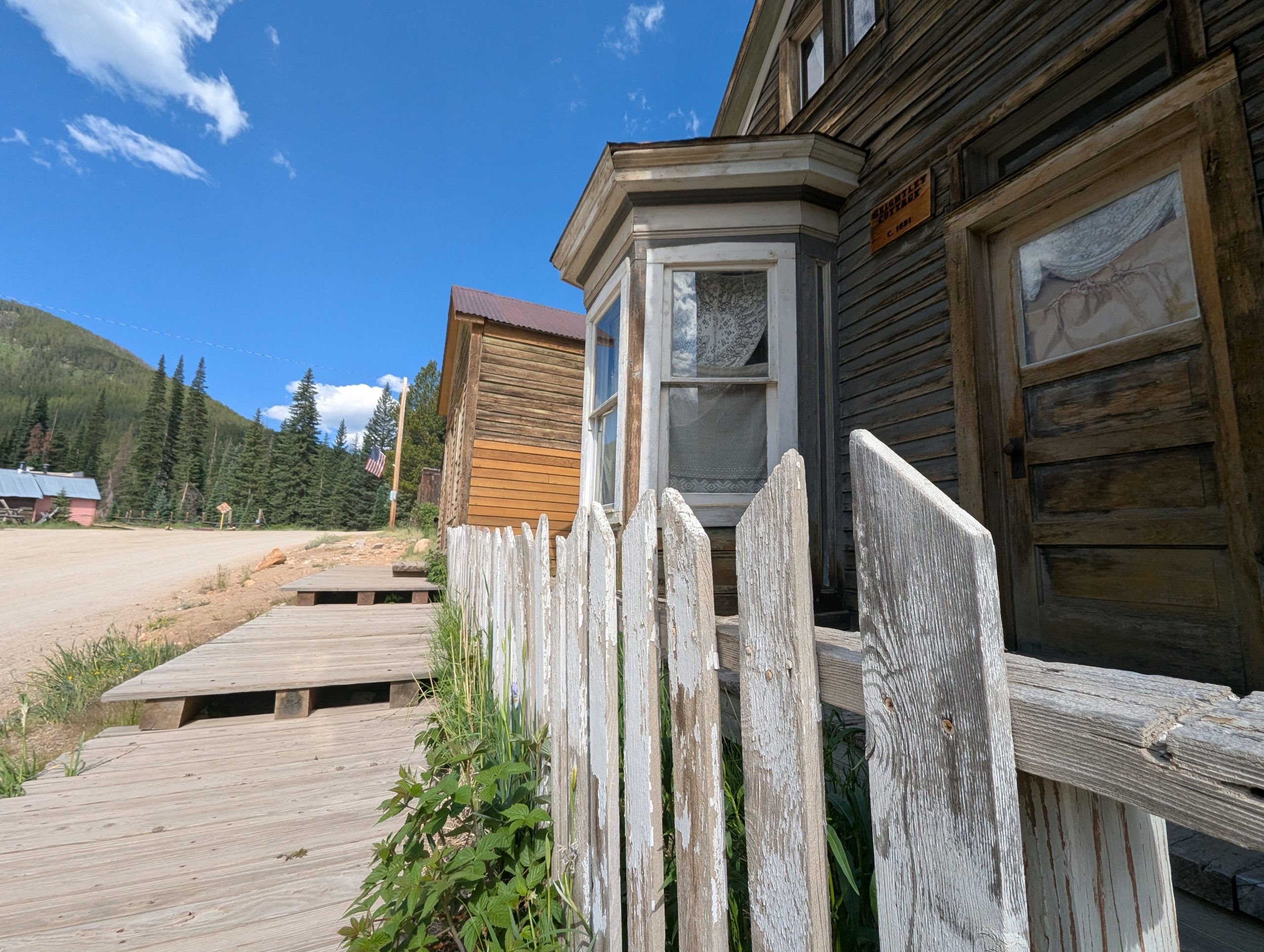
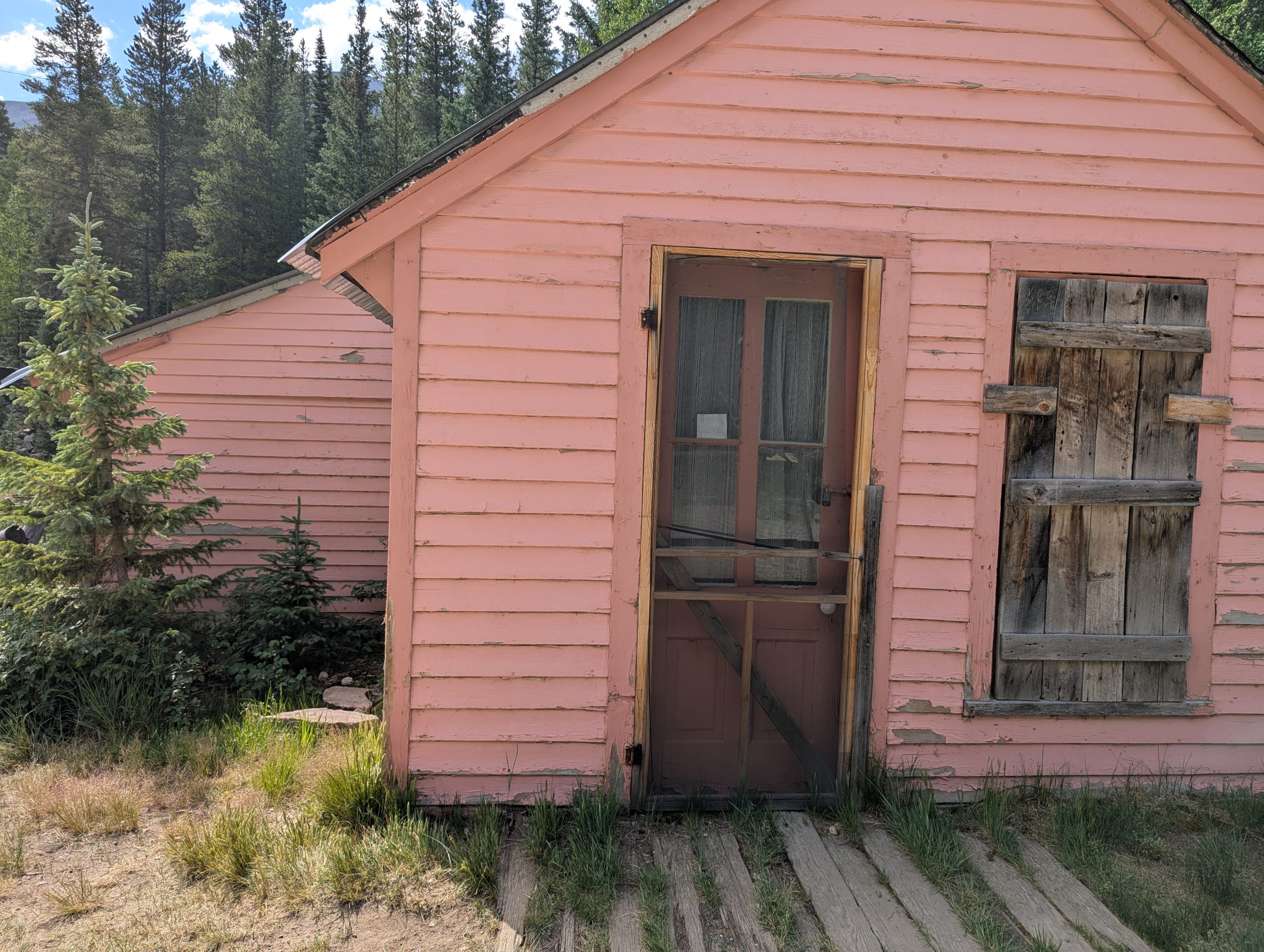
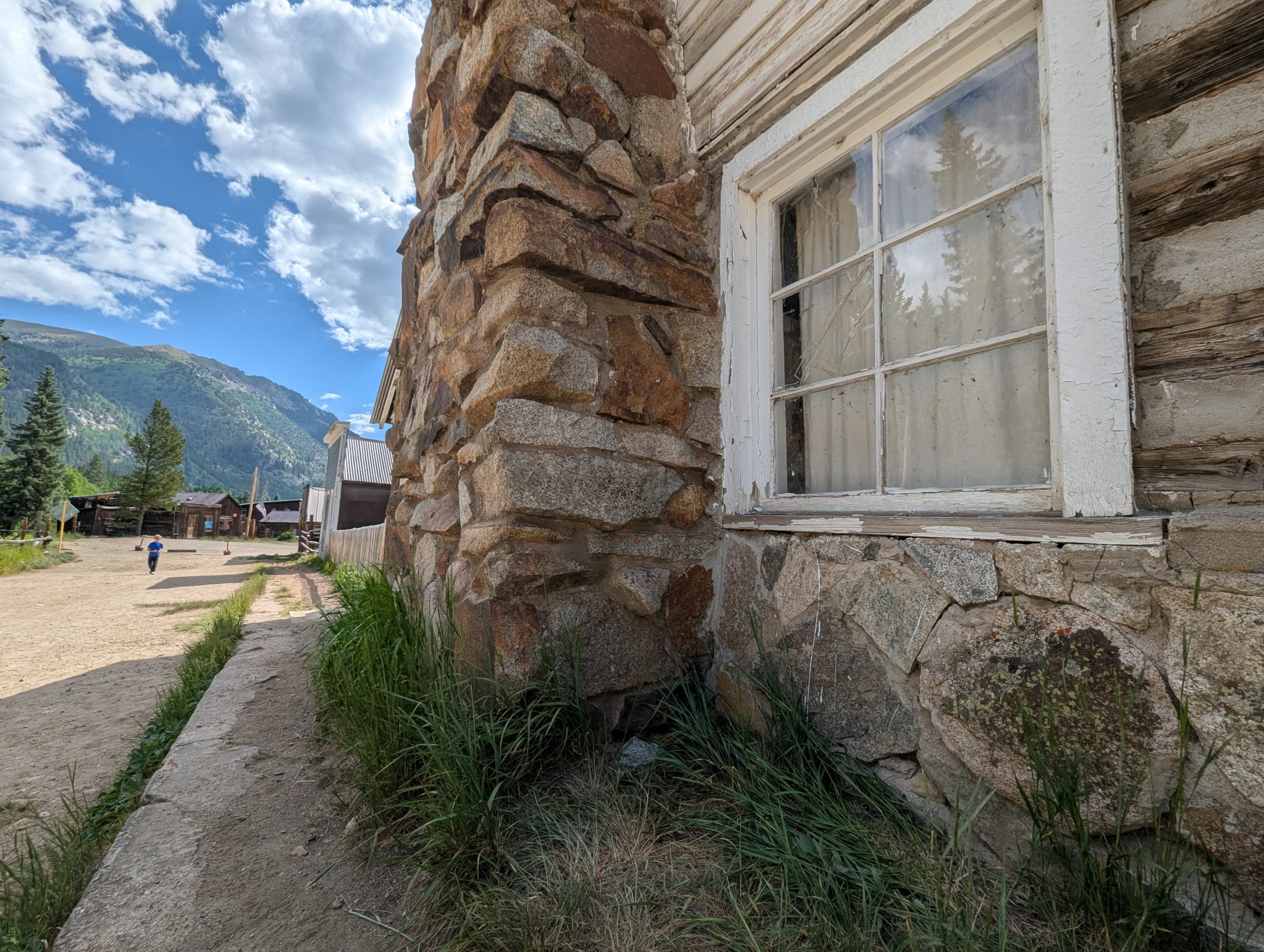
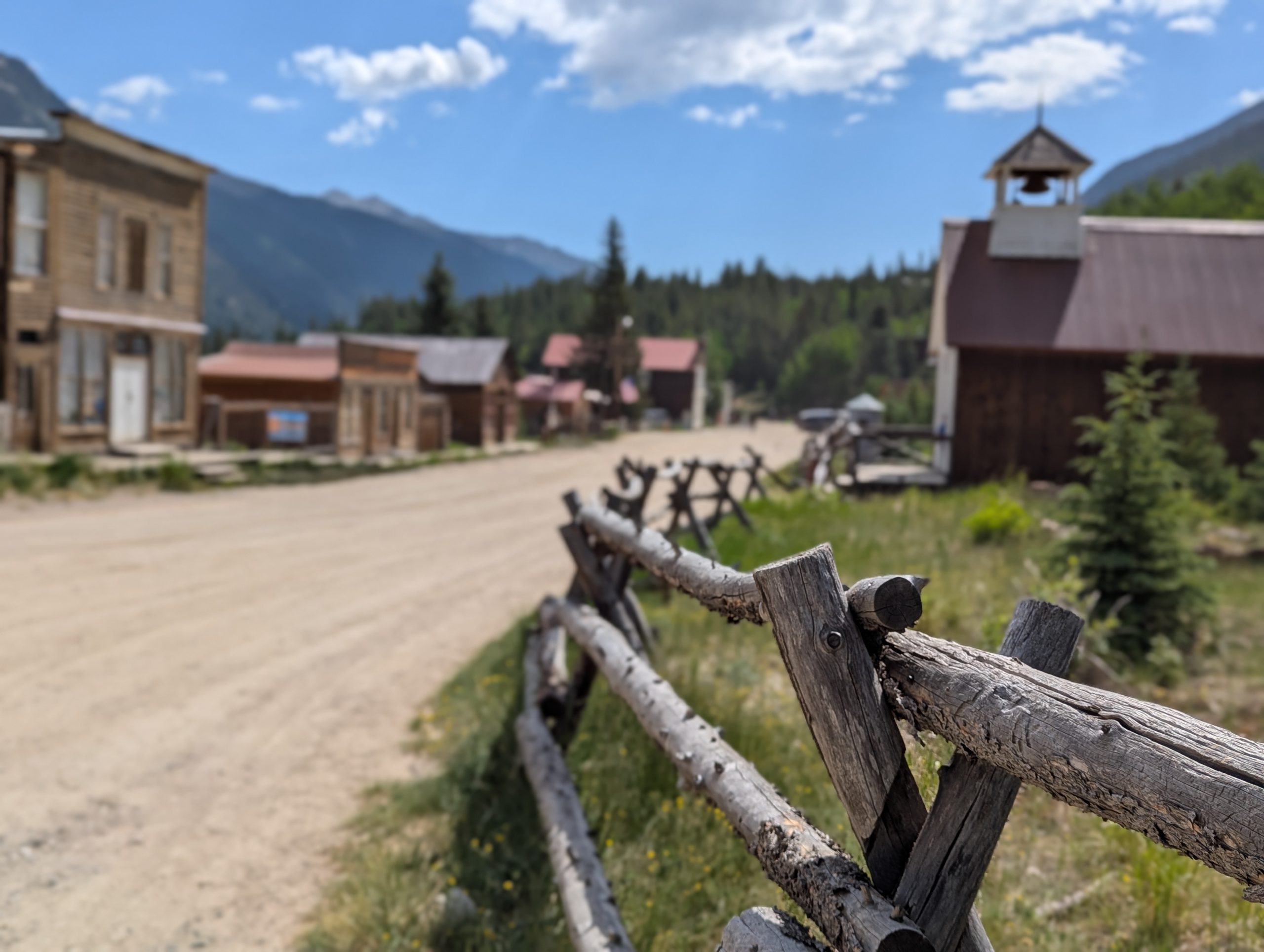
I wave goodbye to the young boy, and he runs off to join his parents. My walk through the town is unhurried. There is so much to take in. Lace curtains still drape in the windows of the Stark Bros. Store and Post Office. Paint on the window advertises cabins for rent in a fancy script, a relic from the last century when efforts were made to bring summer tourism to St. Elmo after the town was deserted by most residents. To my surprise, a general store operating in the old Hellman’s Saloon & Miner’s Exchange building is open for business, filled with souvenirs and snacks, and I step inside to talk with the friendly clerk for a while.
The town of St. Elmo sprang up, as many others did in Colorado, after the discovery of rich ores in the Rocky Mountains. In the late 1800s, a physician by the name of Abner Ellis Wright, drawn by the irresistible lure of adventure and freedom, left his medical practice to become a frontiersman, and headed into the rugged mountains of Colorado. Along the way he found an associate and partner in a prospector-by-trade, John Royal. Together they discovered the site that would become the Mary Murphy Mine. Significant gold was struck there in 1879, and the following year, Wright and Royal sold their interests to investors in St. Louis who began large-scale mining operations. A post office was approved to support the mining camp with its growing population, and officially, the town of St. Elmo was born.
As confirmation of the town’s quickly rising prominence, the Denver, South Park & Pacific Railroad reached St. Elmo in 1881. At its peak, St. Elmo boasted close to two-thousand residents. These weren’t just the miners who worked at the Mary Murphy and other smaller mines in the surrounding area, but the businesses and services that supported mining efforts: hotels, saloons, restaurants, merchandisers, livery, newspaper office, as well as the railroad.
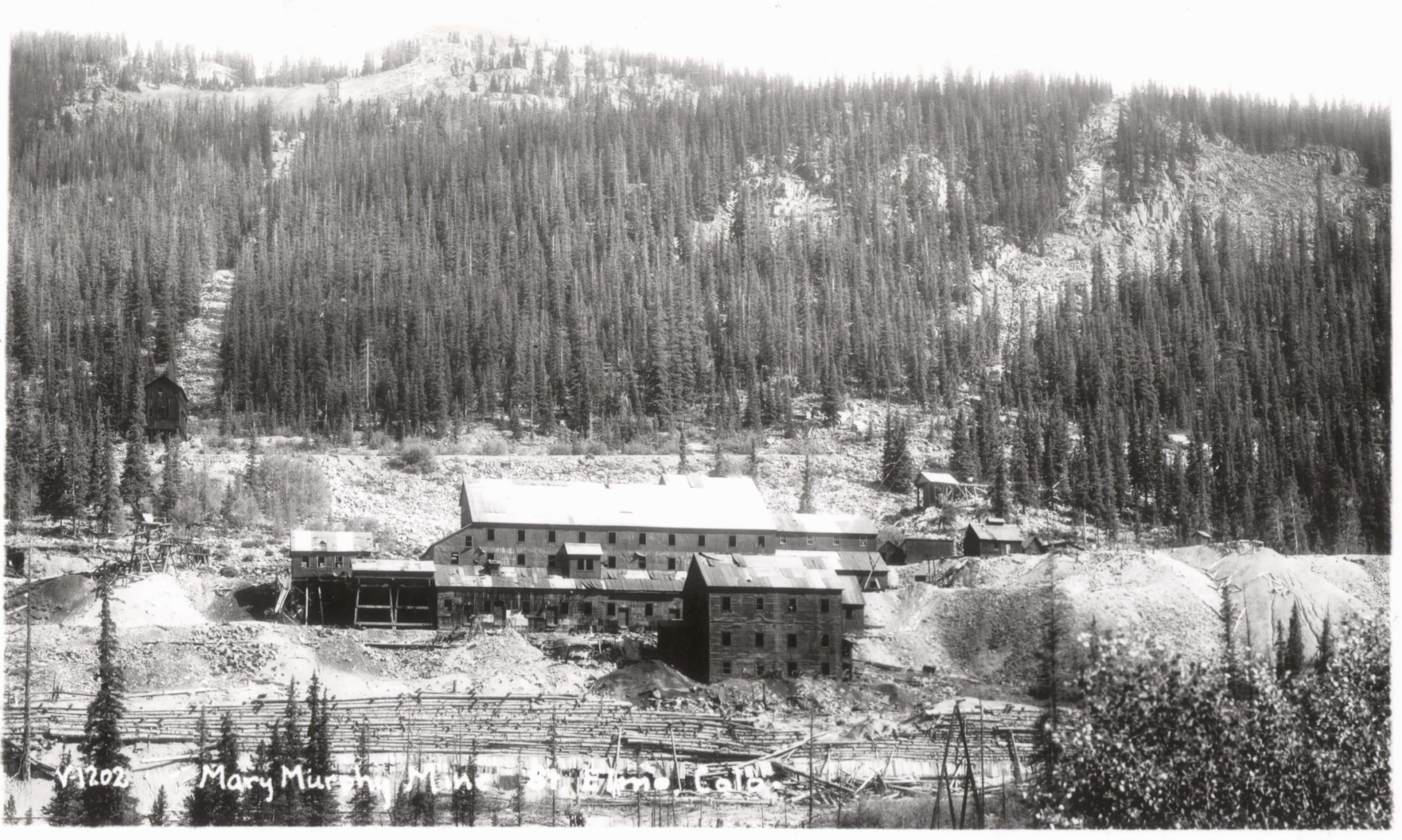
The Mary Murphy Mine was substantially rich in gold, silver, and other ores. Over its lifetime, the mine produced over two hundred twenty thousand ounces of gold, which made it one of the most abundant producers in the area. By weight, the Mary Murphy Mine produced more silver than gold, but gold was far more valuable, so the mine’s reputation and profitability were primarily driven by its gold output. This may have been how the town managed to survive after the Silver Panic of 1893, when the federal demand for silver was slashed.
Still, the economy was left in a fragile state. Many businesses had to shut down or tighten their belts. A large number of residents left, leaving only a fraction of the population behind that had been thriving just a few years before.
Bessie Launder was six years old when her mother purchased the American House Hotel in 1892 and moved her family to St. Elmo. She recalls prosperous times at the start.
“In the first period of our life in St. Elmo it was a busy and prosperous town. Everyone had work and many miners came to town from the mines and mills where they worked, for recreation and a change. Some spent much of their hard earned pay on drink and gambling. During this period my mother had some food shipped in from Denver, packed in ice, such as fresh lobsters, oysters, etc.”
Once fully staffed with cooks, servers, and maids, the hotel had to cut back to make ends meet.
“After the Silver Panic, as times got harder, my mother had to take over much of the work, such as the cooking. As my sister and I got older we had to help. My mother had a hired girl when we were not home.”
Despite these hard economic times, Bessie describes her childhood in the town as being wonderful and idyllic. The community was a tight-knit one. They celebrated successes and suffered hardships together as a family. The town routinely hosted dances and parties, Christmas celebrations, picnics, games clubs, and even seances.
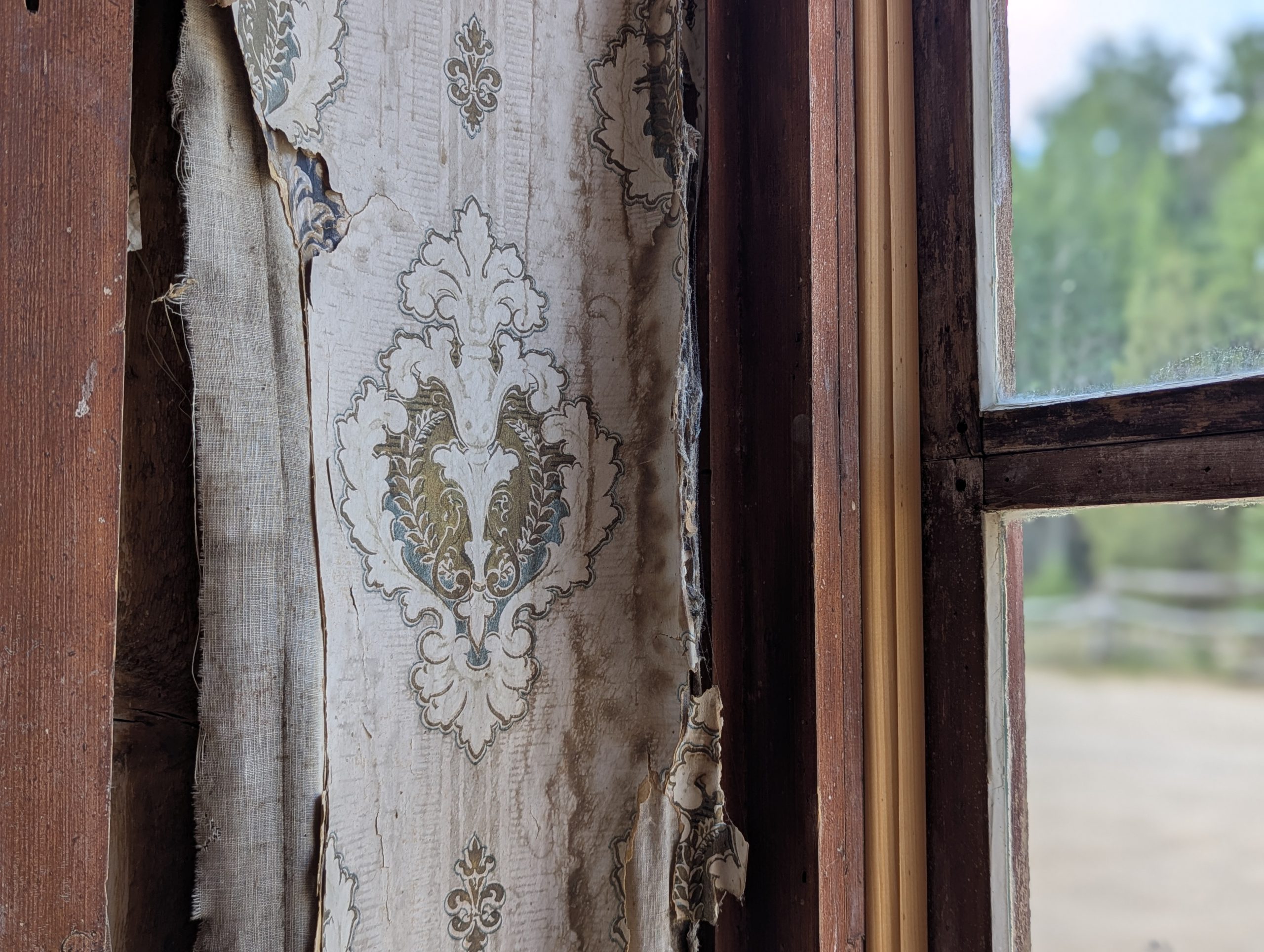
The American House Hotel was used for many of these gatherings; tables were pushed aside to make room for musicians and dancing. On the wall near the door of what is left of the American House, in what formerly would have been the parlor, I can see layers of peeling wallpaper still attached to the wall, the pattern still bright with blue and gold. It still has a vibrancy, just like the lives of the people who used to live here.
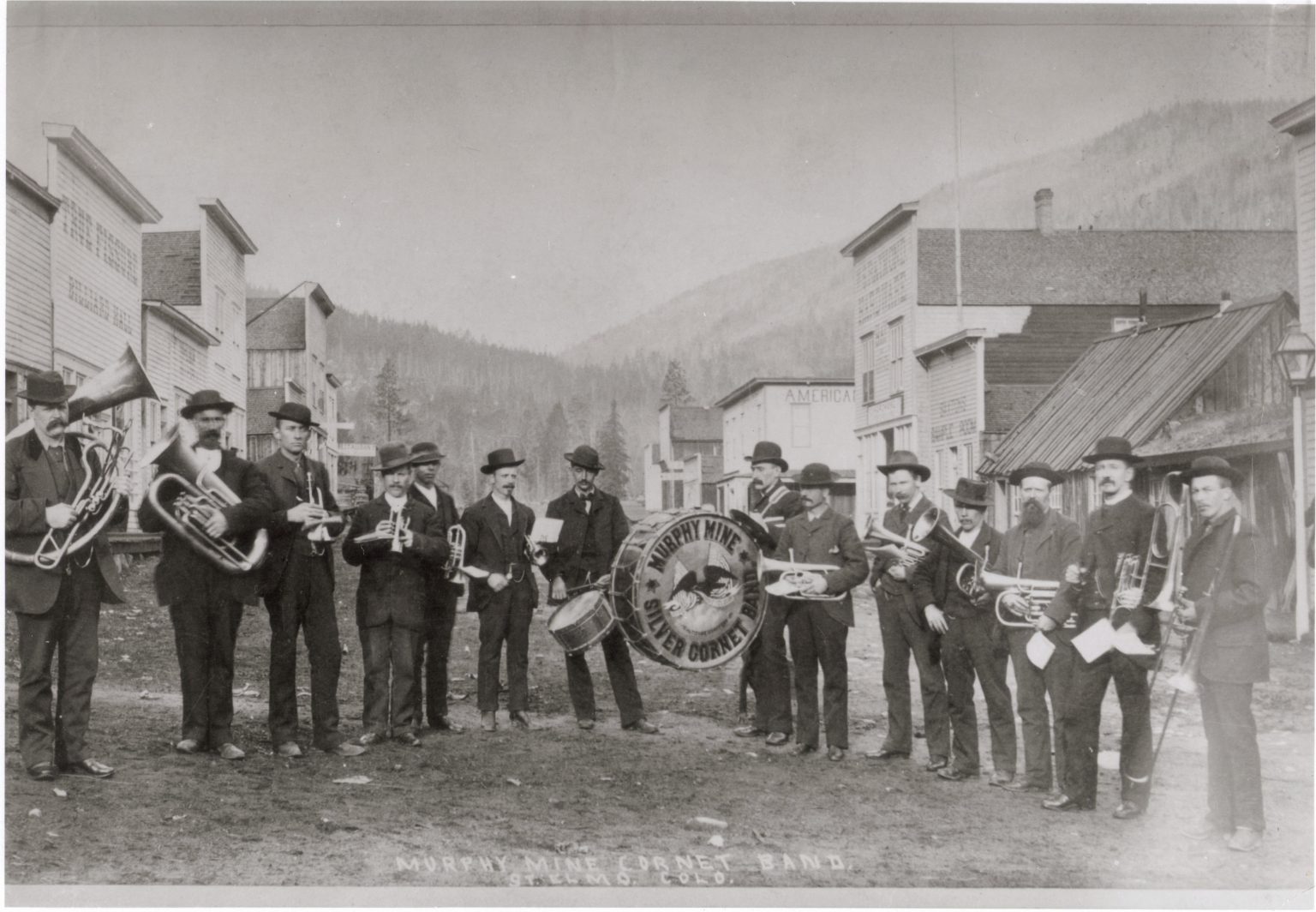
Everyone loves a good comeback story, and St. Elmo experienced its own when a second large vein of high-grade gold was discovered in the Mary Murphy Mine in the early 1900s, birthing a second boom that brought people back to the town. The boom lasted until the mine closed down permanently in 1936, after which the majority left town, this time for good.
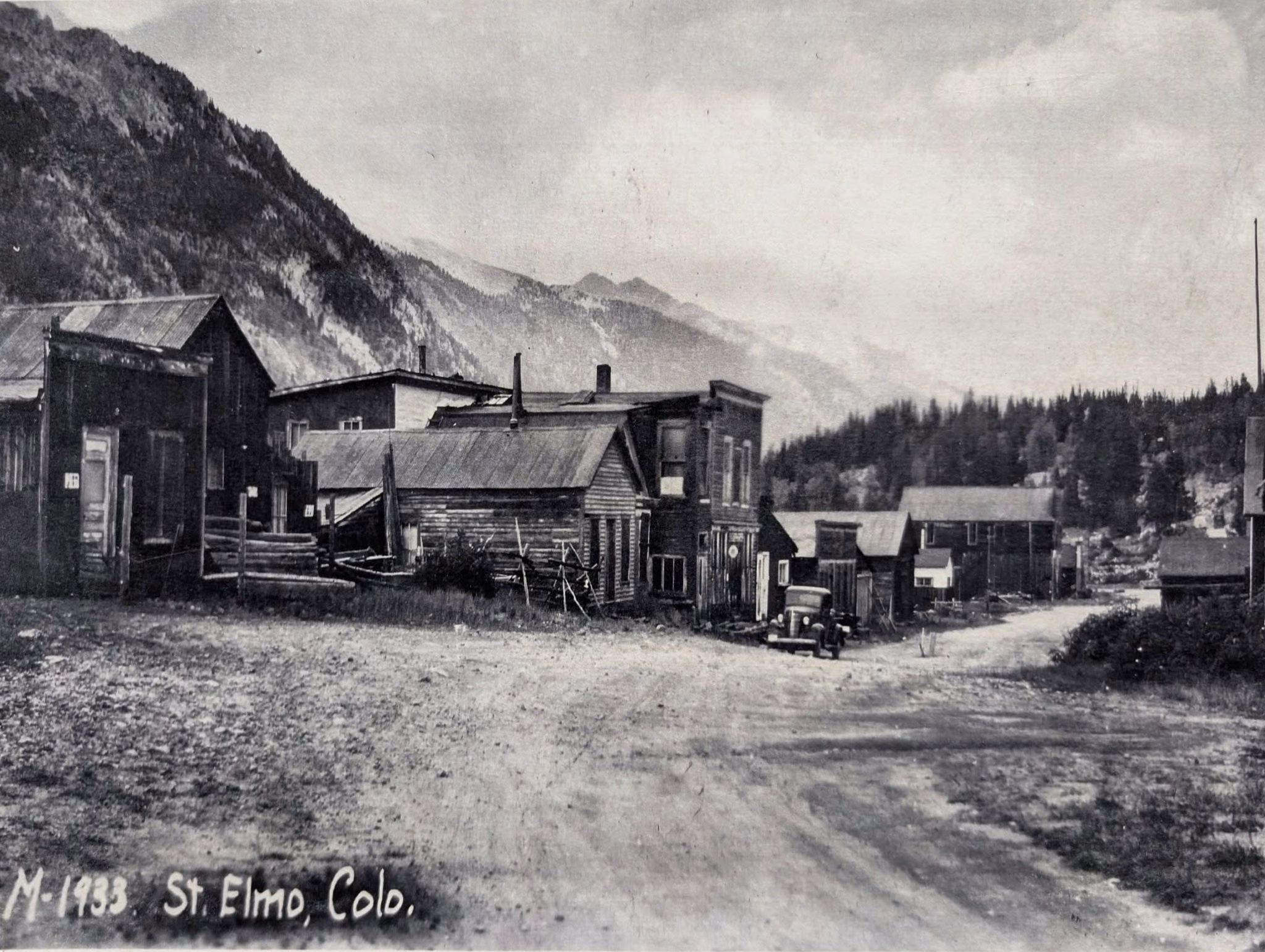
Walking through the historic town of St. Elmo today, you’ll see about forty buildings that remain. They are in remarkable condition despite their age. Local lore tells of the ghost of Annie Stark, a member of the prominent Stark family who ran several businesses in town, saying that she watches over the place and cares for it even from beyond the grave.
Well, do you believe in ghosts?
Iron City Cemetery
The campground is full.
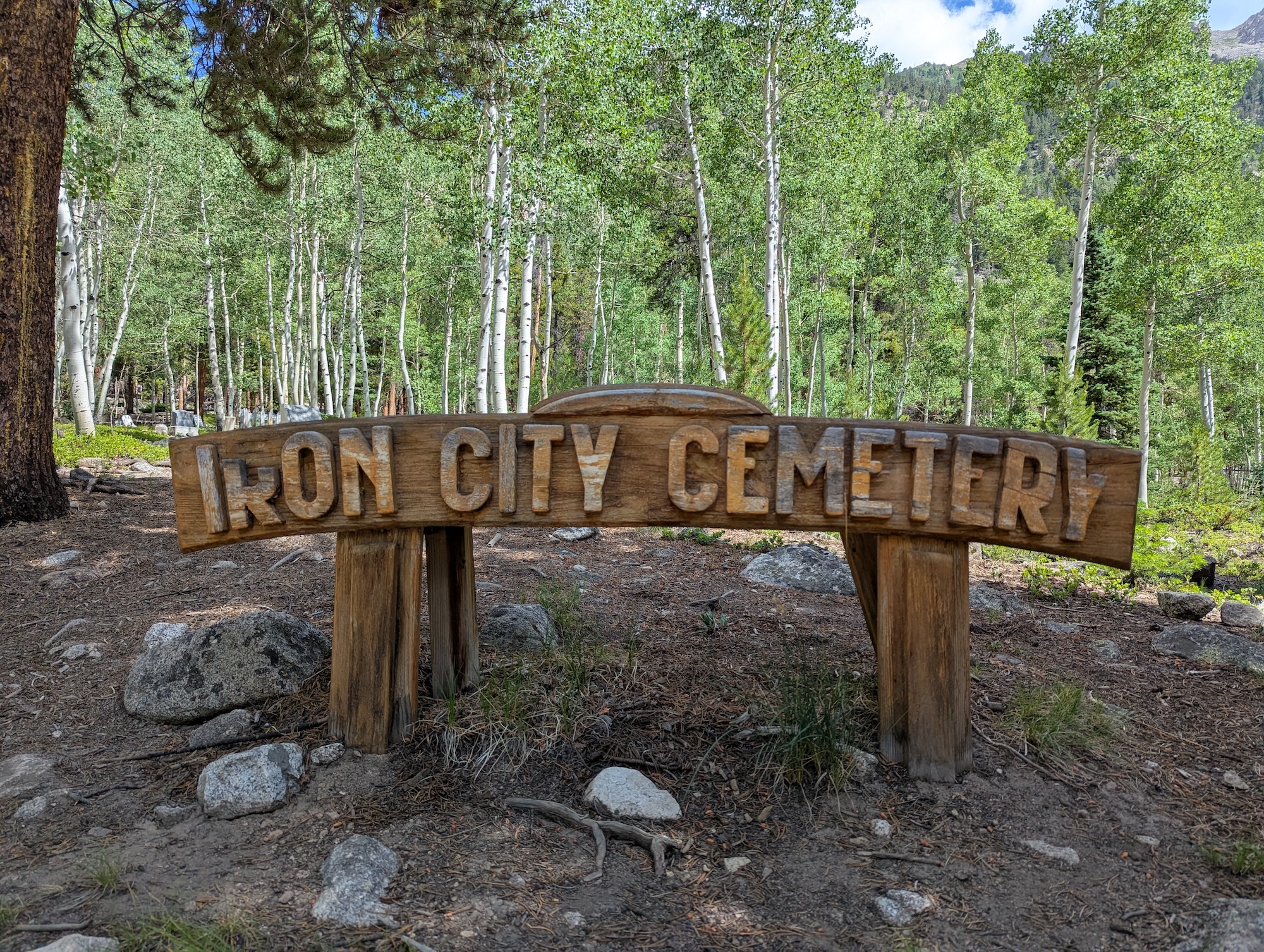
I had hopes of pitching camp for the night at the Iron City Campground, just a mile from St. Elmo, to rest and reflect on my exploration before heading back to Buena Vista. It is a beautiful campground nestled in the trees just beyond a bridge that crosses over Chalk Creek. But no such luck today. I’ll need to find something farther down the mountain.
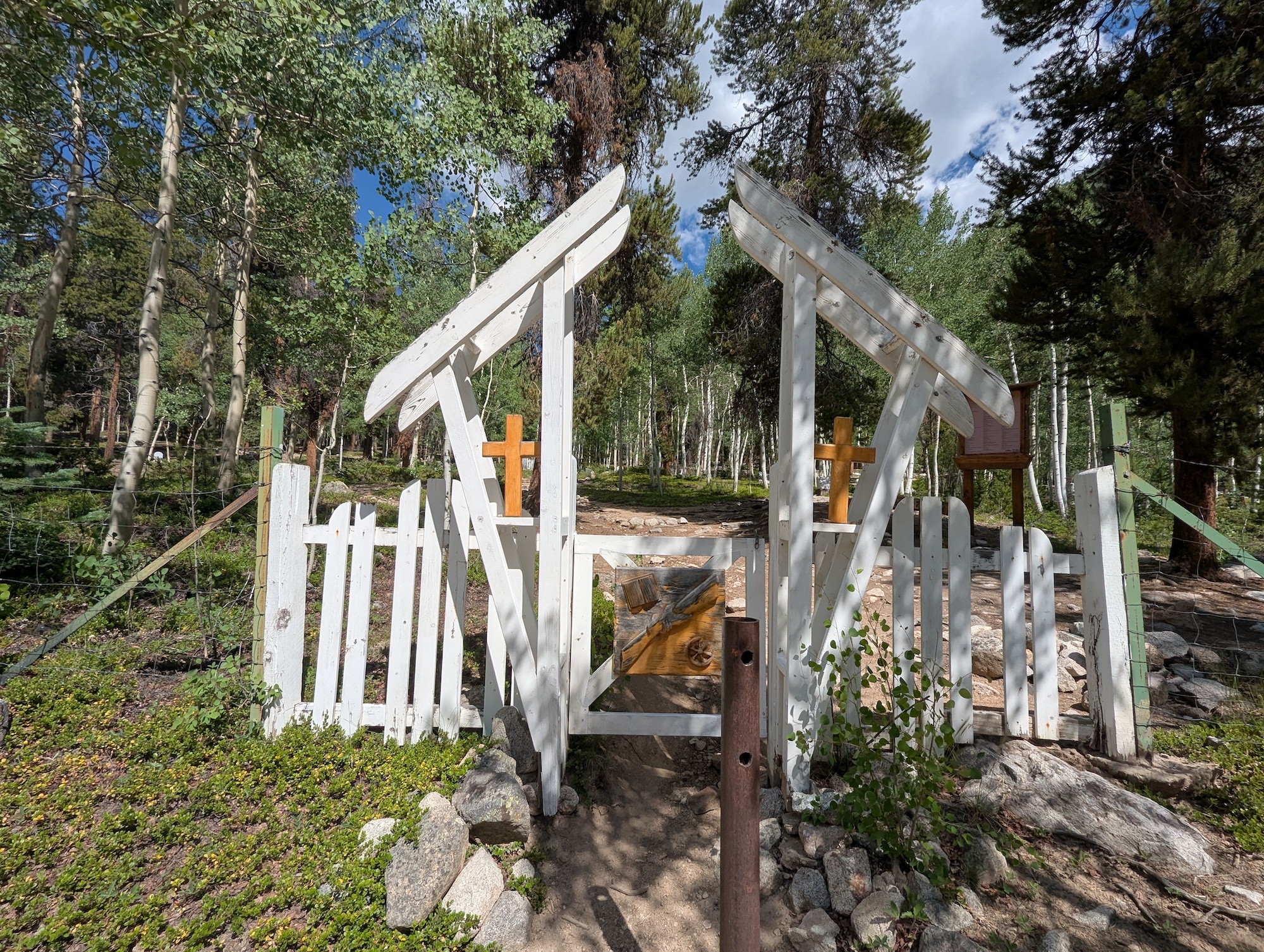
Ahead of me in the trees, a white painted picket fence with a welcoming gate gleams in the dappled sunlight. The gate is flanked by two rough-hewn wooden crosses, rustic and worn by time. Beyond the gate, I can glimpse a rocky path leading up the sloping hill and disappearing into the trees. A spark of intrigue lights up my melancholy, and I can sense instantly that this entrance must lead to someplace magical.
It is a cemetery, and unlike any cemetery that I’ve ever seen.
The Iron City campground sits adjacent to the former settlement of Iron City. Iron City smelted gold and silver-lead ores produced by the area mines, including the Mary Murphy. The water-powered smelter only operated for a couple of years, from 1879 to 1881, but became obsolete once the railroad came to St. Elmo. Hauling ores by rail to larger regional smelters became more efficient and cost-effective than smelting on a small scale locally. Even while it was still in operation, most of the ores couldn’t be processed at Iron City and had to be hauled by mule teams and wagons on a perilous journey down the canyon into Buena Vista, to be forwarded on to Leadville.
The settlement today is gone. The only evidence that it once existed are leftover piles of slag (remnants of the smelting process), the crumbling stone foundations of the furnaces, and the cemetery.
The place beyond the white picket fence is peaceful and serene, a place of rest for many of the town’s former residents on a quiet hillside among the pines and aspens. The path through the cemetery meanders through rocks and trees up the sloping hillside, and I’m compelled to follow it.
Unlike many other cemeteries, this one has a wild, unplanned feeling to it. There are no gravesites in neat little rows; instead, they are dotted here and there as if a natural part of the landscape, and each one has its own sense of quiet that gives tribute to the person who lived and died here.
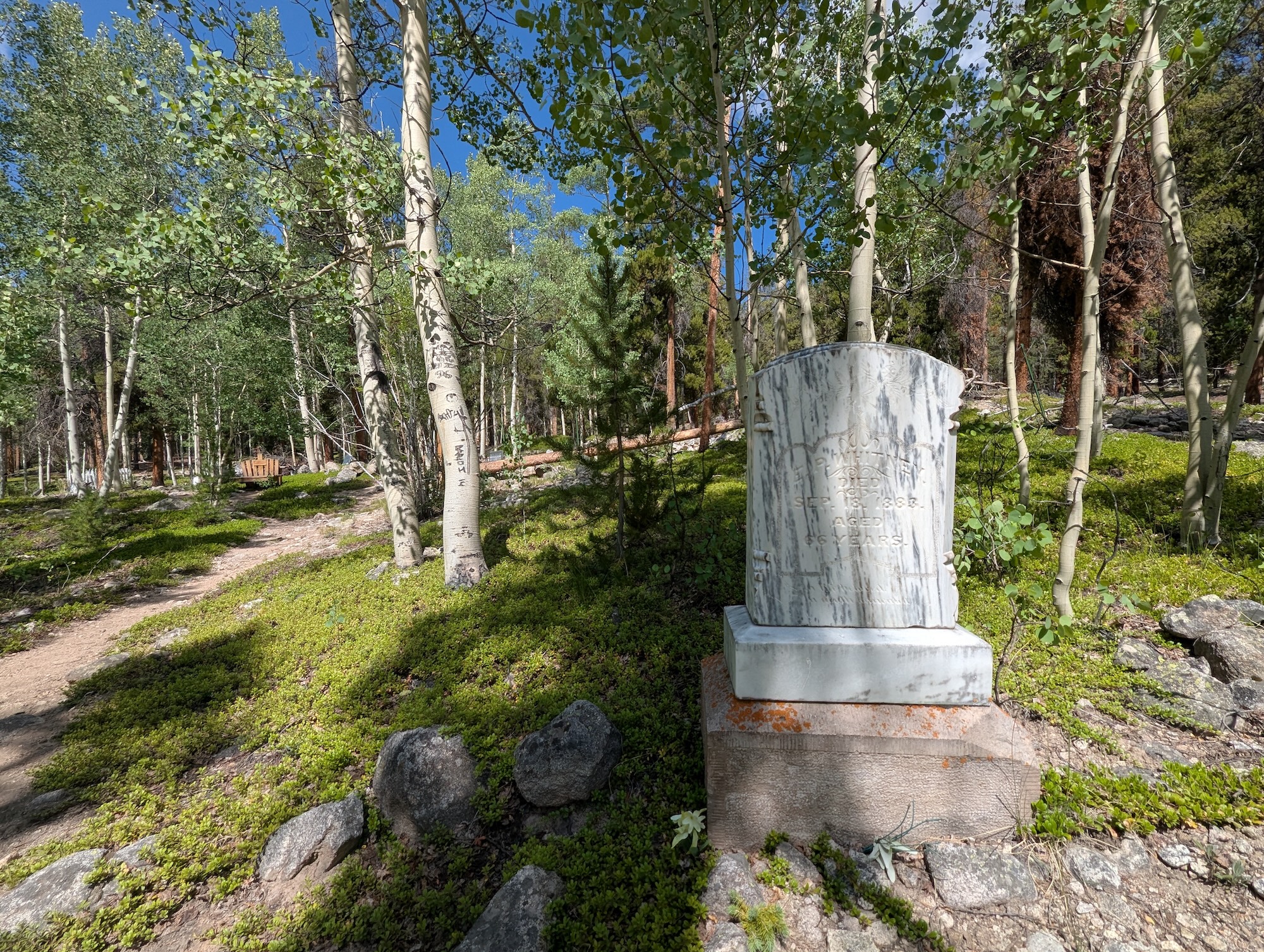
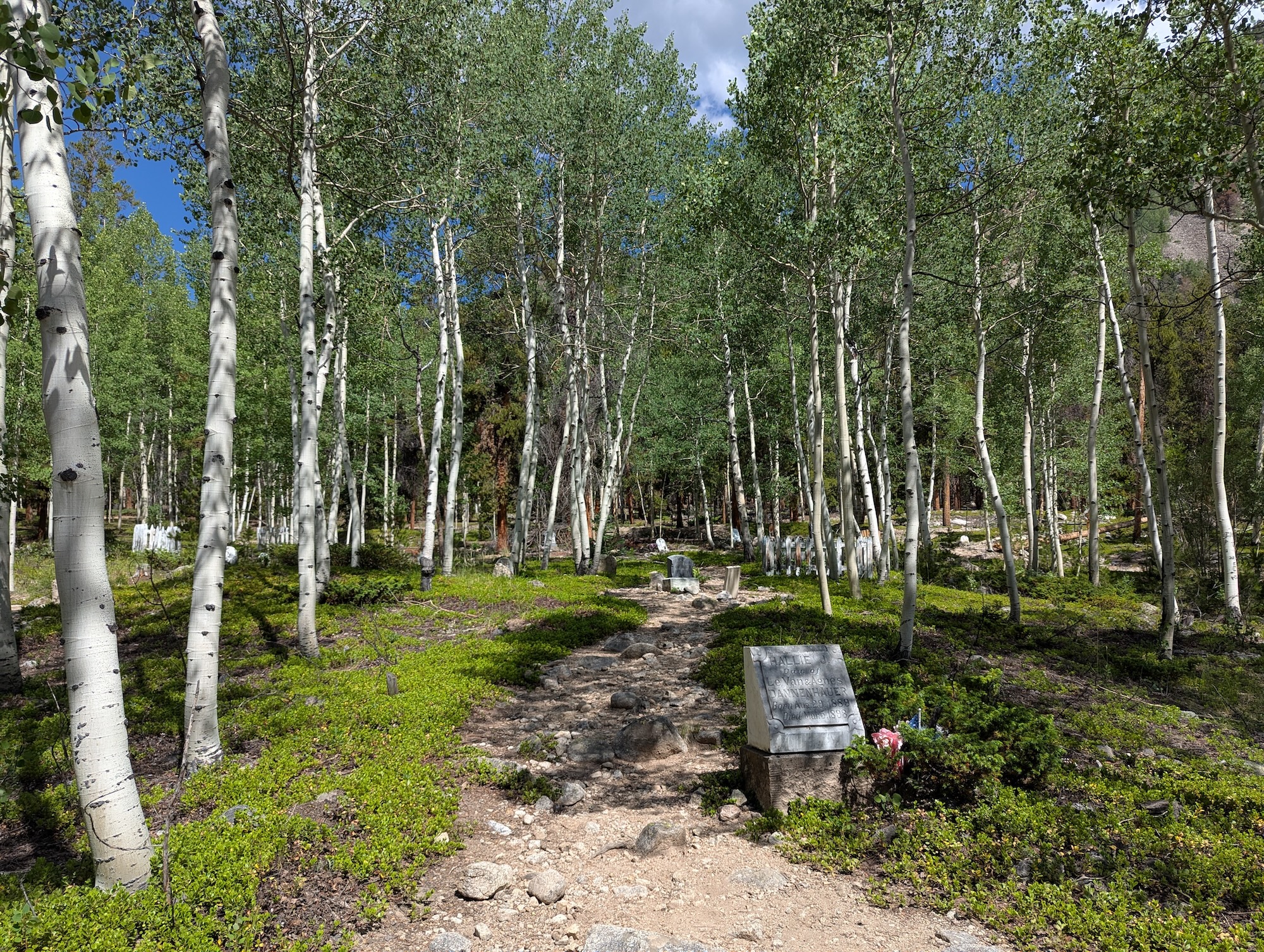
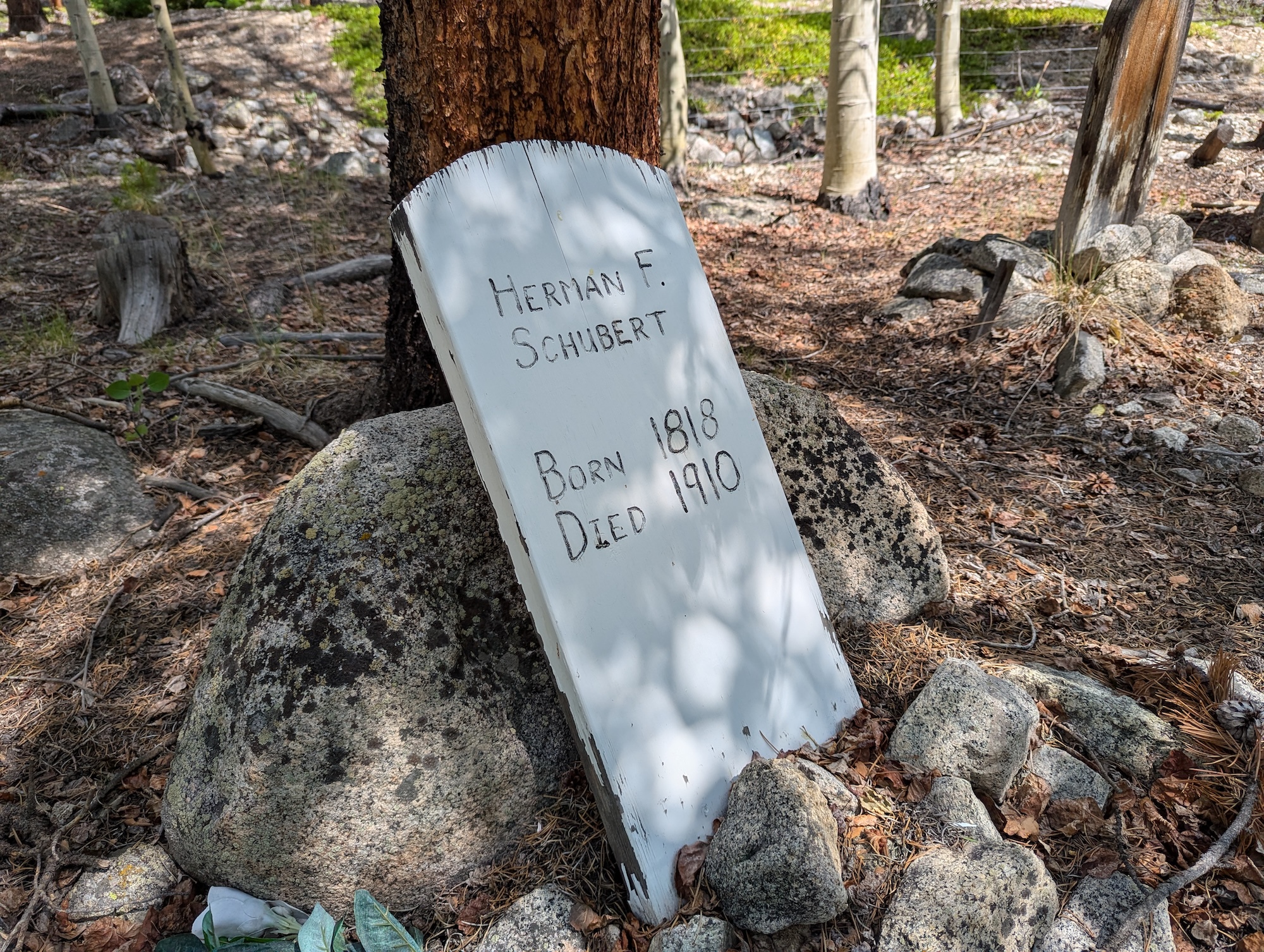
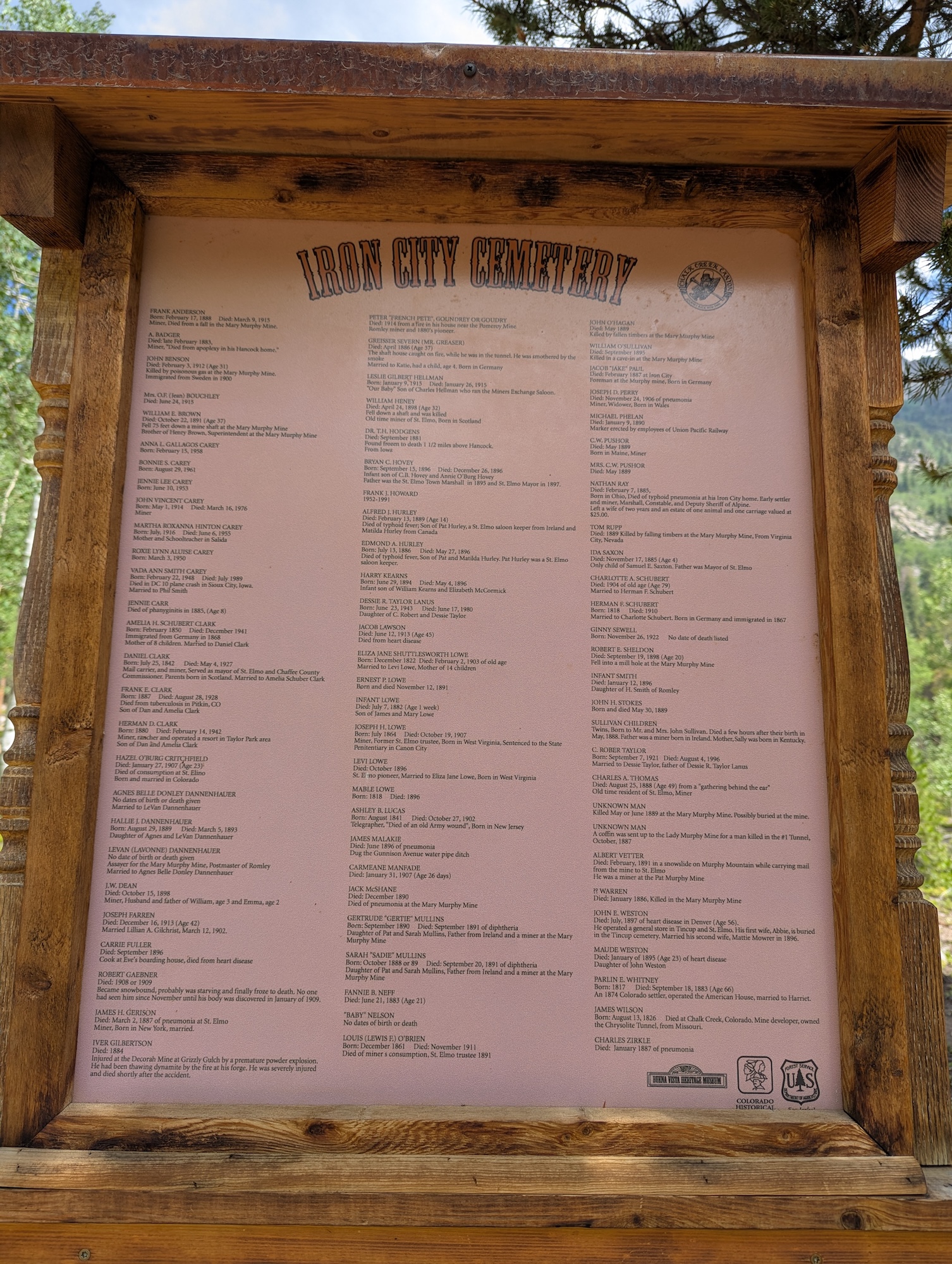
I wander through the grave markers, headstones, and white picket fences, and examine each one. They tell stories of just how hard life truly was here, and how much tragedy many endured. An epitaph on the marble headstone of a young boy, aged fourteen, reads:
“To this sad shrine who e’er thou art, draw near
Here lies the friend most loved, the son most dear
Who ne’er knew joy, but friendship might divide
Or gave his parents grief but when he died”
The boy was the son of Pat Hurley, an Irish immigrant who was the proprietor of Hurley’s Saloon in St. Elmo. Beside him lies his little brother, who died at age ten a few years later. They both succumbed to the same malady, Typhoid Fever.
“How many hopes we buried here”
There is evidence of the unique dangers that miners, in particular, faced every day. Countless lives were claimed by the mines. The memorial roster at the cemetery entrance tells of accidents—falling down shafts, fires, dynamite explosions. The death dates of two men hint that they may have died in the same cave-in. There was mining-caused tuberculosis and pneumonia. The Mary Murphy mine manager and his foreman both succumbed to asphyxiation from toxic gas during an inspection. A couple of unnamed men, their identities lost to time, are listed simply to have been “killed at the mine.” This is by no means an exhaustive list.
Bessie Launder, who spent her childhood in the nearby town of St. Elmo, recalls the many sicknesses and deaths in their isolated mountain community.
“There were no doctors in town and when people got sick, or there were emergencies, they had to take care of themselves or go out to Buena Vista to a doctor. Pneumonia was dangerous in the mountains. The sick men without homes were usually brought to the hotel. Deaths by accident were frequent. There was never any insurance.”
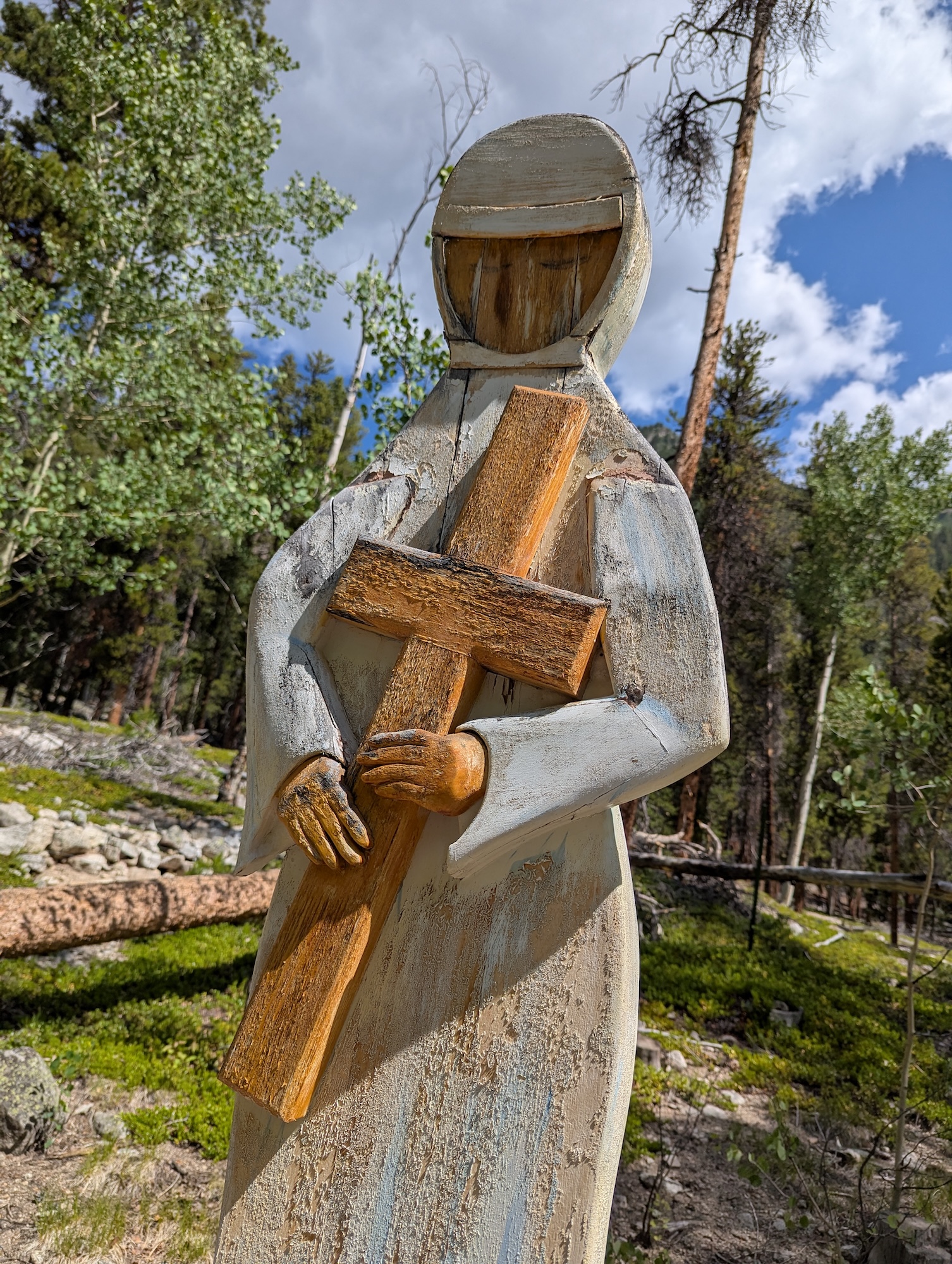
The elegant carved stones marking the graves of the more affluent members of the community contrast with others that are just simple wooden composites, designed as replacements for the originals which have been looted over the years by campers and burned for firewood. Though it looks like it has always belonged here, I suspect that the effigy of a shrouded woman at the center of the cemetery and other wooden embellishments were probably added at the same time, crafted intentionally to match the aesthetic of a nineteenth-century graveyard.
I discover some simple wooden benches in the shade of the trees, a perfect place to sit and contemplate my own memento mori. I’m overcome by a transformative sense of calm and reflection. This may be one of the most unexpected and beautiful places that I’ve come across in my travels. When I go, I want a final resting place just like this in the quiet mountains where the only sounds are the gentle breezes whispering through the aspen leaves and the occasional birdsong.
As I leave and close the gate behind me, I see a shelf piled high with coins and pretty stones, small offerings left by visitors to honor the memories of those buried here. I leave my own sparkly stone as a symbol of the riches in these mountains that the miners sought after, willing to risk dangers and even give their lives for, in hopes of a better and prosperous life for the generations to follow.
Independence
I wasn’t prepared for this. The highway drive up to Independence Pass has me gripping the steering wheel with white knuckles. Even with a guardrail giving some small sense of safety, one false move could prove fatal. I peek from the side of my eye over the edge of the precipice, just inches from my tires. The mountainside drops away steeply a thousand feet down to the valley below. I maneuver a bit to hug the side of the mountain more closely, and take comfort that no one would dare attempt to pass another car on this type of road…
Not true. As I round a hairpin turn, I can see a vehicle just ahead in the incoming lane passing another car, and they are squarely in my lane.
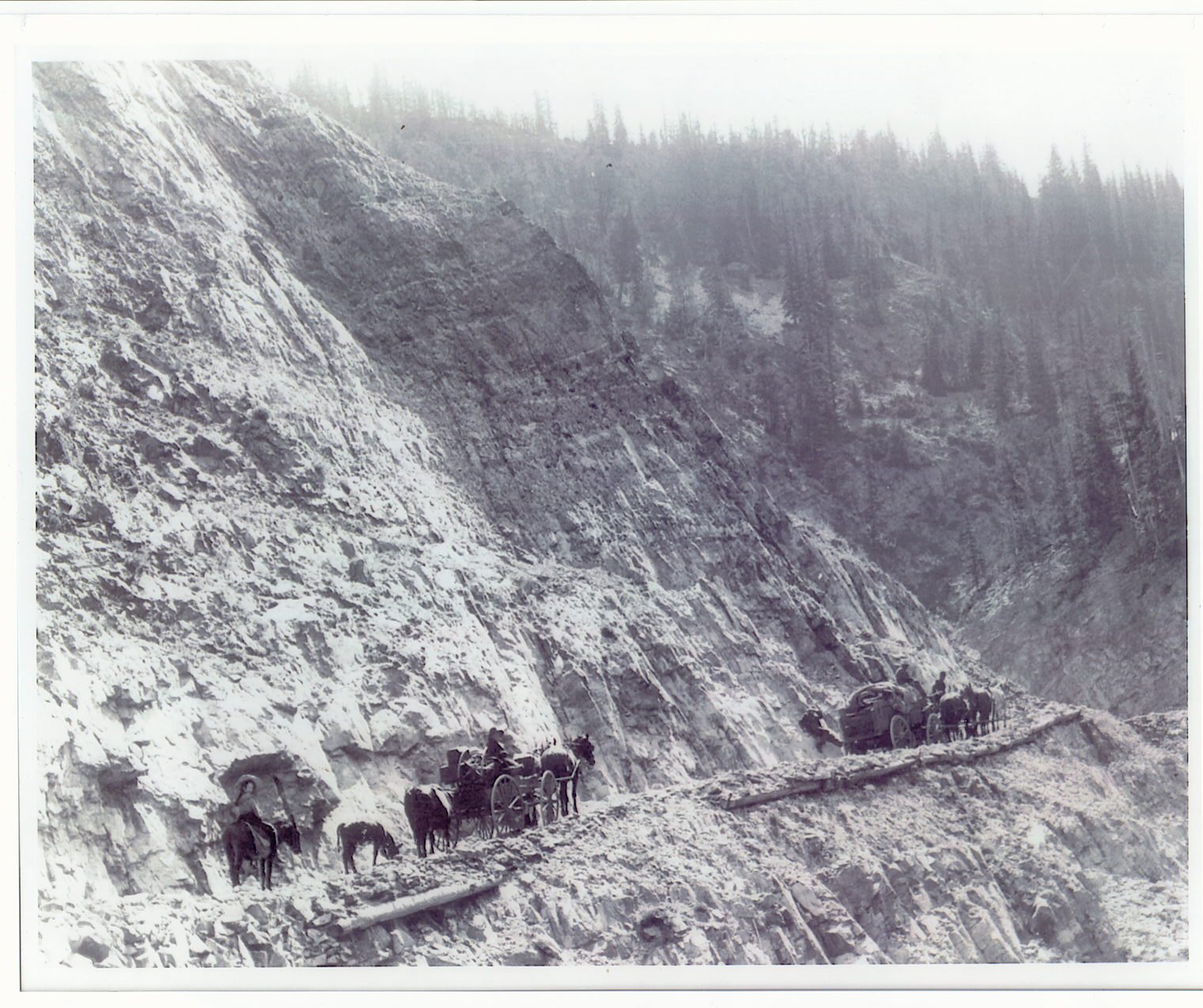
At its inception back in 1881, this road would have been even more treacherous. Originally carved out of the mountain by hand with pickaxes and shovels, the road was narrow—barely wide enough for a wagon. It was unpaved and rocky, with no guardrails to keep stagecoaches or wagons from teetering off into oblivion. But a road over the pass was critical to provide access to the mining towns springing up west of the Continental Divide: Independence, Ashcroft, and eventually Aspen.
When I finally turn off the highway at my destination, the former mining boom town of Independence, Colorado, I breathe a sigh of relief and take a moment to compose myself. I’m greeted at the parking lot by a friendly and knowledgeable representative from the local Historical Society, and we talk about the town’s history before I start my exploration. She gives me a sense of the former layout of the community, the Farwell Mill, and the multiple mines just up the hill from the town. I can still see a scar where the earth has been scraped away from the side of the mountain.
The interpretive trail sets off down the hillside below the highway and quickly splits. To the left lies the old wagon road that entered the town, now just a single track and barely wide enough to be a footpath. To the right, the trail winds down the valley through the remnants of what would have been close to a hundred structures at its peak, and disappears. The buildings are dispersed here and there across the rolling green hillside, following the natural movement of the landscape.
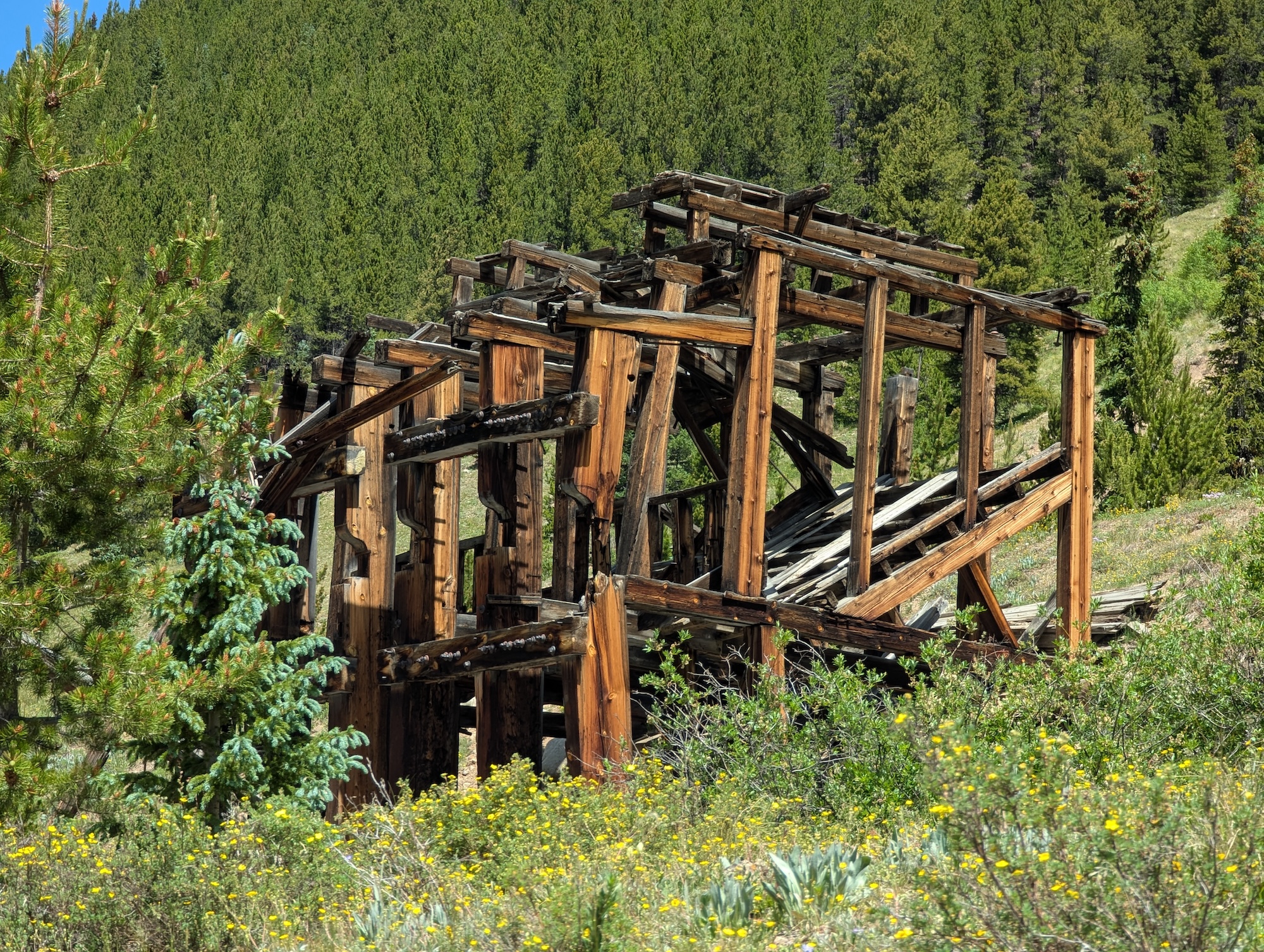
Similar to St. Elmo, prospectors in the Roaring Fork Valley struck a large gold lode in 1879, and the town formed around it almost overnight, taking the name Independence after the date of the discovery (July 4th, Independence Day). The Farwell Consolidated Mining Company from Leadville bought out the area claims and quickly built a stamp mill to crush and separate the gold from rock. A second stamp mill followed, the Farwell #2, to process the high volume of ore coming from the mines.
New businesses and infrastructure came to Independence, and tents were replaced with cabins of notched-log construction, the trees sourced from the surrounding hills. But unlike St. Elmo, the gold deposit here was shallow and quickly played out. It took only two years to bust. Although there were hopes of finding a second profitable vein, one was never found.
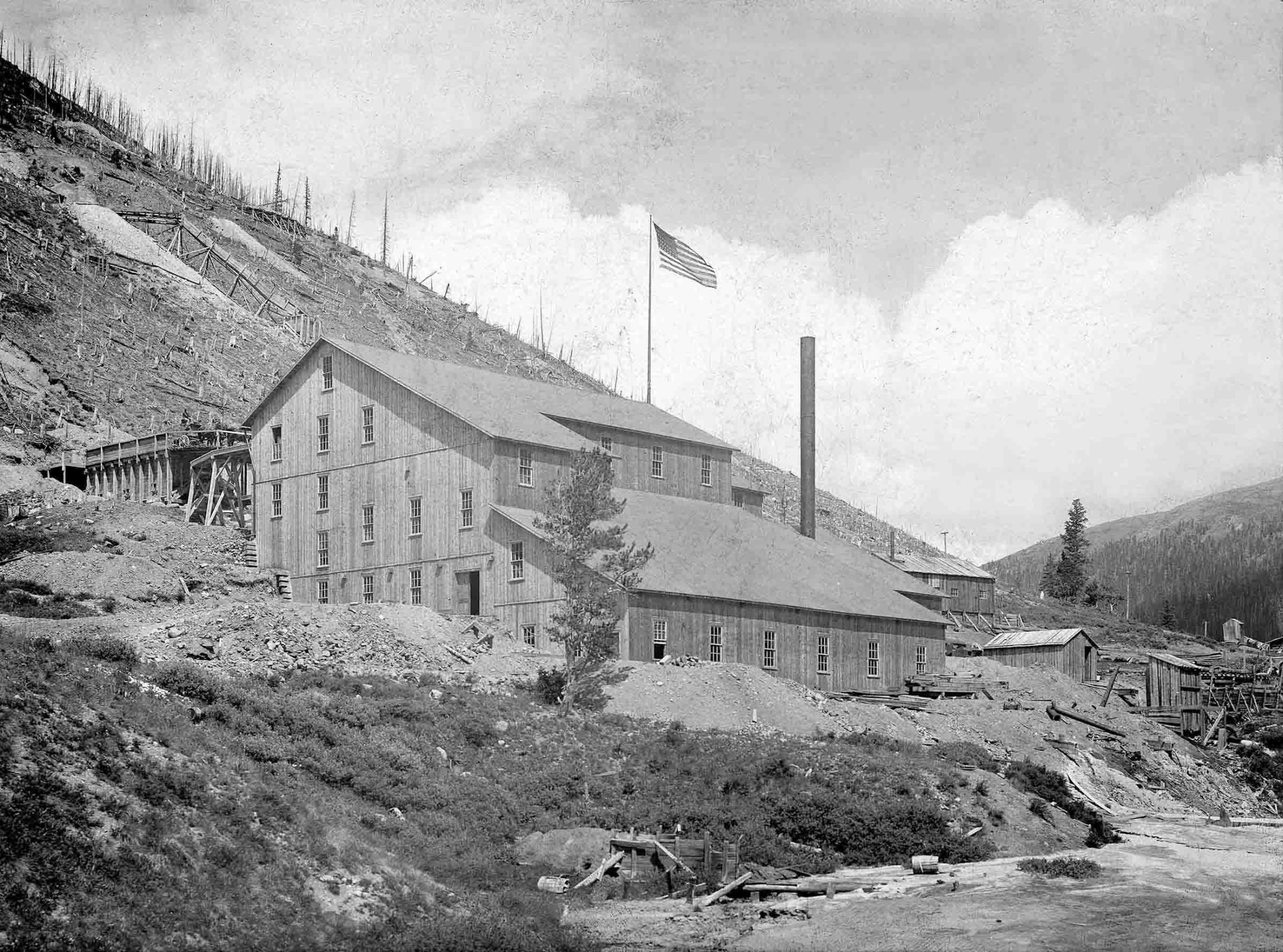
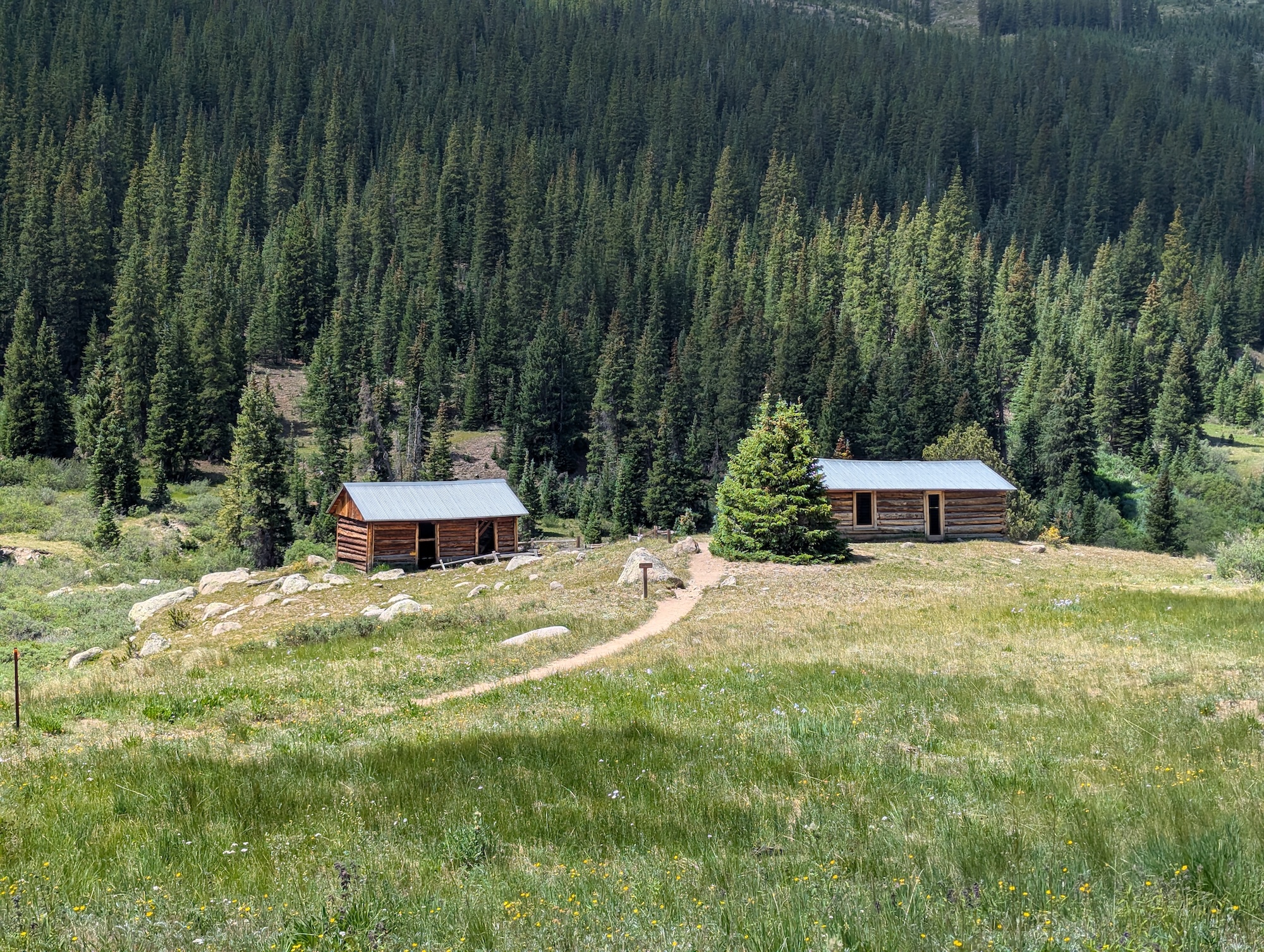
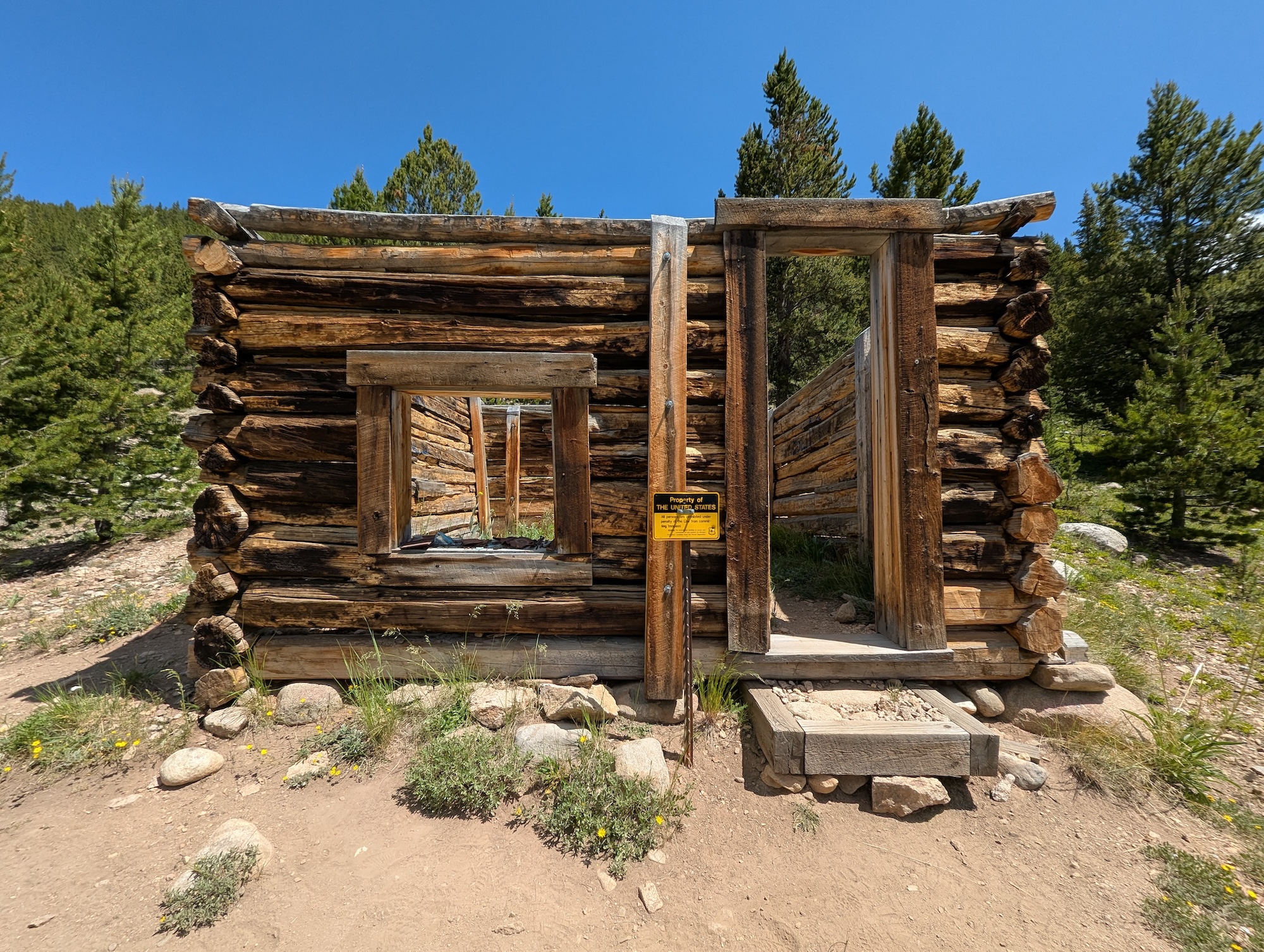
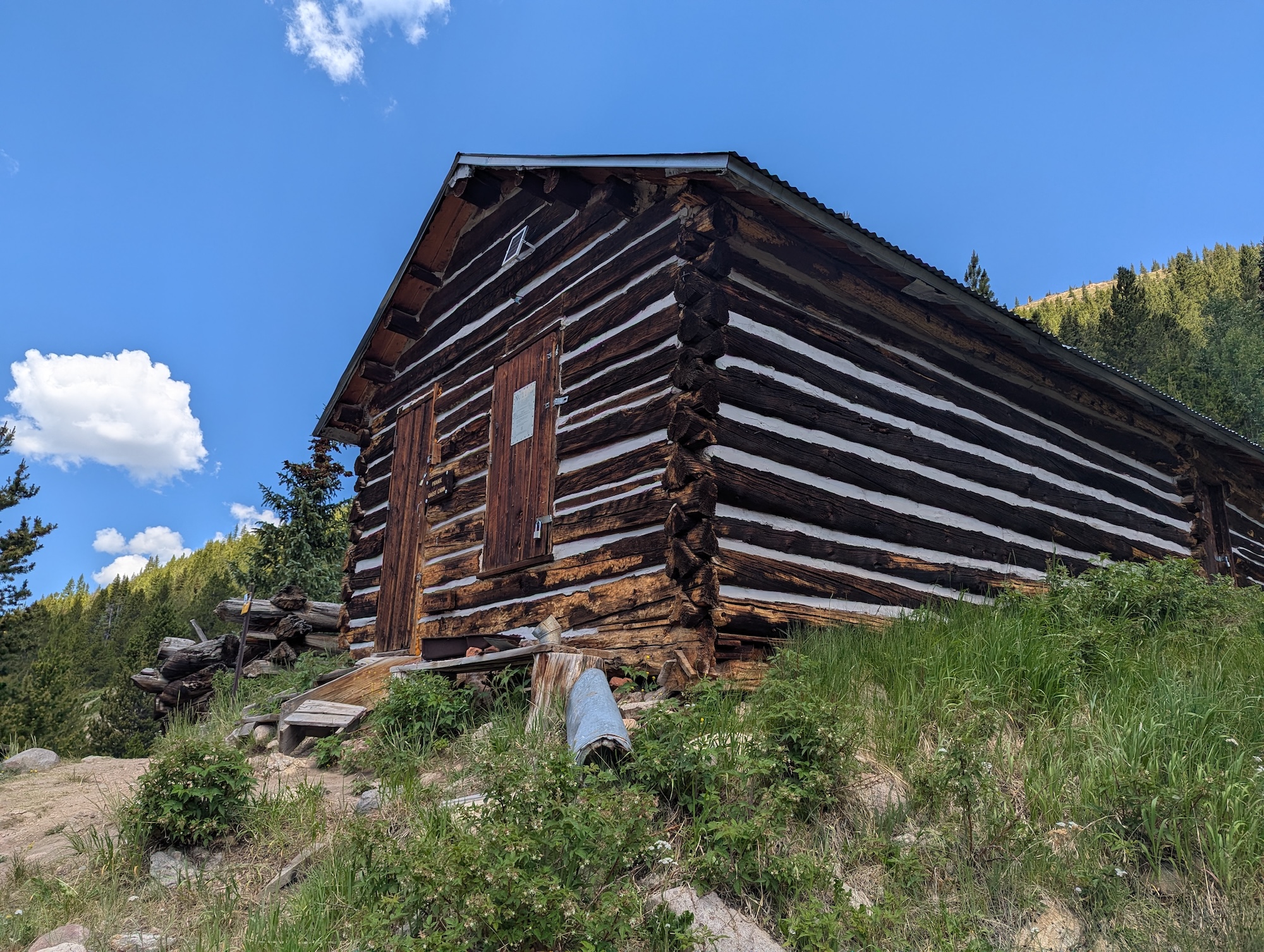
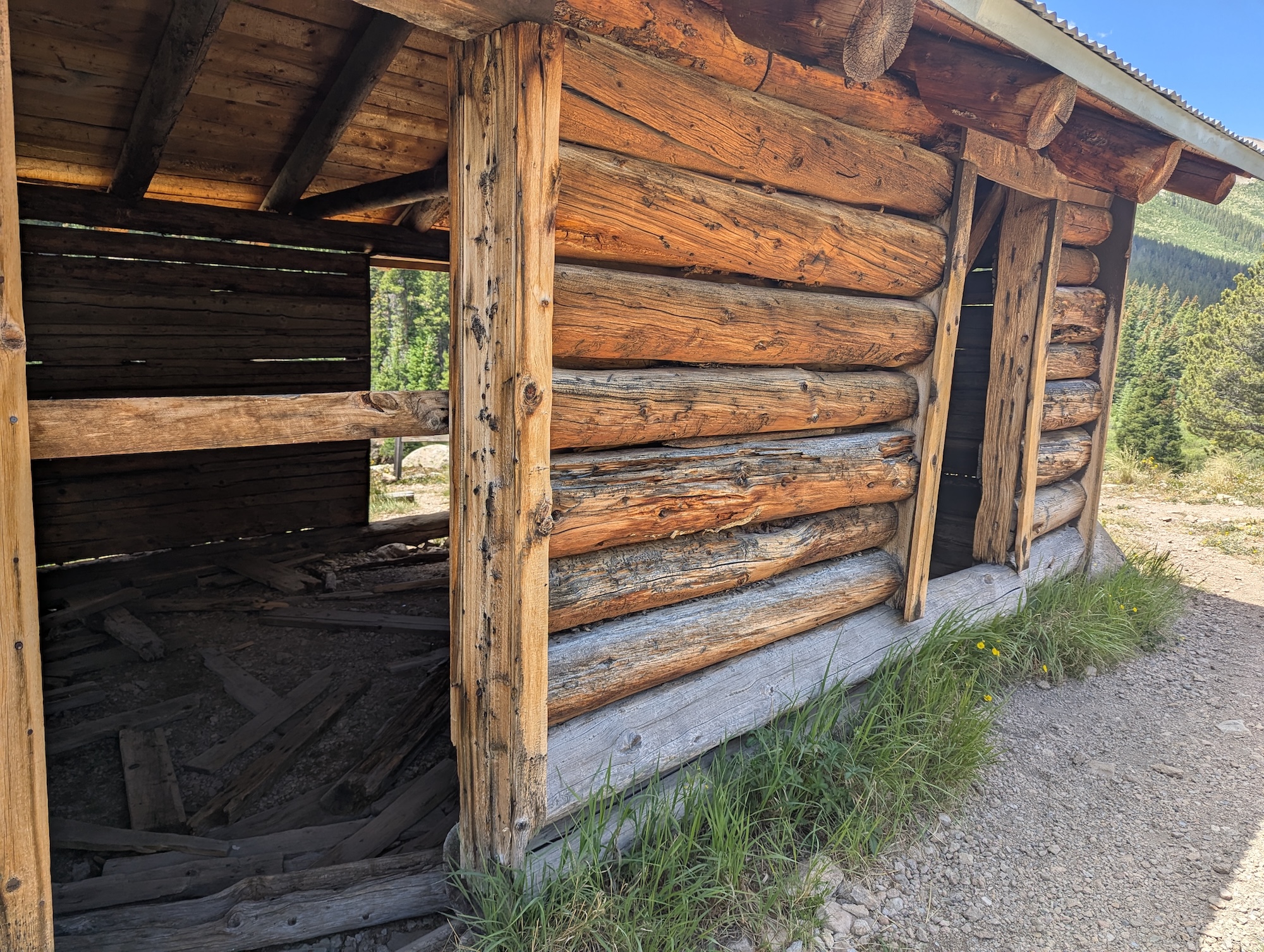
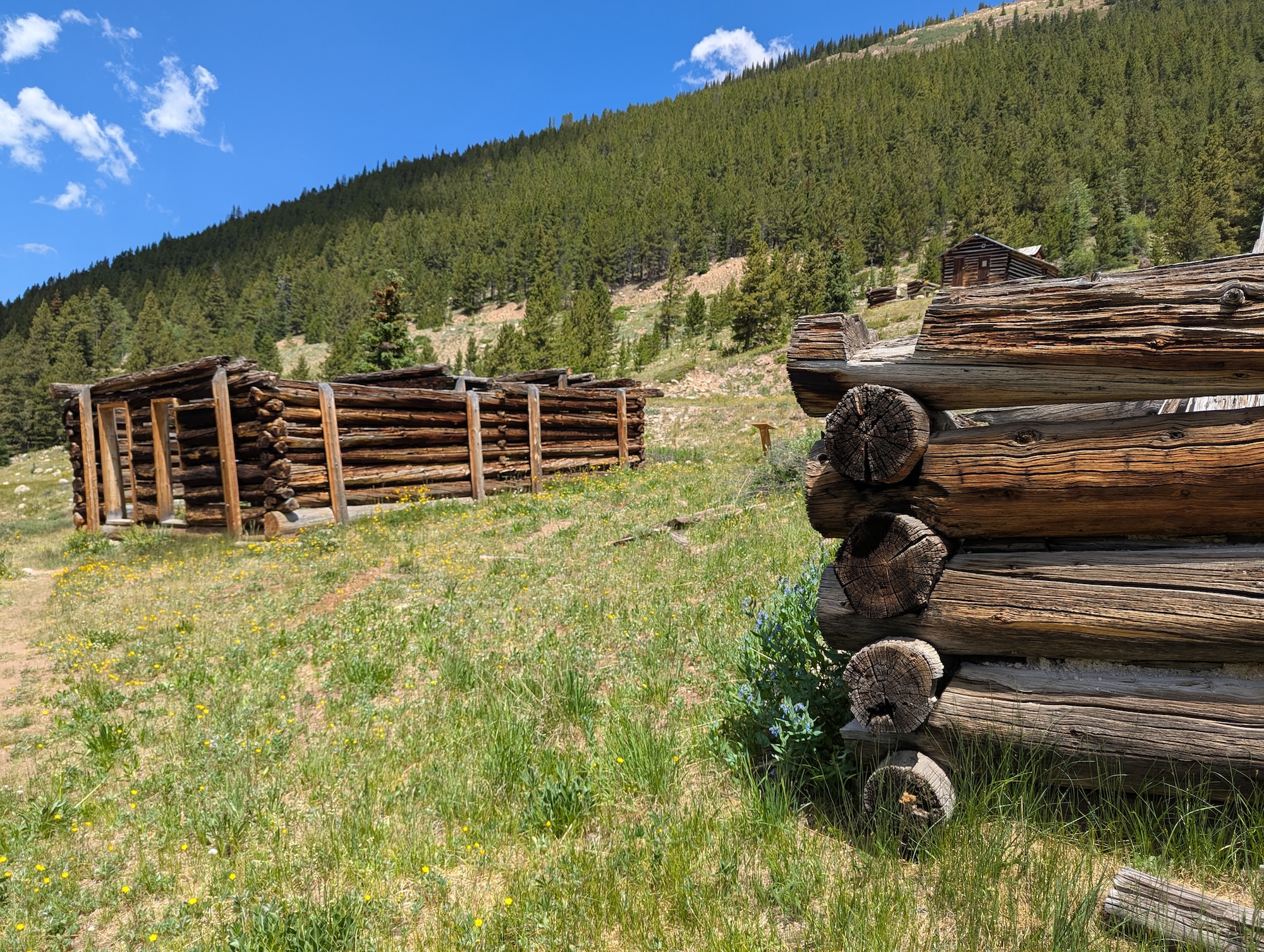
It wouldn’t have taken much persuasion to move on after the bust. At nearly eleven thousand feet in elevation, life here would have been harsh and meant only for the hardiest of people. Most of the town’s population of fifteen hundred left and moved farther west to Aspen, dismantling their entire cabins and taking the logs with them. The Independence that we see today is a ghost town in the truest sense of the word. No one has lived here for over a hundred years.
But that’s not to say that there’s nothing left. Some of the buildings left behind are kept minimally preserved with fresh chinking plaster and aluminum roofing; others have been left to decay naturally with time and weather.
The Connor House is one of those left to ruin. Once thought to be the finest boarding house in Independence, what remains now are a few weather-worn logs, overtaken by yellow wildflowers. As I round a bend in the trail, I can see the old stamp mill just ahead on the hillside, a derelict wooden skeleton that offers just a hint of the imposing structure that it once was.
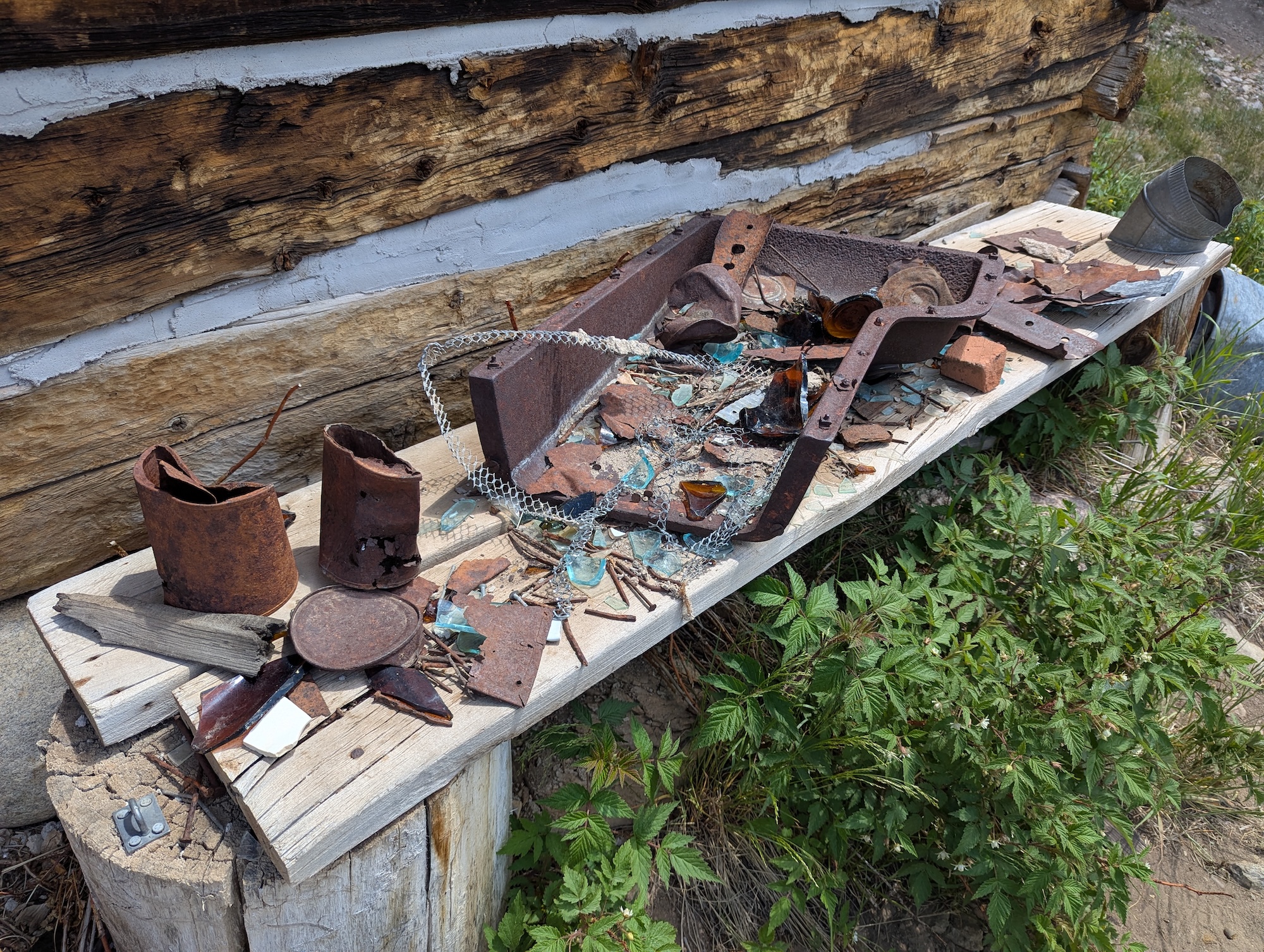
Even more abundant are the treasures in the earth. Not gold, but the relics of daily life left behind—rusted tin cans, construction nails, broken glass bottles, bits of metal stovepipes, and more. It’s not permitted to carry any of these pieces of history away in your pocket, but you can see them scattered in the dirt along the overgrown main street or collected together for viewing along benches and in vacant windowsills.
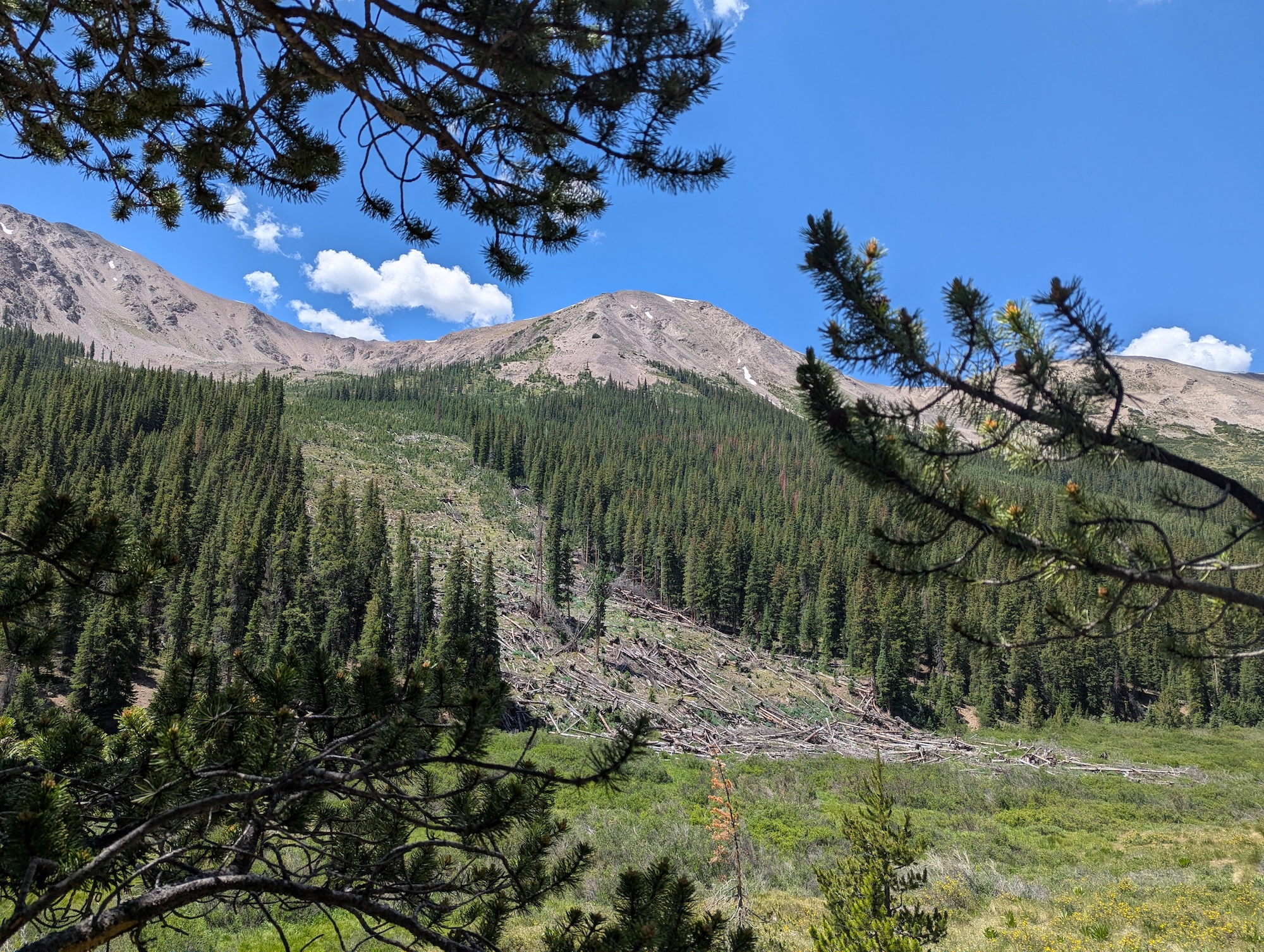
I’m struck by how green this valley is. The town was built at the confluence of the river, where Independence Creek joins with the Roaring Fork. A side-turn of the trail twists down to the river, where it’s cool and shaded by pines. I take a detour to dip my hands in the cold water before heading back up the hill to the parking area.
The mills in Independence were partially blamed for the pollution of the river, which provided drinking and irrigation water that was needed for the Aspen community downstream.
“All residents are aware that at Independence, some fourteen miles above Aspen, two stamp mills are pulverizing ore to the consistency of dust,” reported the Rocky Mountain Sun newspaper of Aspen, “which, as it passes from the mill into the stream changes the color from an almost perfect translucent and white to a yellow ochre, thick enough and almost the consistency of a new made cheese.”
This was an accurate portrayal of the process that the stamp mills used. The ore was first crushed by giant jaws to reduce it to the size of gravel, then stamped down into a sand and silt slurry. This sand and slurry mixture passed over bumping tables, conveyors, and screens that shook, washed, and separated the heavier gold from the waste. The waste was then washed back into the river.
With the mills out of operation now for well over a hundred years, the Roaring Fork River runs crystal clear again, refreshed by snowmelt runoff from the peaks above.
Use of the stage road through Independence declined after the residents left. It still suited as a direct route from Twin Lakes from the east to Aspen in the west, but then the railroad came, offering a faster and safer option for travelers. However, in 1924, the road went through a revitalization to widen it to two lanes to accommodate the growing popularity of automobiles, and became what we know as Highway 82 today. It was eventually paved forty years later in 1967.
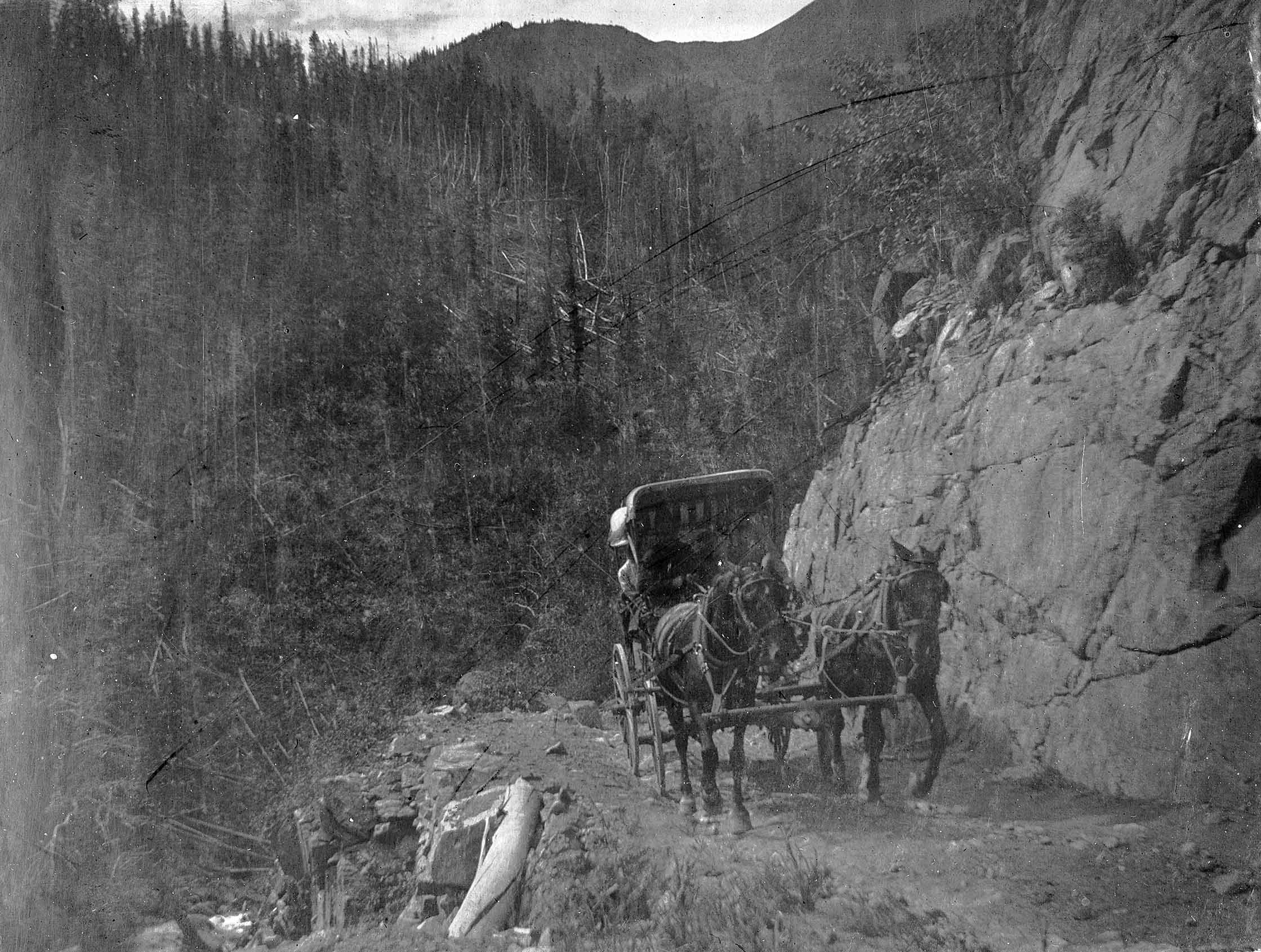
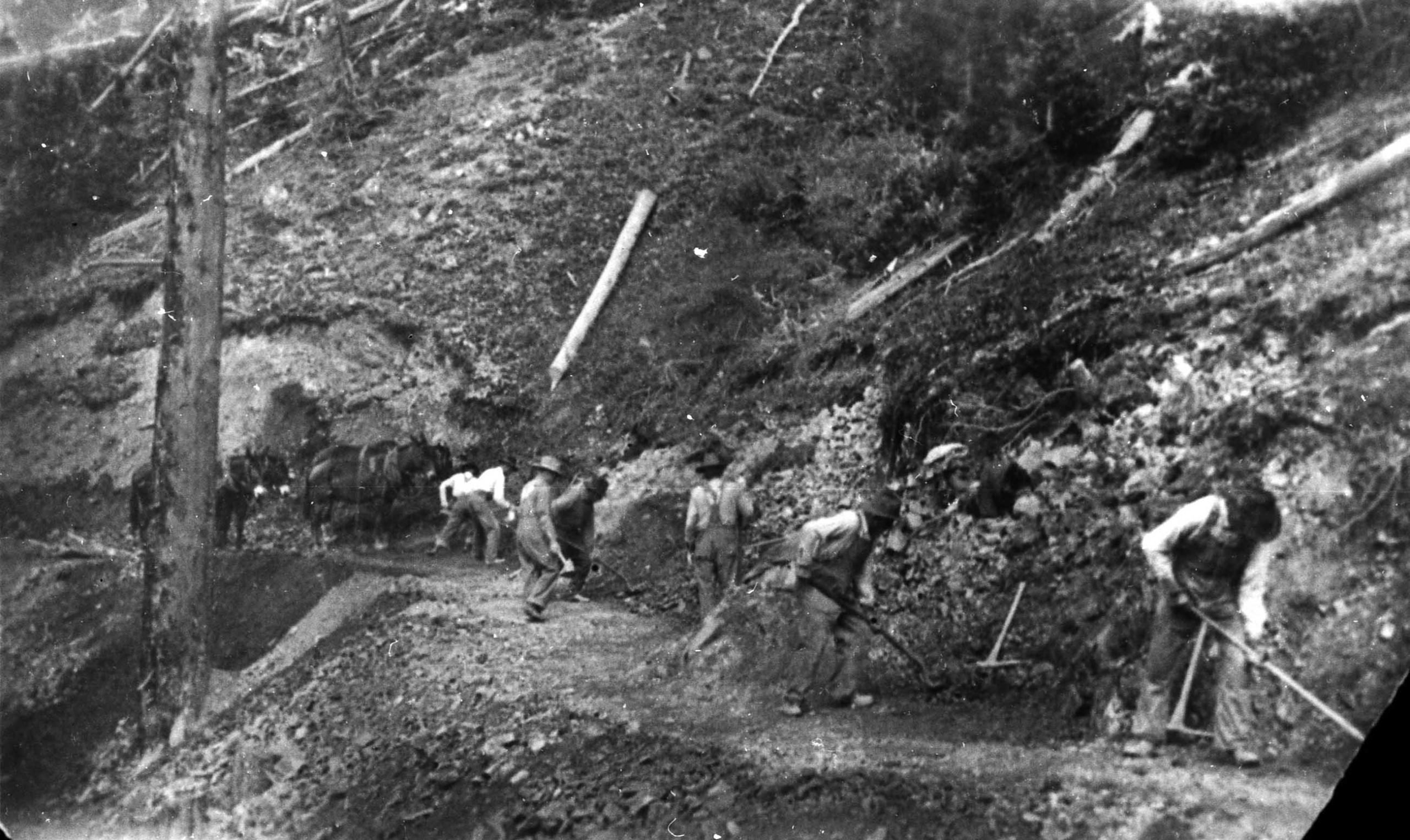
Hiking back up to the parking area, I stop for a moment to gaze down the old wagon trail that once went directly through Independence. It is the only section of the old road that wasn’t included in the main highway when it was rebuilt, which now sits just above the town. It’s been reclaimed by nature and overgrown by weeds.
As I leave Independence and head back over the pass toward Twin Lakes, far below by nearly three thousand feet, I have a new sense of gratitude to have this modern two-lane paved road with guardrails running the length of it.
Vicksburg
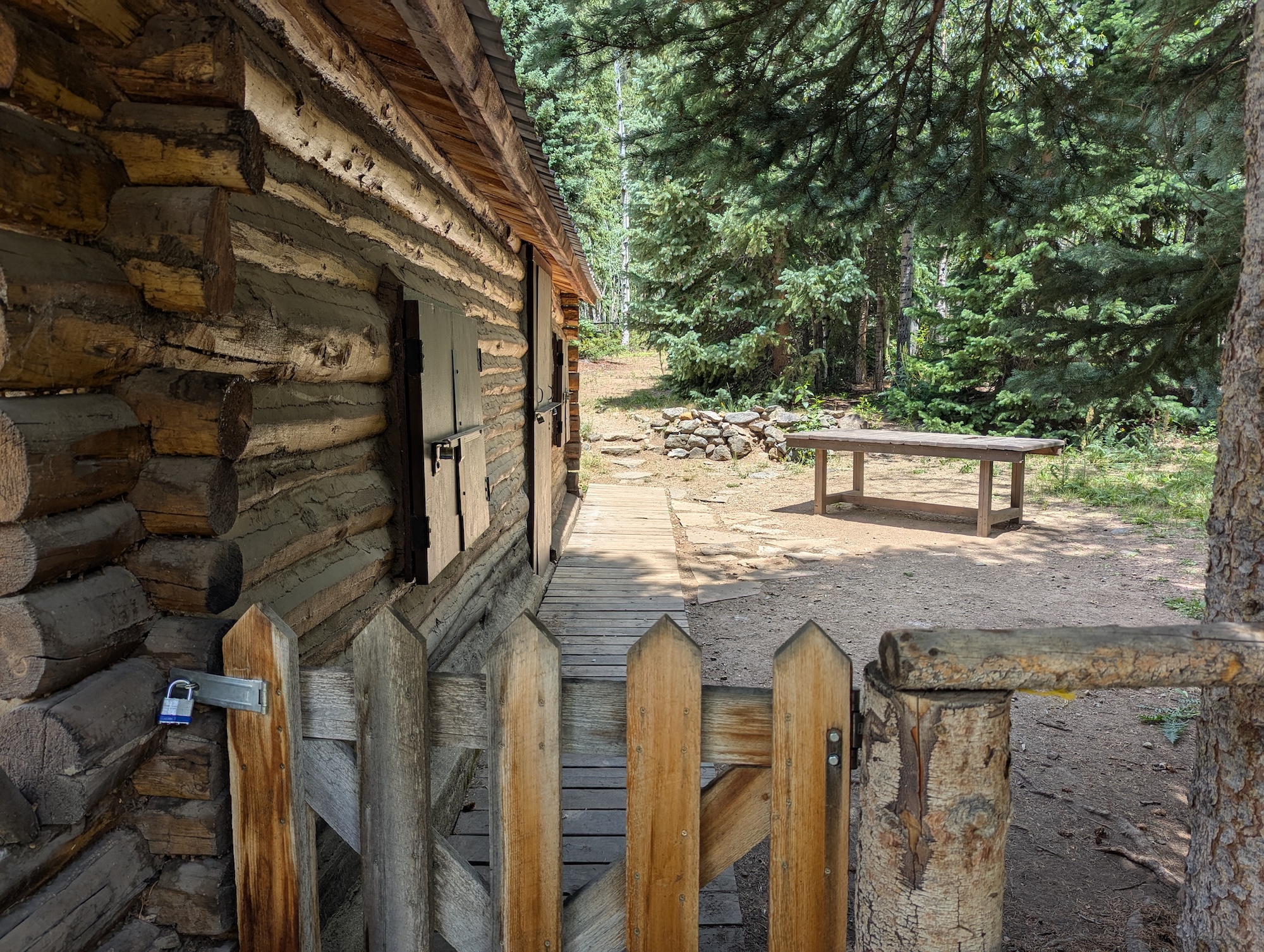
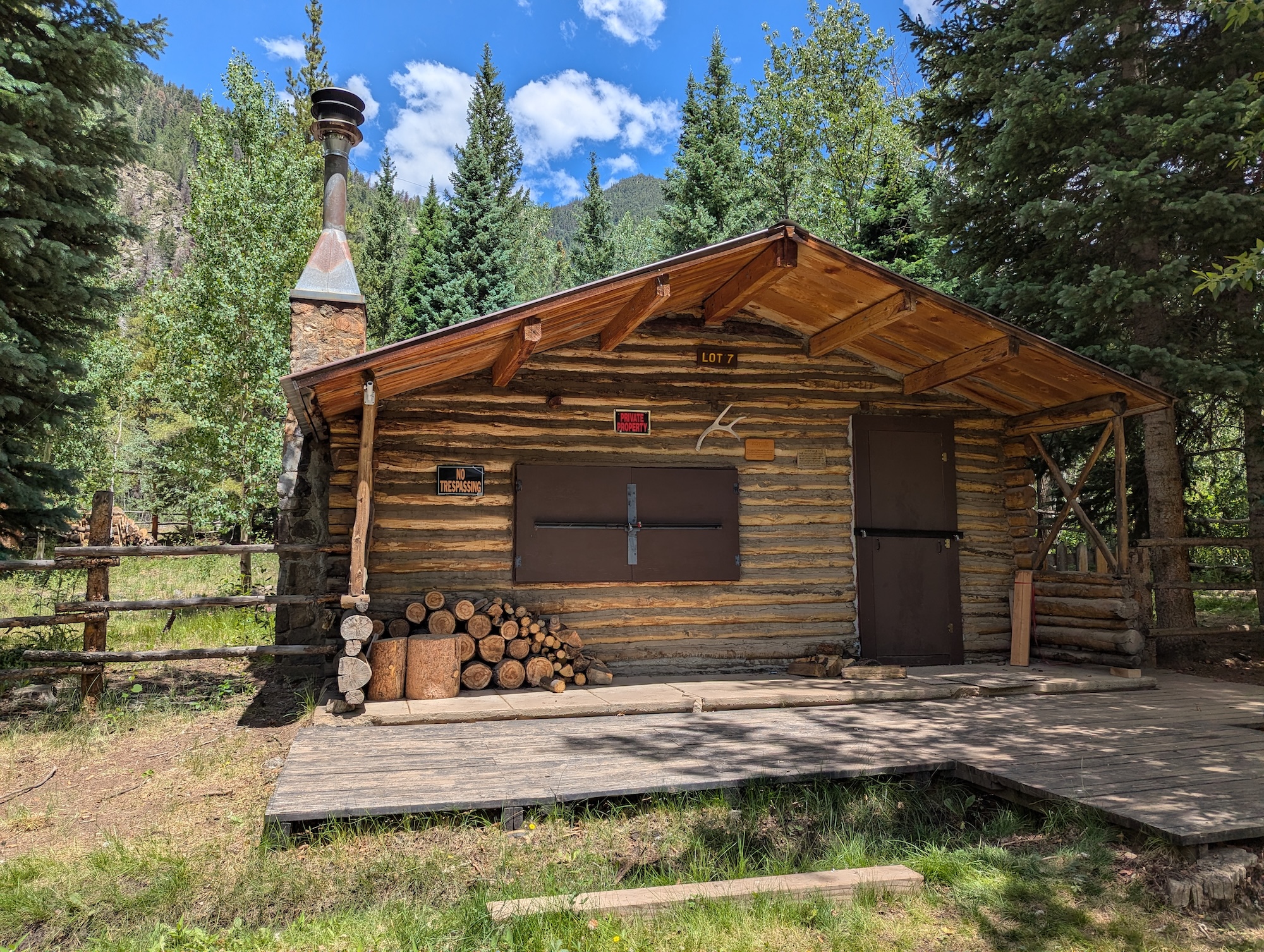
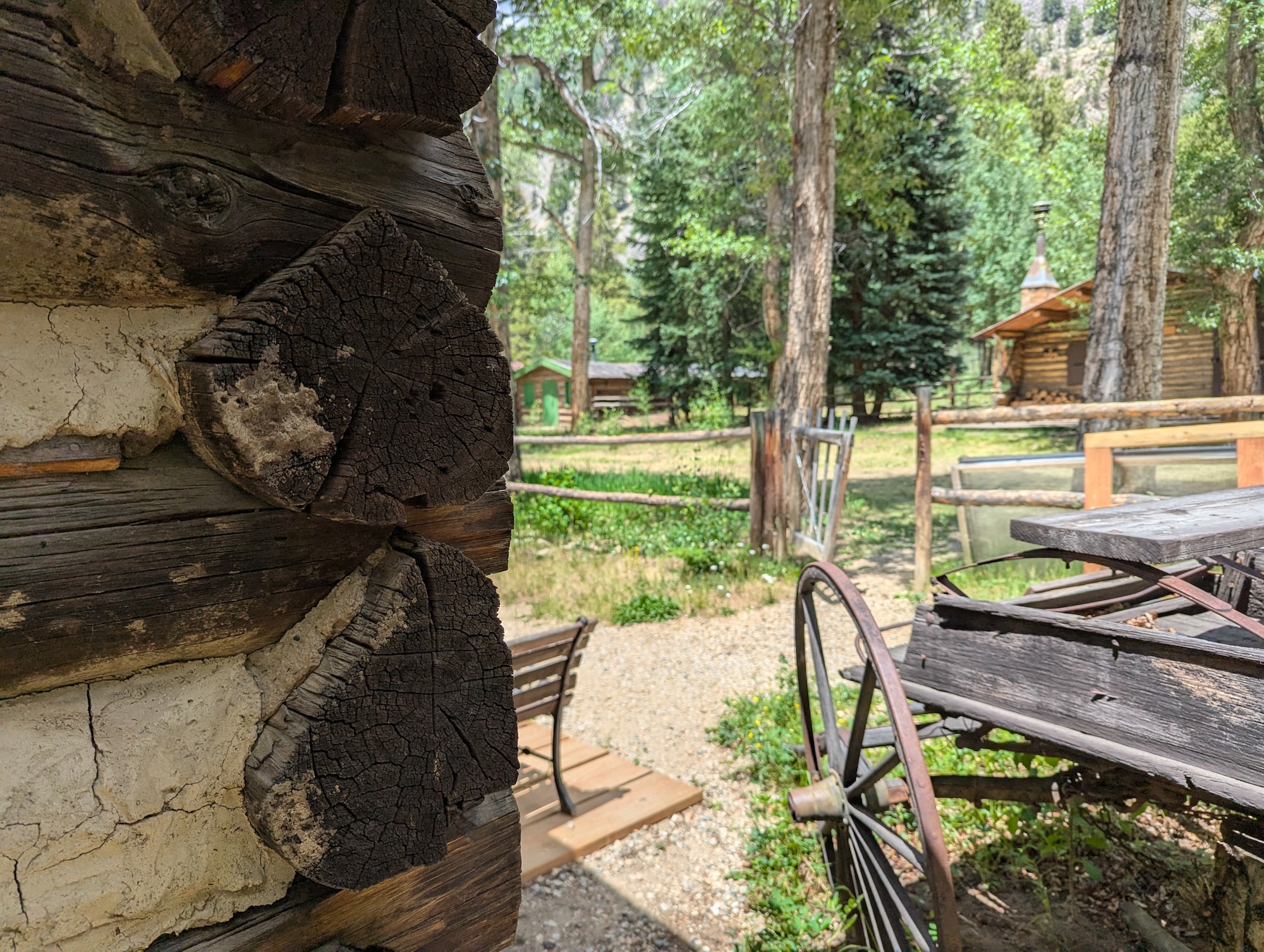
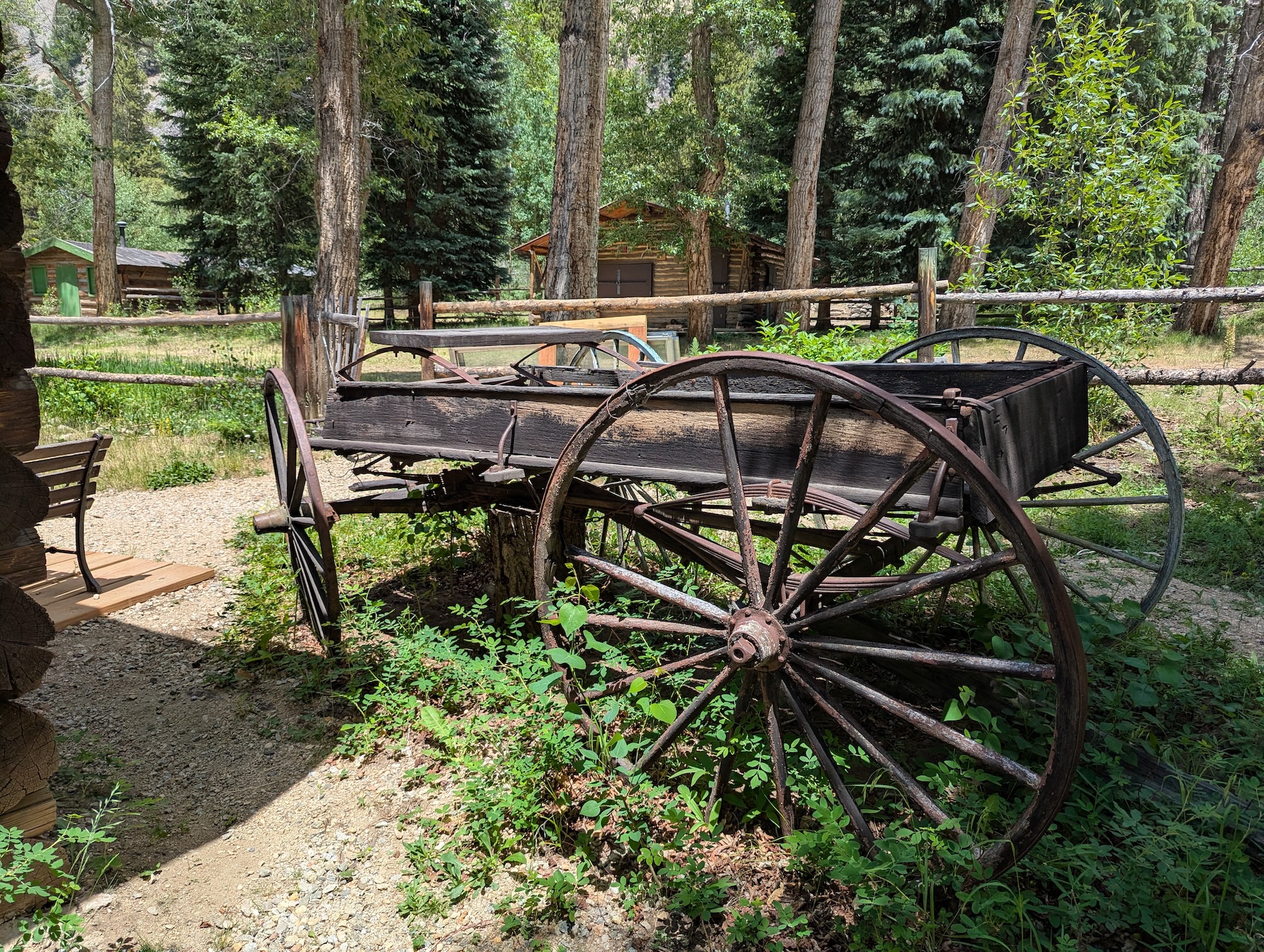
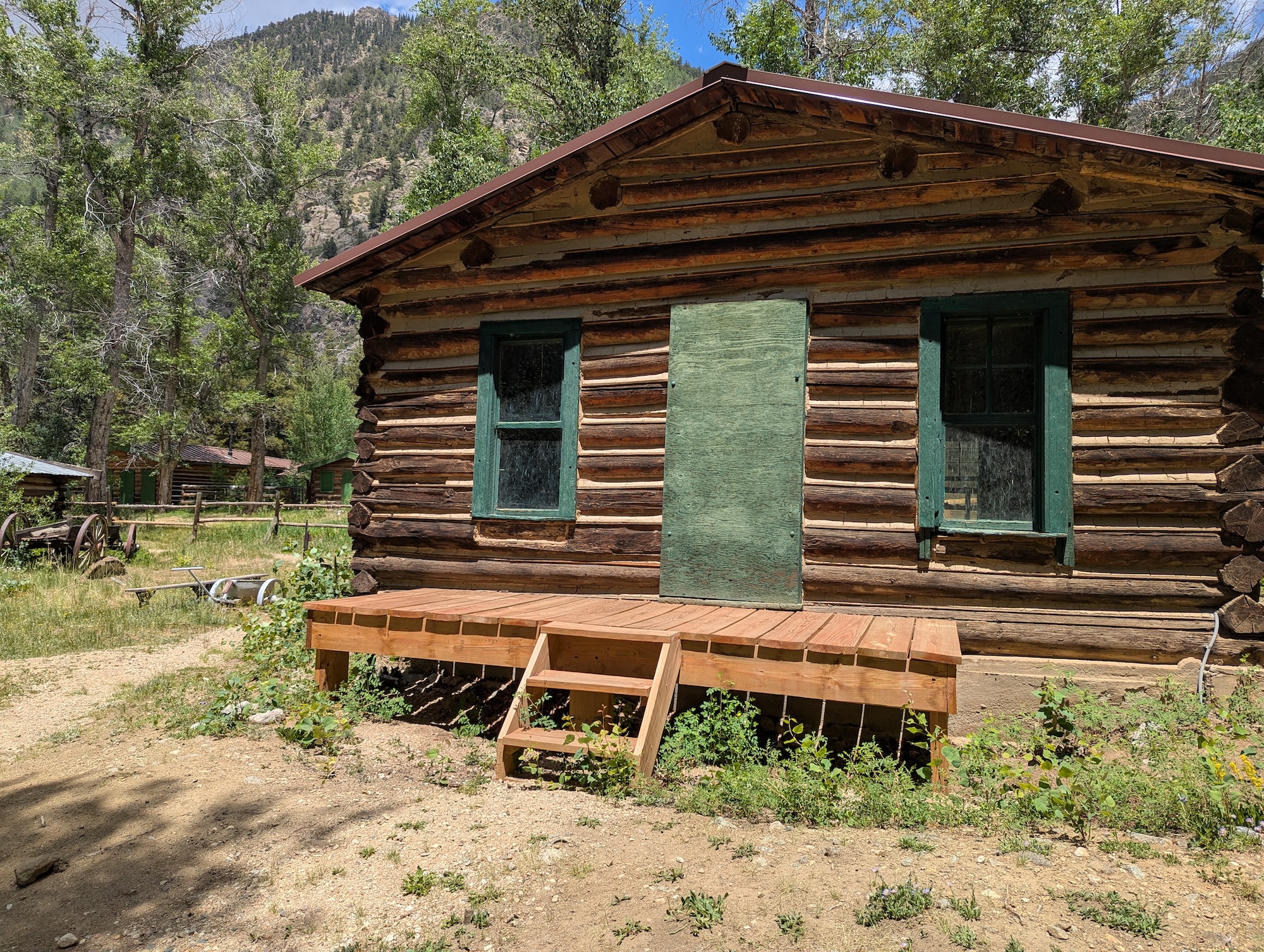
I shield my eyes against the glaring sun and gaze down the dusty main street, rambling off and disappearing ahead where it joins back to the Forest Service road. The window frames and doors of the half dozen or so log cabins alongside the street are painted in green and red; though sun-faded, it’s a cheerful contrast against the rustic look of peeling pine. Stepping over a ditch into the shade of a broad old tree, the temperature suddenly shifts to pleasantly cool. The entire length of this old stage road is canopied by tall trees on each side, planted in evenly spaced rows. This is not by happenstance—someone designed this with intention.
An old wagon and some companion mining equipment sit alongside the Shepard House, now a museum for visitors to learn what life was like in the 1800s for this small mountain mining community. The museum is closed today. Even so, I discover something far better.
The town’s only remaining resident sits with his dog on his porch, eating strawberries. He calls out a greeting and introduces himself. I get to know Ed, and he tells me stories.
Ed grew up here in the mining settlement of Vicksburg, ten thousand feet in the mountains of central Colorado. The now ghost town sits on the banks of the Clear Creek in Chaffee County, eight miles west of the town of Granite. Clear Creek is described as one of the most beautiful mountain streams in Colorado, “… fed from the melting snows and from springs; the water, clear as crystal and cold as ice, abounding in trout, flows through rough and rocky valley … to the river.”
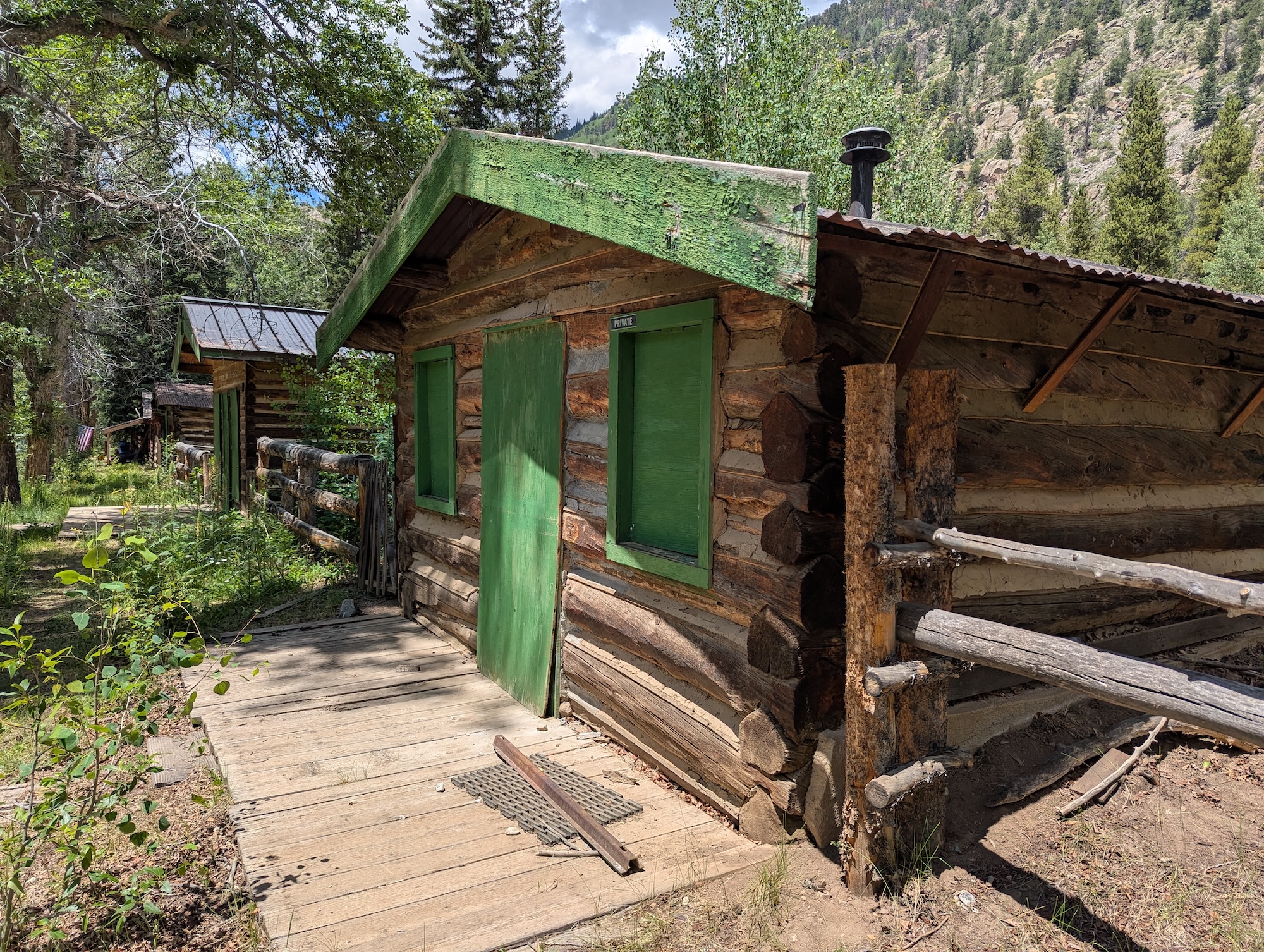
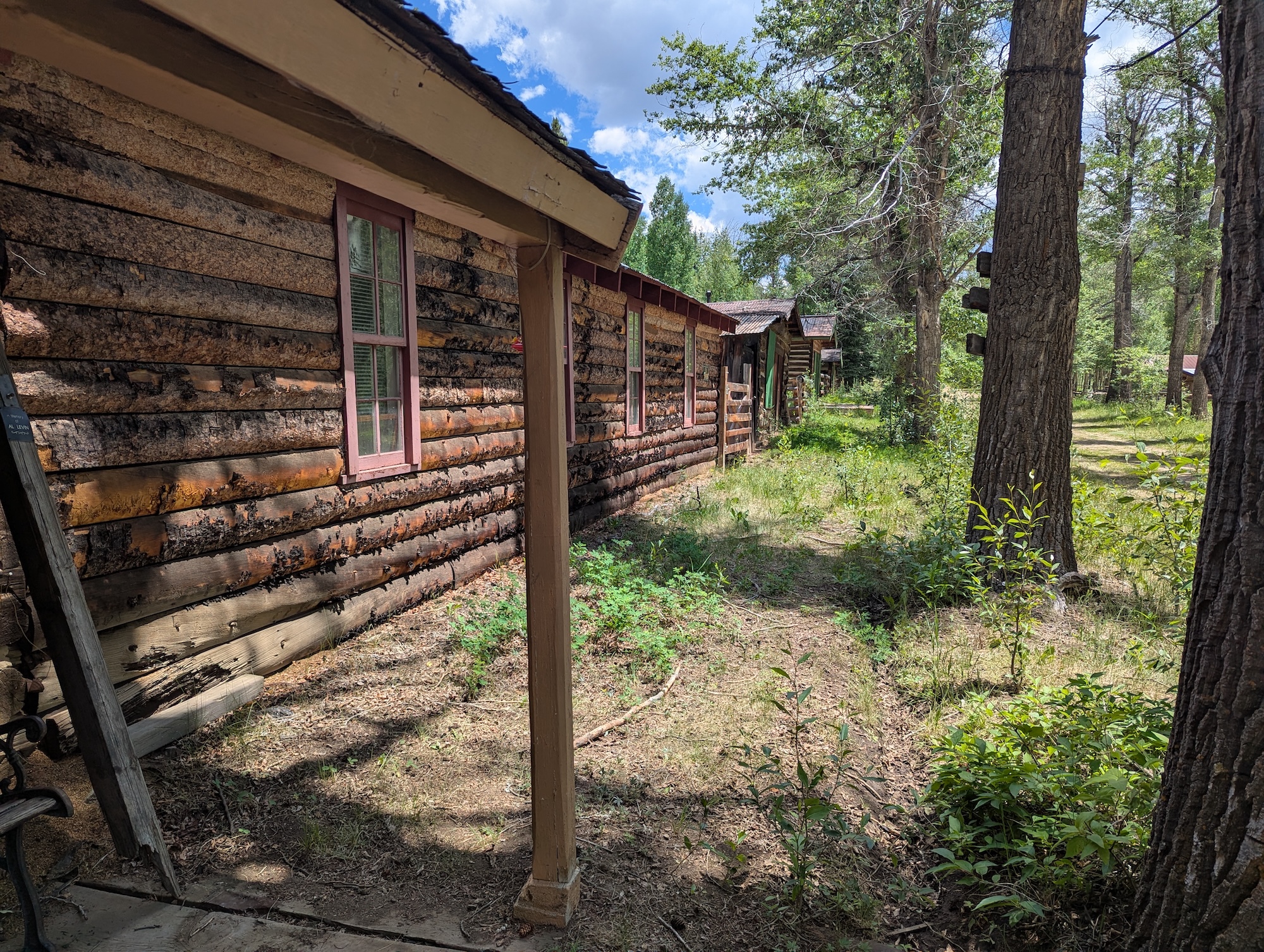
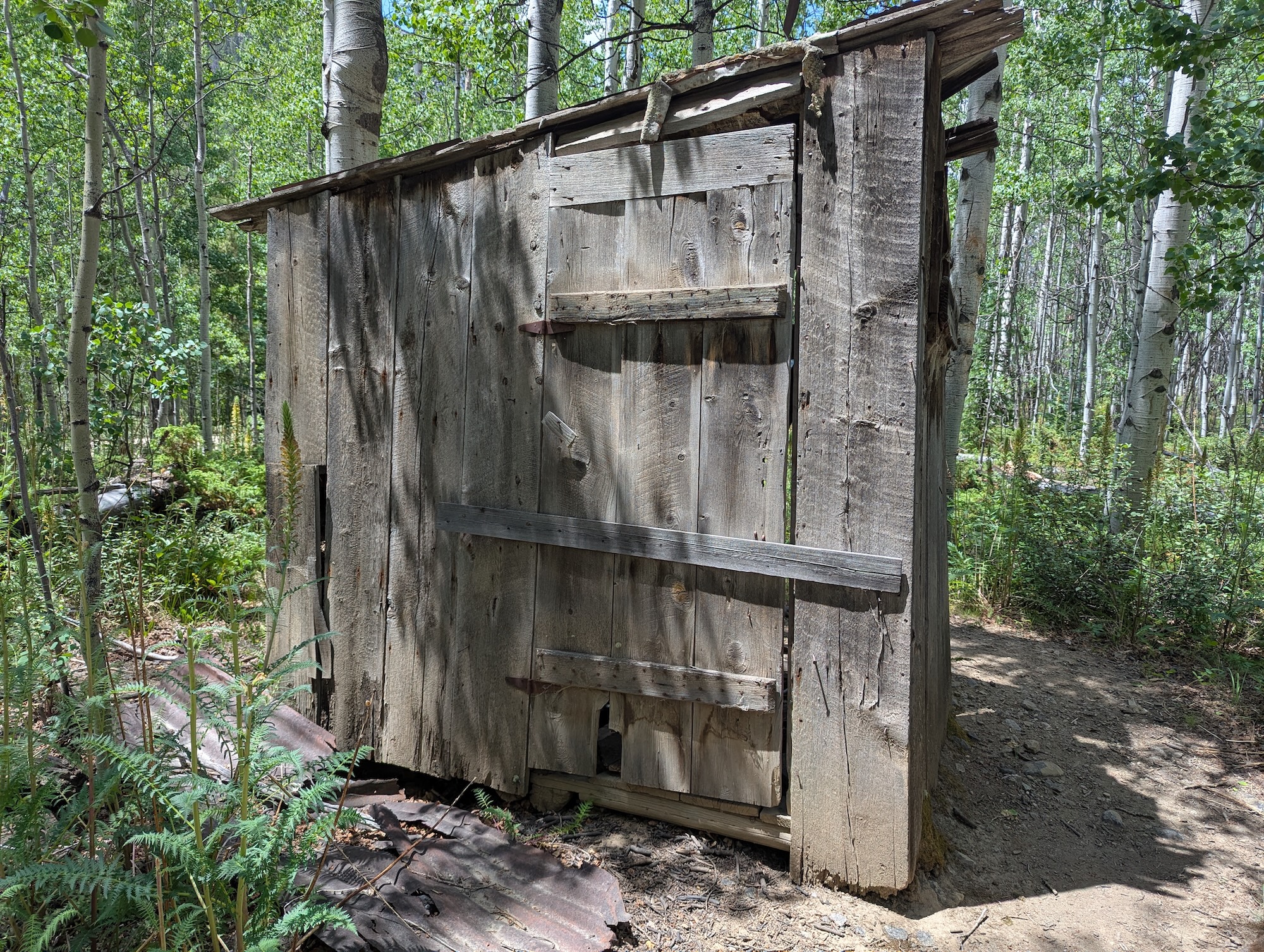
One hundred fifty years ago, the land was home to ranchers and homesteaders rather than miners. While the Clear Creek Canyon had been districted for mining, the first wave of prospectors swept through and left. They were looking for gold at the time, and while lead and pyritous iron (an indication that there might be silver) were present, they were either overlooked or deemed of little value and discarded.
Thirty miles north in Oro City, despite being named for the gold it produced, placer gold mining was playing out. However, in 1877, miners realized that the troublesome black sand that had been clogging their sluice boxes and subsequently discarded was actually a valuable lead carbonate ore that contained silver. This led to a rush of new prospectors moving to the area to mine silver and lead, and the town of Oro City was renamed to Leadville. It only took two years before Leadville became one of the world’s largest and richest silver camps, its population booming to over fifteen thousand by 1880.
Not until this time, nearly fifteen years after prospectors had picked through the Clear Creek Canyon and left again, did anyone remember the district and its promising potential for wealth. In 1879, prospectors returned to look for it.
An 1880 article in the Carbonate Chronicle told the inspirational story of two such prospectors, named Curley and Babcock, passing through the Clear Creek Canyon on their way to “the promised land” of Gunnison, who found their lucky strike after the loss of a pack burro.
“During the night, however, somebody stole one of their animals, and being unwilling to proceed without making an effort to recover the lost burro, they remained in and about the camp all day. During their wanderings up and down the gulch they discovered some very promising float, and around the camp fire that night they decided to spend a few days right there prospecting,” the story tells.
“Their first days’ labors were rewarded by the discovery of a four-foot vein of galena outcropping from the surface. They followed it in some distance on an incline, and believe that they now have a genuine bonanza.”
The news of this discovery spawned a boon of treasure-seekers swarming into the area to scavenge for their own bonanza, “looking for the precious.” Settlements were established in succession up the canyon in line with new ore discoveries; the first was Beaver City, then Vicksburg, Silverdale, Rockdale, and Winfield.
By 1881, Vicksburg already had several saloons, stores, and a post office. By 1882, the town swelled yet more to over forty establishments, including hotels, boarding houses, livery and blacksmith, billiard halls, and a school.
As hummingbirds swoop past my head in a competition for the feeders, Ed tells me of one such establishment, Peck’s Place Bar and Saloon, that operated a couple of cabin rows over from his own. In its heyday, the bar featured “three pool tables and five spittoons,” the success of the establishment being judged by the number of spittoons it had. I look in the direction where he is gesturing, but can see only a thicket of trees where the bulk of the town of Vicksburg used to be. Only a single lane of cabins remains, but the trees are everlasting.
The original town’s residents brought in the balsam poplar trees, hauled on the backs of burros, and planted them all along the main street. The trees were fed by water flowing through a hand-dug trench, diverted from a tributary to the north of town. The trenches ran through the entire grid of cabins, bringing fresh, cold mountain water to residents, and also served to keep food cool in “refrigerator” boxes. Even though the trenches are dry now and overgrown with grass, Ed says, “You don’t know just how much water you can flow through a ditch until you do it.” It must have been something remarkable to see.
Ed’s uncles worked for the Denver & Rio Grande railroad (D&RG) near Leadville, and entertained themselves by counting the miners coming down from the Matchless Mine on Fryer Hill at the end of a shift. They counted up to eleven hundred at a time, with just as many passing them back up the hill since the mine operated on twelve-hour continuous shifts.
Little did anyone know at the time that the Silver Panic of 1893 would close many mines and plummet the wealthy Leadville silver barons into poverty, some dying penniless.
Vicksburg suffered its bust sooner. The area ores were of a low grade and insufficient quantity to sustain extraction. By the winter of 1883-84, after only a few years of meager profitability, mining along Clear Creek declined. The winter was described as being “very dull at the moment,” as the best mining properties had not been worked all season up the canyon. The post office ceased delivering mail, billiard halls and saloons closed their doors, and many of the area residents left, leaving only a skeleton crew of services keeping the town alive.
Despite the decline in available conveniences and services, efforts were made to lure vacationers to the town with the prospect of renting or buying cabins on the cheap for a summer destination. Descriptions were sleepy, yet optimistic.
“Miss Resling keeps the Clear Creek [boarding house]; Mr. R. P. Walker the mountain house. A few other citizens are hibernating. The saloons and billiard rooms are closed, but the hall of the Young Men’s Christian Association has been turned into a Young Men’s Card Association. Several families live in the village, and an excellent turkey supper served by charming hostesses at Shepherd’s proved that there is still hope for Vicksburg.”
The entire town would have closed in that year if it had not been for the Twin Lakes Hydraulic Gold Mining Syndicate, which purchased a project to build a water diversion flume from Clear Creek to Cache Creek in the next valley over to the north. Manual laborers were hired to dig four miles of ditch with pickaxe and shovel, then tunnel through the ridge separating the two valleys—a total of eight miles. At least forty ditch diggers boarded in Vicksburg, with more lodging in Beaver City downstream.
As interest in mining along Clear Creek declined, the use of the area shifted naturally to outdoor recreation—hiking, fishing, camping, and sightseeing—encouraged by the U.S. Forest Service. The “See America First” campaign, first coined in the early 1900s, gained traction during the First World War. With access to Europe limited because of the war, Americans were instead encouraged to vacation at home in the United States, with unlimited possibilities to explore.
As further encouragement, the Occupancy Permits Act of March 4, 1915 enabled the U.S. Forest Service to issue permits for National Forest lands to be used for recreational purposes—summer homes, hotels, stores, and other tourist conveniences. Shortly following this, the Federal Aid Road Act of 1916 allotted funds to improve roads for automobiles.
The Twin Lakes region was touted as “the Switzerland of America,” noting the similarities in beauty and terrain. Vicksburg, in particular, was advertised as an ideal place for Leadville residents to consider for summer vacationing.
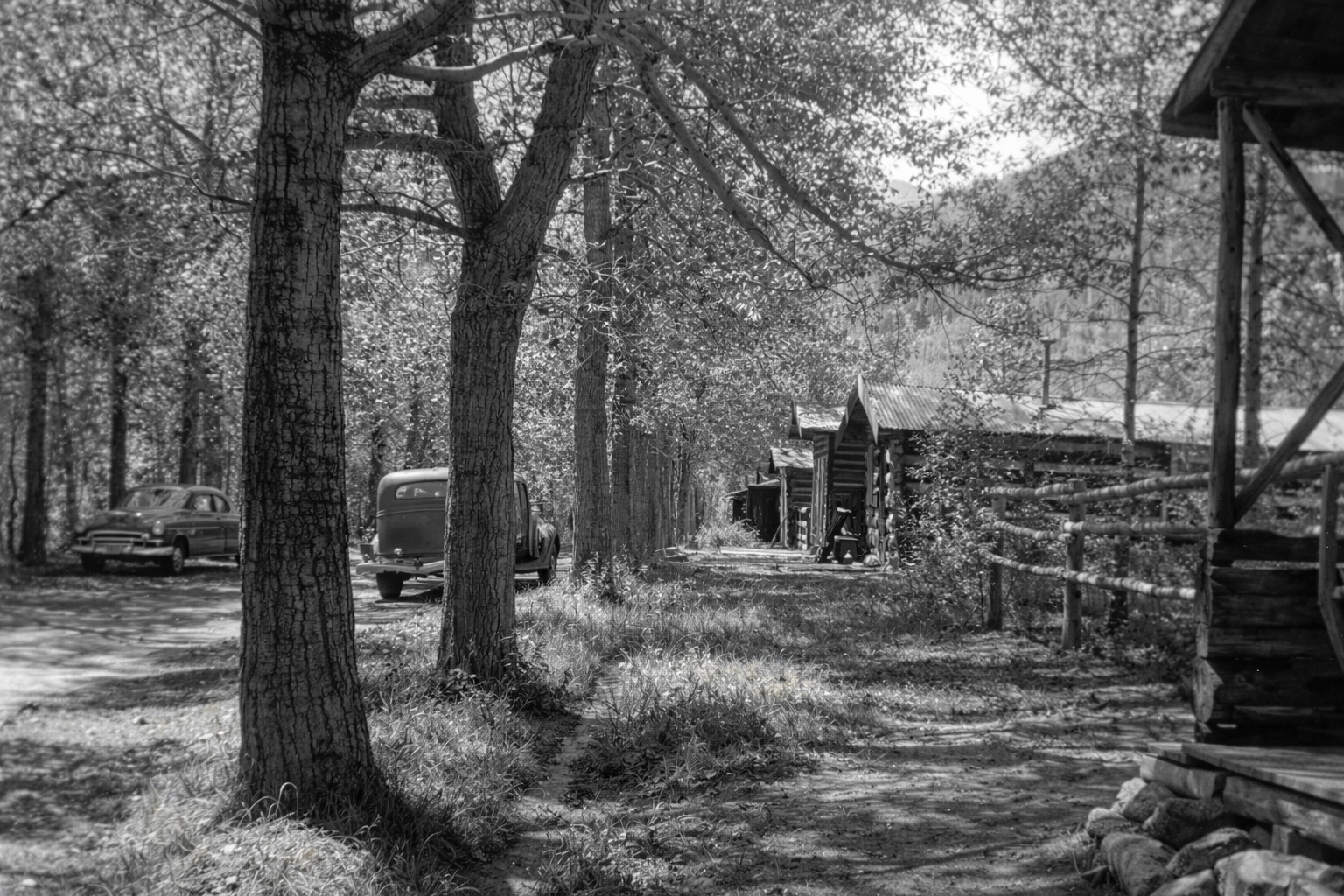
“Those who have visited Vicksburg pronounce it as one of the most beautiful spots they have ever seen. ‘What an ideal place for a cabin!’ or ‘How delightful it would be to spend the summer here!’ are exclamations made by practically all of those who have passed thru the even lines of balm of gileads and aspens which border upon the former main street of this ‘ghost hamlet.’”
The advertisement from 1917 tempts the reader with possibilities for the development of gardens and lawns, picnic pavilions, tennis courts, and other modern conveniences.
I don’t see any of these things around me as I walk through Vicksburg today, but I wonder if the lure of a peaceful mountain getaway is what brought Ed’s family, originally from Leadville, here.
Ed speaks to me of days bygone, of his childhood running for miles through the mountainside and fishing in the lakes and rivers. Of rugged mountain men, “Arnold Schwarzenegger types,” who endured through hardships, hunger, and freezing winters. Of a man who refused to leave his cabin despite a tragic fate rather than give up his way of life. Speaking of it brings him to uncontrollable tears. The sorrow stems from a way of life that no longer exists.
I feel like I’ve just collected another rare gem by getting to talk with Ed for a while. The sadness that he feels is genuine; I can feel it too. He is the last of a generation living in the old ways, and I wonder who will be left to tell these stories after he is gone.
Taking a walk through an abandoned place tells a story. The voices reach out as echoes of the past to show us the ways that real people lived their lives, what they valued and yearned for, and the hardships that they endured. It shows us ways of life that are no more and have become just a memory, even forgotten. We keep those stories alive by searching for them, reaching into the past and digging them out of the ruins, reflecting on how all that we see today is constructed on what came before.