
When in Rome, Drink From the Nasoni Like a Roman
A simple drinking fountain reveals how water shaped Rome—from ancient aqueducts to a modern ritual hidden in plain sight.
The sound of water
I am really quite lost. Each street has begun to feel strangely familiar with its repeating patterns of pizzerias, cafés, small boutiques, and tucked-away hotels. I’m left searching for a landmark, anything to give me some sense of bearing. Eventually, I yield to the flow of foot traffic and follow where the locals seem to be going.
When in Rome…
The twisted puzzle of Roman backstreets leads out into a sunny piazza, where the open square offers a place to sit and rest my tired feet. Dozens of other visitors have clearly had the same idea—they are milling about, taking pictures and lounging on church steps. Café tables spill into the streets where lazy diners sit sipping wine, the white tablecloths blindingly bright in the midday sun. Occasionally, the shriek of a child or a peal of laughter rises above the chatter of the crowd.
Beneath all the bustle of conversation and activity is the sound of water trickling.
My eyes trace to the extravagant fountain that sits like a prize at the center of the piazza. It’s unapologetically lavish like so many other water features across the city, gleaming in all its marble and travertine glory. At the center of the fountain, a towering Egyptian obelisk rises from a pedestal guarded by grotesque figures frozen in stone—sea creatures and dolphins with piercing eyes, razor teeth, and serpentine scales. Streams of water spew from the mouths of the stone creatures, sparkling briefly in the sun before splashing into the marble basin below.
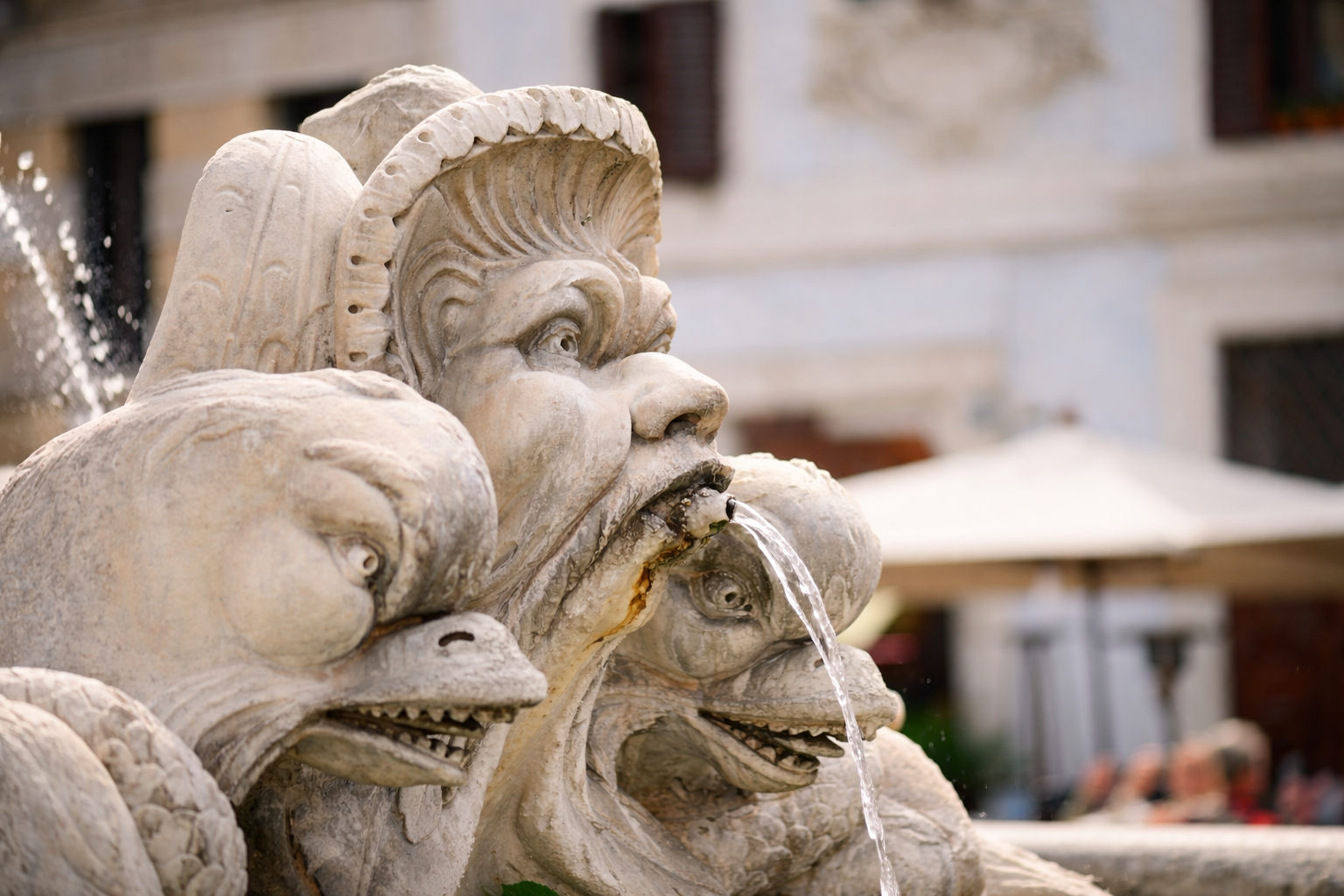
Visitors linger at the edge of the pool and toss coins into the water, wishing for all the things that are worth wishing for—love, good health, adventure, or fortune. Places like this make you believe those wishes might just come true.
Beyond the fountain, at the edge of the square, the massive Corinthian columns of the Pantheon rise above it all, where pigeons flutter high in the rafters. The piazza is brimming with visitors who wait for a chance to step inside the domed temple and stand in the soft light descending through the open oculus above, marveling as the ancients did at that gateway to the heavens.
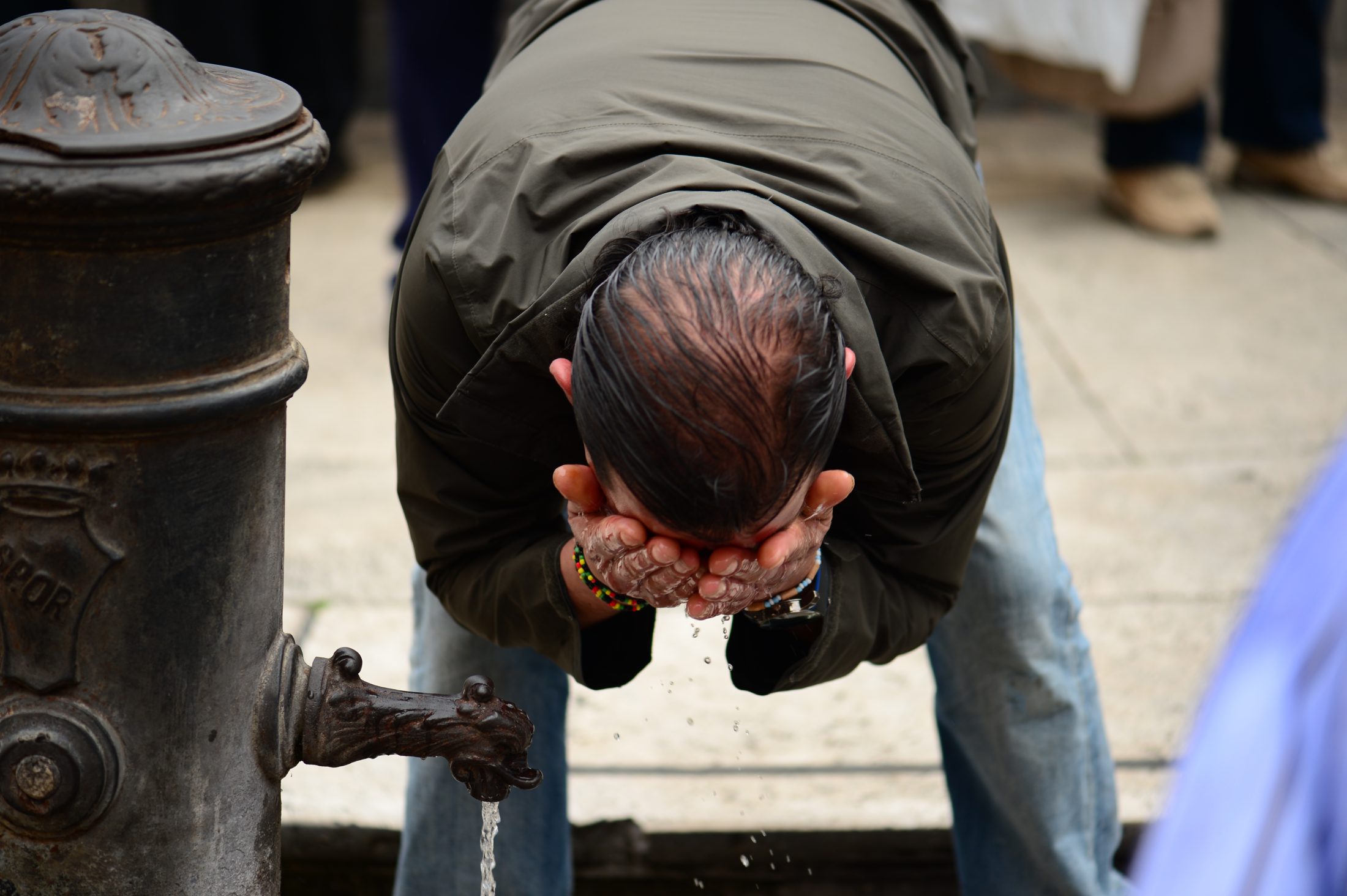
Yet, despite all of these grand attractions within reach, a humble little three-spout fountain with a constant trickle of water is the most visited landmark in the piazza. It’s a different kind of fountain than the grand one beside it, one not for ornament but for drinking—the Fontanella Tre Cannelle (“Three Spouts Fountain”)—an unassuming waist-high cylinder made of cast iron, with spouts on three sides. From each spout, a trickle of water spills down into a grate where it disappears beneath the street.
Nearly everyone passing by stops to fill a bottle, wash their hands, or splash the cold water over their faces. The water is clear, fresh, and delicious to drink. The fountain never stops running, day or night, and there is a comfort in that constant.
Across the city of Rome, thousands of similar fontanelle run continuously, spilling clean water into the streets for drinking or washing. Many have a simple spout that resembles the shape of a curved nose. Romans call them nasone—literally “big nose.” They are among the most common pieces of infrastructure in the city, and also among the most beloved.
Drink like a Roman
The sound of water in the streets of Rome is ubiquitous. It’s an always-present ambience behind the chattering of voices, honking horns, and heels clicking on cobblestone. The effect isn’t conspicuous, but the constant soundtrack of splashing, trickling, and dripping feels cool. I welcome the sensation on this hot Mediterranean day roaming through a city almost entirely constructed of concrete and stone.
The water in the fontanella looks inviting to my parched throat, but I can’t see a practical way to drink from it. I don’t particularly want to crouch on my knees or put my mouth under the spout to drink.
As if in response to my puzzlement, a local man steps up and prepares for a show. Throwing a wink in my direction, he puts his finger under the spout to plug the opening, and a stream of water arcs out of an inconspicuous hole in the top. With precision that could only come with practice, he aims the stream of water at a group of tourists standing just within reach and gives them a good wetting. The group is startled, but when they turn to look all they see is a man bent over, casually taking a long drink from a water fountain.
With engineering so simple yet so clever, the function of the nasoni becomes clear, and the mystery of how to drink from them is solved. I acknowledge a mental gratitude to the man for letting me in on this fascinating cultural secret. He throws me another wink, wipes his mouth with the back of his sleeve, and then goes along his way.
In that way that happens, once my eyes were opened to the ritual, I began noticing it everywhere across the city. Locals, barely altering their stride while passing by, lean in for a quick drink and then continue on their way. The nasoni have become so woven into daily life that they are simply accepted and used without any fanfare.
After counting dozens of nasoni before finally losing track of the number, I wonder how there came to be so many in literally every corner of the city, from the grand piazzas down to the quiet, humble alleyways.
The answer threads back through centuries of Rome’s history, further than one might assume.
Rome: a city built on water
When I think of Rome I think of water.
I think of ancient aqueducts and the sophisticated engineering that we still marvel at today. I think of an ancient city overflowing with water, channeled for miles from distant springs in the Apennines Mountains into the city, generously feeding thousands of fountains, gardens, artificial lakes, and private swimming pools. I think of the nymphaeum, the lush watery sanctuaries built to lure and please the water spirits.
And of course, I think of Roman bathhouses, hundreds of them, and the grand baths of the Caracalla and Diocletian that could accommodate thousands of people at once—as much a part of daily life for its social value as for cleansing and health. All of these features must have consumed vast amounts of water every day.
Beyond the daily were the monumental staged naval battles of the naumachiae in arenas flooded with tons of water, enough to float dozens of full-sized battleships with thousands of doomed men fighting to their deaths. Amphitheaters could be filled and drained rapidly to satisfy the appetite of the crowds with both water-based and land-based entertainment. It was an extravagant watery spectacle that required advanced engineering that surpassed even that of the aqueducts.
And just as important as the fresh flow in, the Cloaca Maxima managed the flow of water back out of the city, flushing waste into the Tiber River. Even the sewage system was acclaimed for its marvelous engineering.
“The extraordinary greatness of the Roman Empire manifests itself above all in three things: the aqueducts, the paved roads, and the construction of the drains,” spoke Dionysius, of Rome. Rome rightfully earned the name Regina Aquarum, meaning literally “Queen of Waters.”
But the water would not always flow. Then came the Gothic War of the sixth century, with wave after wave of Ostrogoth sieges on the city. The invading armies knew that to hurt the water supply would hurt Rome, and systematically vandalized the aqueducts that fed water to the city. Rome’s illustrious water culture would collapse almost overnight, and along with it its population, sanitation, and health. After the city fell, it would take until the time of the Renaissance—almost a thousand years later—to recover even a portion of what was lost.
The ornate fountain before me at the entrance to the Pantheon gleams white in the midday sun, and bears the dragon symbols of it’s patron, Pope Gregory XIII. It was one of the first to be erected under the papal patronage, when the popes sought to restore Rome to the glory of its ancient days and establish it as the premier center of art and architecture, repairing the broken aqueducts and commissioning opulent water features in prominent, high-visibility areas of the city.
For the glory of Rome, yes, but perhaps more for the glory of those who had them built. The ancient practice of euergetism, popular in Imperial times, revived with the papal patronage. Grand gifts to the city by the wealthy elite were often done under the theatrics of goodwill and civic duty, but ultimately served to reinforce power structures and social status—seemingly more for public recognition than the greater good. Little was done to address the underlying water infrastructure that lay, still broken, beneath the streets.
The majority of the population didn’t benefit from these grand new fountains, and instead continued to rely on wells, cisterns, and even the polluted Tiber River for water to drink. The river, prone to flooding, backed sewage into the streets and contaminated drinking water sources. Diseases held Rome in its grip—cholera, malaria, typhoid.
It would take centuries more work to truly restore Rome to its former days of glory and reputation as Queen of the Waters.
The birth of the nasoni
By the time Italy became a unified nation and Rome had been declared its capital, the city was facing the effects of a rapidly growing population. People were dying of disease. Citizens needed access to clean water urgently. To meet the needs, the existing infrastructure would need a complete modernization overhaul.
It was then, in 1874, that the mayor of Rome established the framework for a new public water distribution system, and the first drinking fountains were installed across the city. The fountains weren’t like the ornate water features of the Renaissance, Baroque or even antiquity. They were strictly utilitarian—cast in iron, durable, simple to deploy, easy to maintain, easy to drink from. The consistent flow of water through the network also kept water from stagnating in the pipes and vented the system.
By the early twentieth century, there were already thousands of them in neighborhoods all across Rome, almost twice as many nasoni as in the city today, providing drinking water to residents and travelers without discrimination.
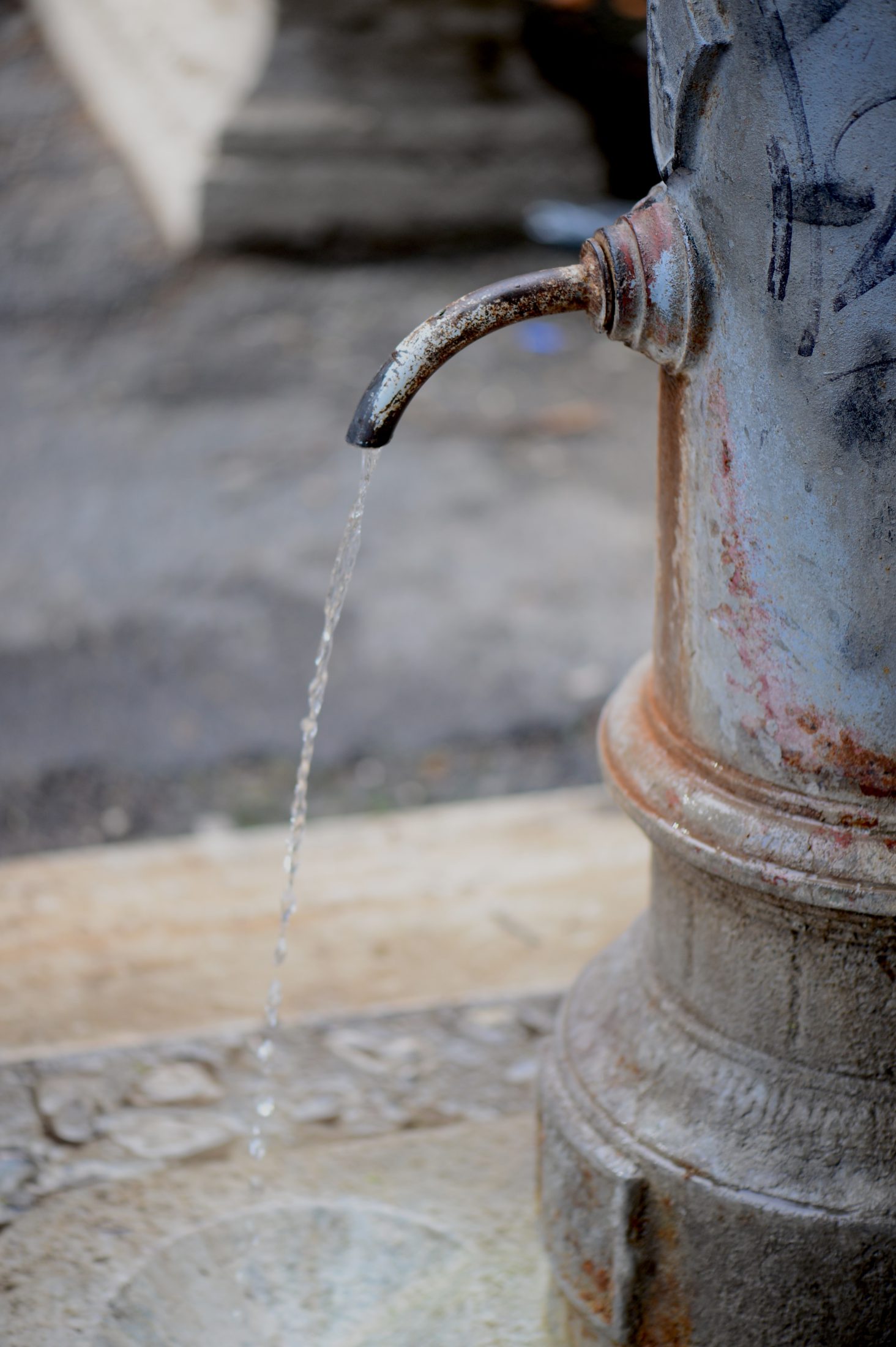
The Rome that I see around me has gone through centuries of rebuild, reinvention and change. Each distinct period of history has left its own fingerprint on the city. Rome is many things all at once. It is the crumbled ruins of its ancient past, that still emerge like skeletons from the ground. It is patterned mosaics and murals, painted angels and saintly figures in white stone. It’s Carrara marble, travertine limestone, terracotta, and stained glass. Mausoleums, catacombs, aqueducts, and amphitheaters. It’s peeling layers of old paint, each layer showing a bit of the one beneath it.
Instead of feeling chaotic, the resulting form is beautifully cohesive, and so recognizably Roman.
The nasoni have found a natural home within this landscape. Despite an age gap of three centuries, the nineteenth century nasone that sits next to the Mascherone di Santa Sabina fountain on Aventine Hill is not intimidated by its older neighbor and looks perfectly in place there.
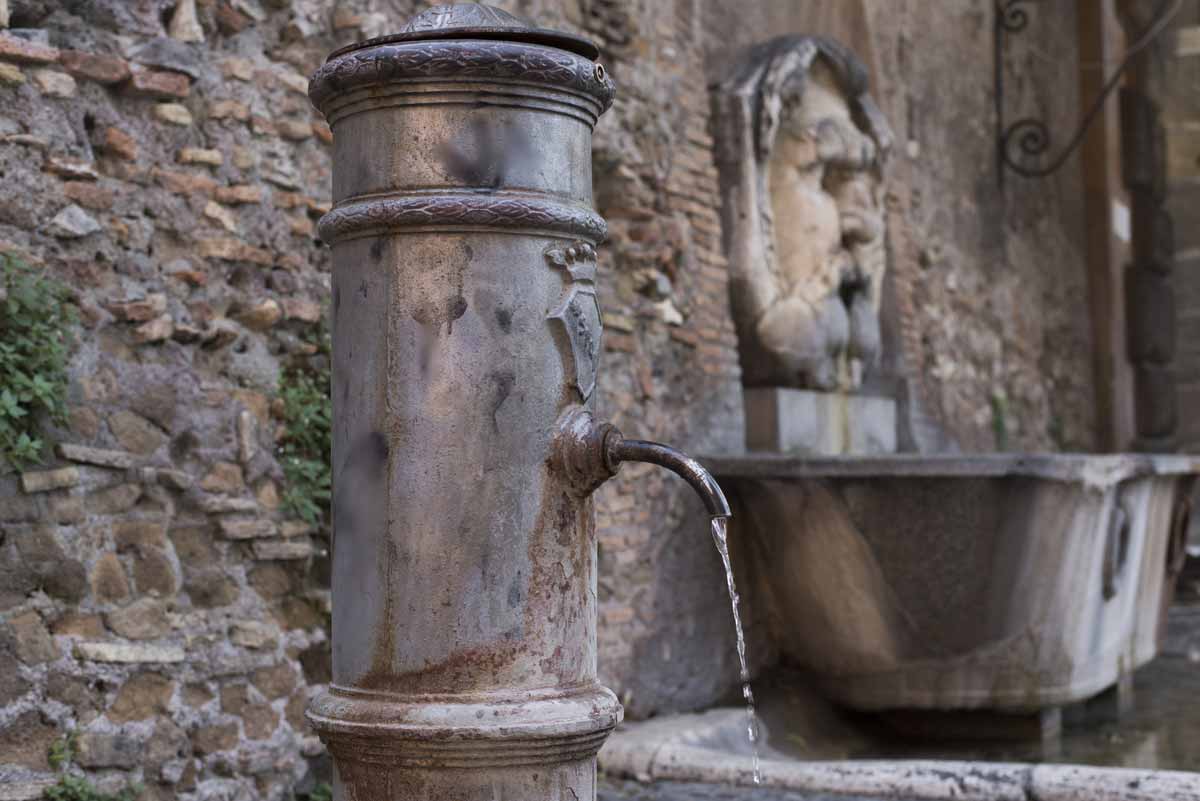
The nasoni have become a symbol of Rome, and are as beloved by the Roman people as the grand fountains of old history.
The notable nasoni
For travelers like myself, the nasoni are revelations.
In other cities, water comes with a price tag, purchased in plastic bottles from convenience stores or cafés. But in Rome, fresh drinking water flows unrestrained and free of charge. Beneath my feet, an eight-thousand-mile-long arterial network of subterranean pipes and valves delivers water into every corner of the city. The fountains surface it to the streets, as cold and fresh as it was bubbling up from the distant mountain spring.
I’m reminded of water bottling companies that capitalize on the appeal of fresh mineral water from mountain springs, bottling it in expensive packaging and distributing it at a premium. But here, in Rome, water of the same quality is available for free. To make sure that it is safe for everyone to drink, water across the entire network is monitored daily—and sometimes even hourly—for contaminations from bacteria, heavy metals, and chemicals. For the environment, it makes sense; it limits reliance on bottled water and reduces plastic waste.
Spend enough time walking through Rome and the nasoni begin to feel like the most ubiquitous and dependable objects in the city. There they are—in parks, along roadways, near world-renowned landmarks that attract masses of visitors, at the end of quiet alleyways, and in hidden courtyards. I never have to search for one. The nearest nasone is always around the next corner, easy to spot with their big noses. They are as common as couples showing displays of affection in Rome (which, I need not add is a very common sight).
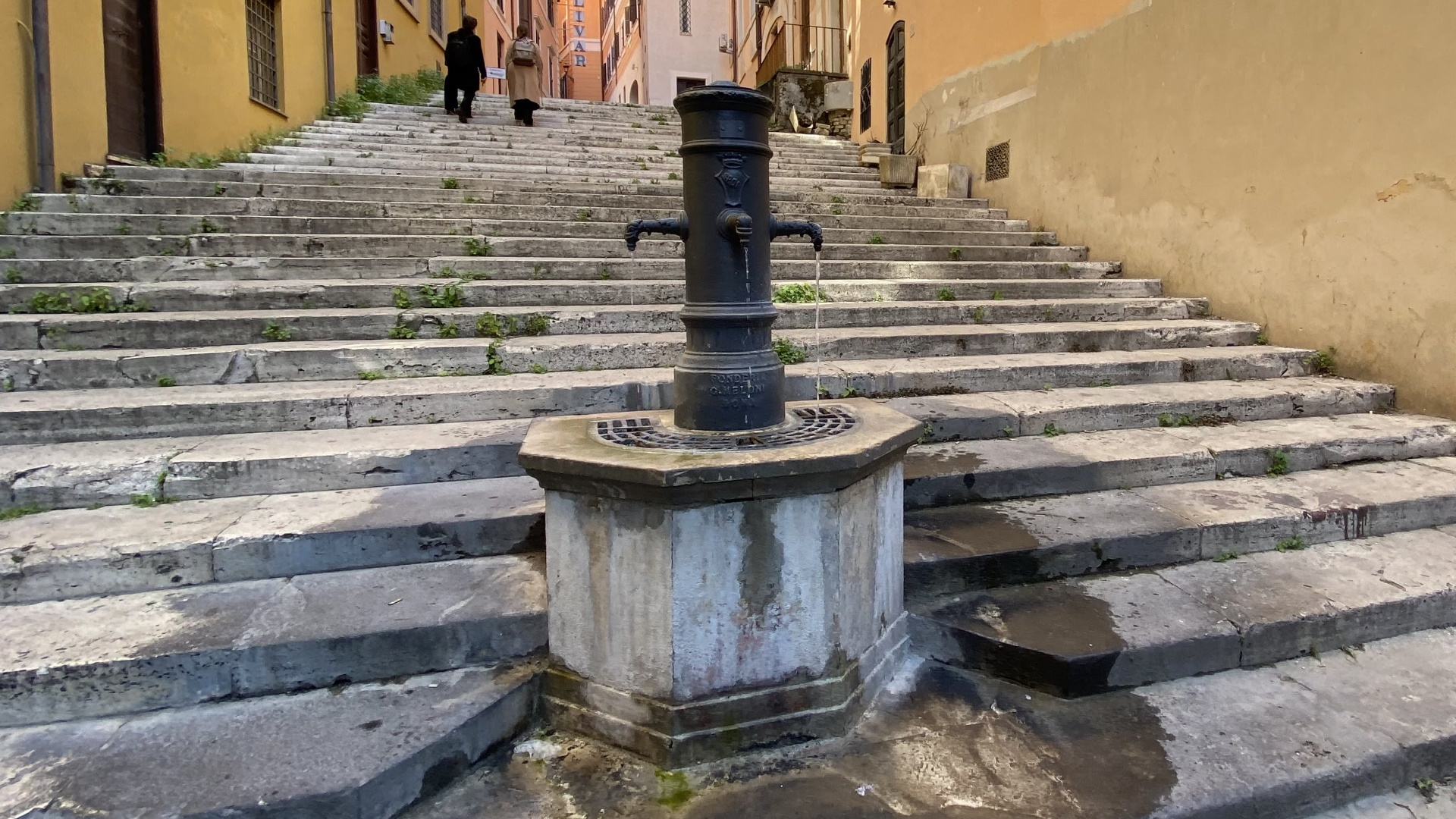
But finding the rarer variations becomes a treasure hunt, my own private game that takes me all across the city into secret, special places that I otherwise might never have found. Less common and quite rare are the Fontanella Tre Canelle—the more ornate ancestor of the nasoni with three spouts in the shape of dragon’s heads, a nod to the heraldic symbol of Pope Gregory XIII. These were the original design at the birth of the fontanelle. Only a few remain along Via di San Teodoro, not far from the Roman Forum, the Piazza della Rotonda, in a prominent position in front of the Pantheon, and the Via della Cordonata, which is particularly photogenic framed at the bottom of the avenue’s long cascade of steps.
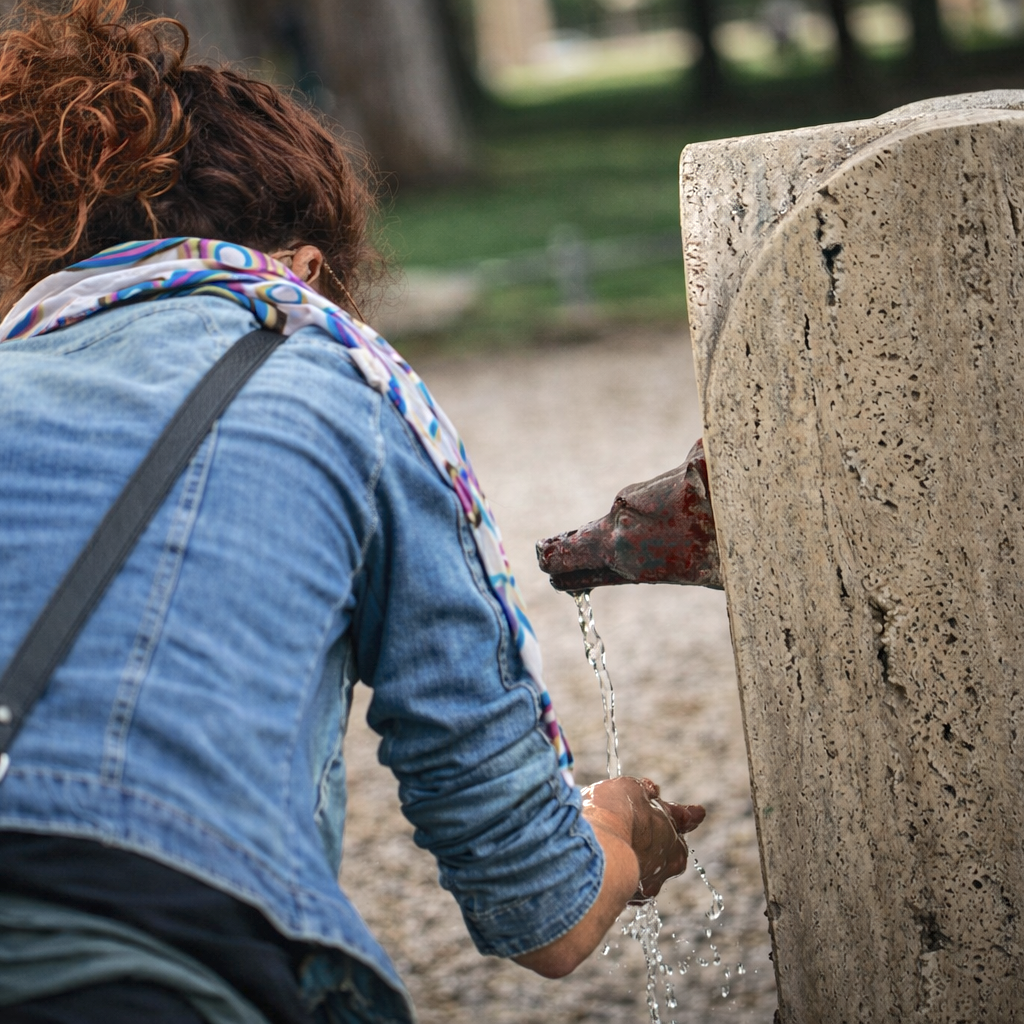
Though they look as if they’ve been around since the times of the emperors, carved from travertine and decorated with a wolf’s head spout made of brass, the della Lupa imperiale (“of the Imperial She-wolf”) fountains are the newest introduced in the 1920s. Transport them back in time by two thousand years, and I doubt anyone would notice anything amiss. Around seventy Lupa fountains can be found throughout Rome in its many parks. I spotted one under the cool shade of the tall orange trees in the picturesque Giardino degli Aranci on Aventine Hill.
Uncorking the noses
The water of Rome’s fountains feels eternal, but the increasing modern reality is that it is not as abundant as it once was. Rome has seen periods of drought before, but historic incidents have never been as frequent or extreme as what we are seeing today due to the effects of climate change. Baseline temperatures are trending hotter, 1.4 degrees Celsius above average in Rome, and the temperatures continue to climb. Couple this with a dramatic lack of rainfall and, more importantly, snowmelt in the mountains—both of which are critical to recharge the springs—and the result is a serious water shortage for Rome.
This happened in 2017 with the worst drought seen in decades, and again in 2022. Visible heat radiated from the cobblestone streets and off stone buildings, and there were few breezes to offer relief. The air across the urban landscape hung sluggish and still. The water level of the Tiber River dropped so dramatically that it laid bare portions of the river bed, exposing pollution, trash, and stagnation.
Rarely was there more a need for water than during that period of excessive heat, but still, Rome’s fountains came under threat. The jubilant soundtrack of the city would dim for a time when the state closed the flow to a portion of the nasoni in an effort to conserve water. Despite being well-intentioned, pointing fingers at Rome’s nasoni was a misguided effort. In truth, the nasoni only account for about one percent of the total water in the city’s distribution network. The real problem lies in water inefficiency, specifically the water lost through half-century-old leaky pipes. Shockingly, nearly half of the water entering Rome disappears before ever reaching the fountains. The infrastructure has been described (perhaps intended humorously but the image is still a sobering one) as “our colander network.”
Silencing the nasoni immediately sparked public debate and outrage, out of which emerged multiple campaigns to “Uncork the Noses.” The outcry by the public shows how beloved the iconic nasoni are to Romans, and an important part of the city’s identity. To take a piece of that is to take away a piece of Rome itself—a tragic and unnecessary amputation.
Almost as soon as the nasoni were corked they were uncorked again, and city officials remain hesitant to take that drastic action should they again experience a drought as severe as the one in 2022. For now, locals and travelers can still enjoy their fountains during times when they are needed most.
The soundtrack of Rome
Dusk has fallen on my final night in Rome, and I wander through the backstreets of Trastevere one last time to take in its essence. I want to firmly establish the memory that I will take with me when I leave.
Above my head, clothing dances in the warm evening breeze, forgotten on laundry lines strung across windowsills. The cafés are all closed now with their lights dimmed, but through the windows I can see shelves stacked high with white cups, washed and ready for tomorrow. Men in white aprons stand outside open kitchen doors in back alleys, smoking a last cigarette before finishing up for the day. Only a few people are still walking the streets, hurrying off to unknown destinations, their forms casting long shadows across the cobblestones in the bright glare of car headlights.
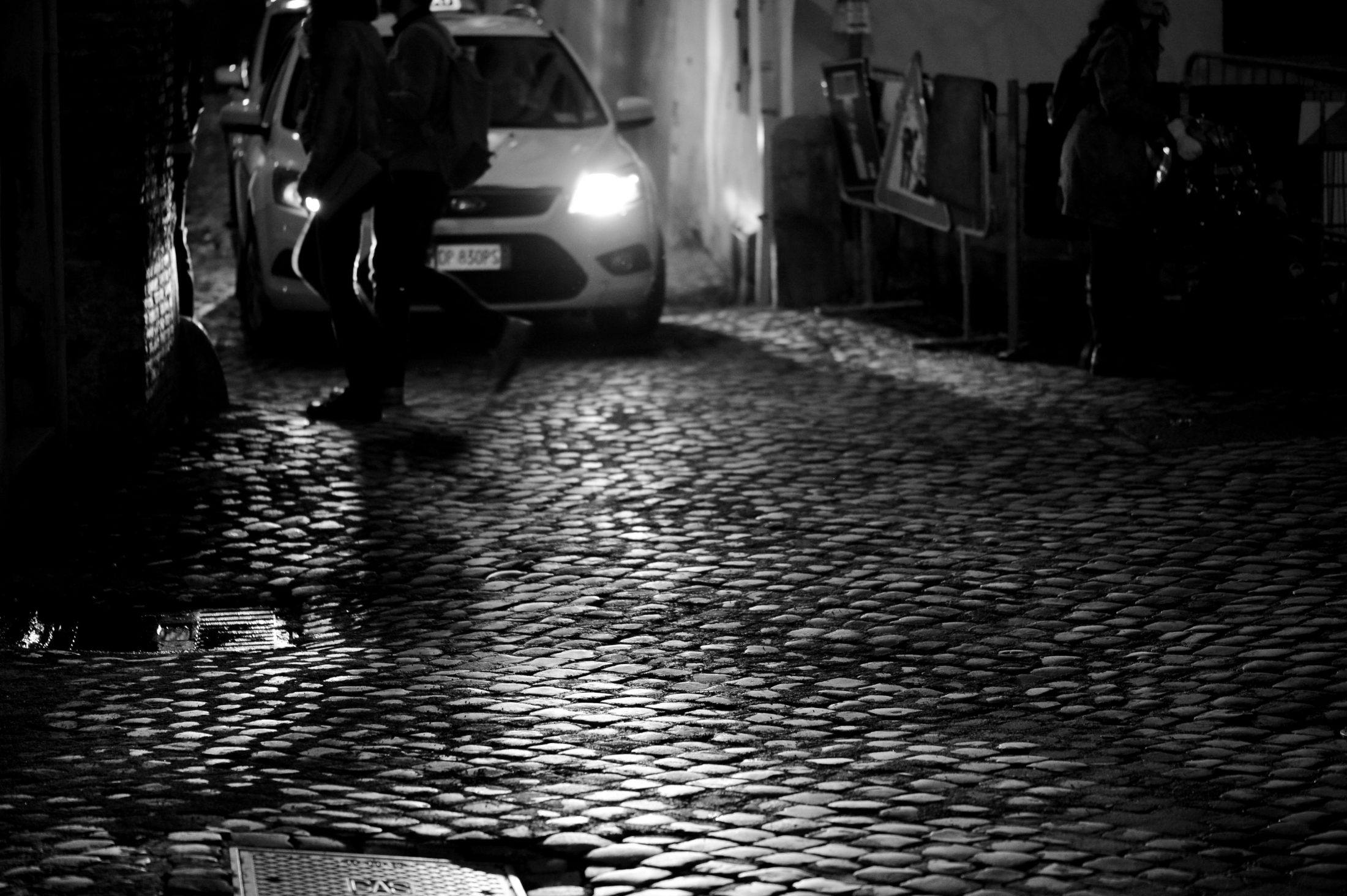
The courtyards and narrow alleyways are finally quiet.
But in the silence I can still hear the sound of water. It’s always there, because the fountains never stop running. It’s the same sound of gently running water that has been the soundtrack of this city for millennia. In a city famous for its monumental architecture and grand history, the nasoni seem almost invisible, though hidden in plain sight. They are not celebrated with plaques or guidebooks. And yet they embody something essential about Rome. They are part of Rome’s identity.
I pause and drink for one last time from a nasone in a quiet corner of an empty courtyard. The water of Rome is cold and refreshing, and now it is a part of me.