
Gruesome Tales of the Thirteenth Element
At its discovery, the element phosphorus captivated the world with its luminous green glow. But the centuries that followed would reveal its dark side, emerging from the match factories of the Industrial Age.
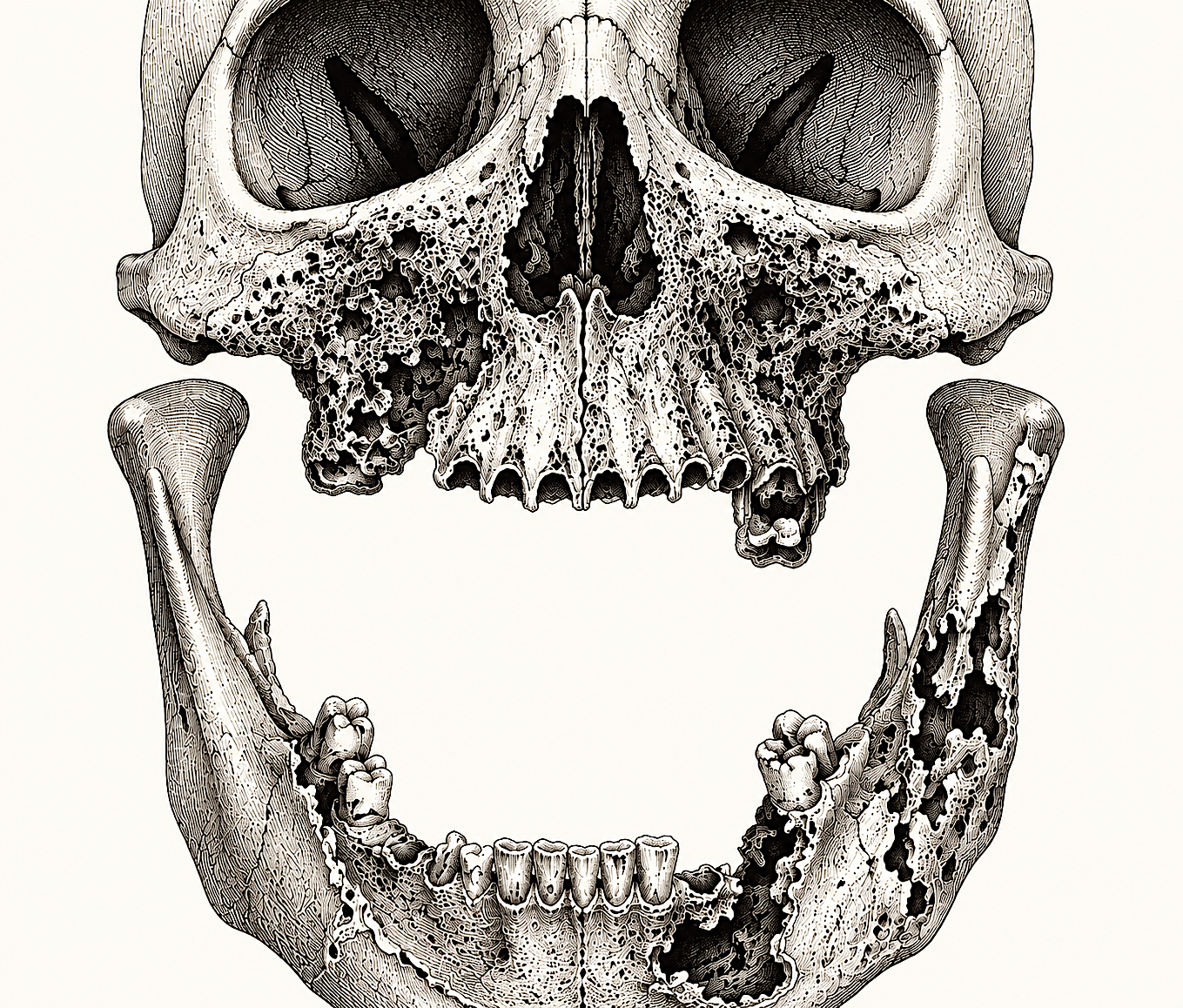
When Hennig Brand accidentally stumbled upon the element phosphorus in his underground Hamburg laboratory in 1669, he could not have known how significant the discovery would be to the world, or what horrors the poisonous substance would unleash in the Industrial Age to come.
Brand was an alchemist in search of the philosopher’s stone, a mythical substance distilled from the natural world that was believed to possess the properties for an “Elixir of Life”—a brew that could restore youth and grant immortality. Almost as tantalizing as immortal life, it could unlock the power to transform base metals into gold, which would surely bring limitless wealth to its discoverer. The quest for the Stone had been long, and Brand was only one of many who sought to find it.
The darkened cellar laboratory stagnated with the smell of ammonia from urine left to putrefy. Brand was convinced that urine—the liquid that came from man that was itself the color of gold—was the secret ingredient that would make him his fortune.
A pale green glow began emanating from the glass retort where the alchemist’s latest experiment was cooking. He had finished boiling the liquid away from the urine, reducing it to a solid that was then superheated by a very hot furnace. The concoction produced luminous white fumes that condensed into a shimmering liquid, before finally cooling into a waxy lump. The substance glowed with a soft light that came from within; it put off no heat, and did not diminish with time.
Brand was certain he’d finally found what he had been searching for. But instead of the philosopher’s stone, the mysterious pale lump that remained in the bottom of the vessel was something else entirely: a chemical element in its purest form, only the thirteenth known to man at the time, and the first to be discovered in many hundreds of years.
The thirteenth element. An unlucky number.
When he revealed his discovery to the world some five years later, Brand called it phosphorus, adopting the name from the Greek god of the planet Venus, the celestial body whose familiar light shone brightly in the sky just before dawn. Those who learned of this kaltes feuer—‘cold fire’—that could shine without an external source were bound by an endless fascination to its mesmerizing green glow—driven to possess it, to study it, to understand it.
In many ways, phosphorus resembled the mythical philosopher’s stone. In the form of phosphate, it exists in all living things on the planet and is critical to life. Within the human body, it exists in the bones, blood, and tissues, and is an essential component for energy production. It’s not surprising then, that Brand found it in concentrated amounts in human urine.
Clinging to secrecy for fear that others would profit from the discovery, the few alchemists who deduced the recipe from Brand hoarded the secret to its manufacture. A fellow German alchemist, Johann Daniel Kraft, found his own fortune of sorts by offering to showcase the substance—for a fee. He would only dangle clues that the key ingredient was “somewhat that belonged to the body of man” without elucidating further, and was eager to claim the invention as his own.
The sticky white substance conjured in chemist’s laboratories was volatile by nature. It had a proclivity for igniting easily—almost too easily—when exposed to heat and oxygen. Singed fingertips and pockets resulted from careless handling, and the flame had to be stamped out quickly to avoid serious burns. The chemist Robert Boyle, in his own efforts experimenting with phosphorus, would document accounts of the burns and blisters experienced by his unfortunate young laboratory apprentice, telling of the dangerous and sometimes humorous stories of hair on fire and holes accidentally burnt in his breeches.
It was an exciting new arena of study for the scientific minds of the seventeenth century. But equally so, the eternal fire had entertainment value. “The sight was [extremely] pleasing, having in it a mixture of strangeness, beauty and frightfulness, wherein yet the last of those qualities was far from being predominant.” Audiences found it endlessly fascinating, and delighted in having their hands and faces painted with the glowing stuff. The curious substance was carried all across Europe to showcase its luminous qualities in the courts of kings.
But it was a short matter of time before the element would turn away from its use as an entertainment device to something far more practical.
The necessity of matches
By the middle of the nineteenth century, the households and industries of Europe were striking eight hundred million matches every day, providing the necessary spark to light their pipes and cigars, candles and lanterns, stoves and hearths, furnaces and boilers.
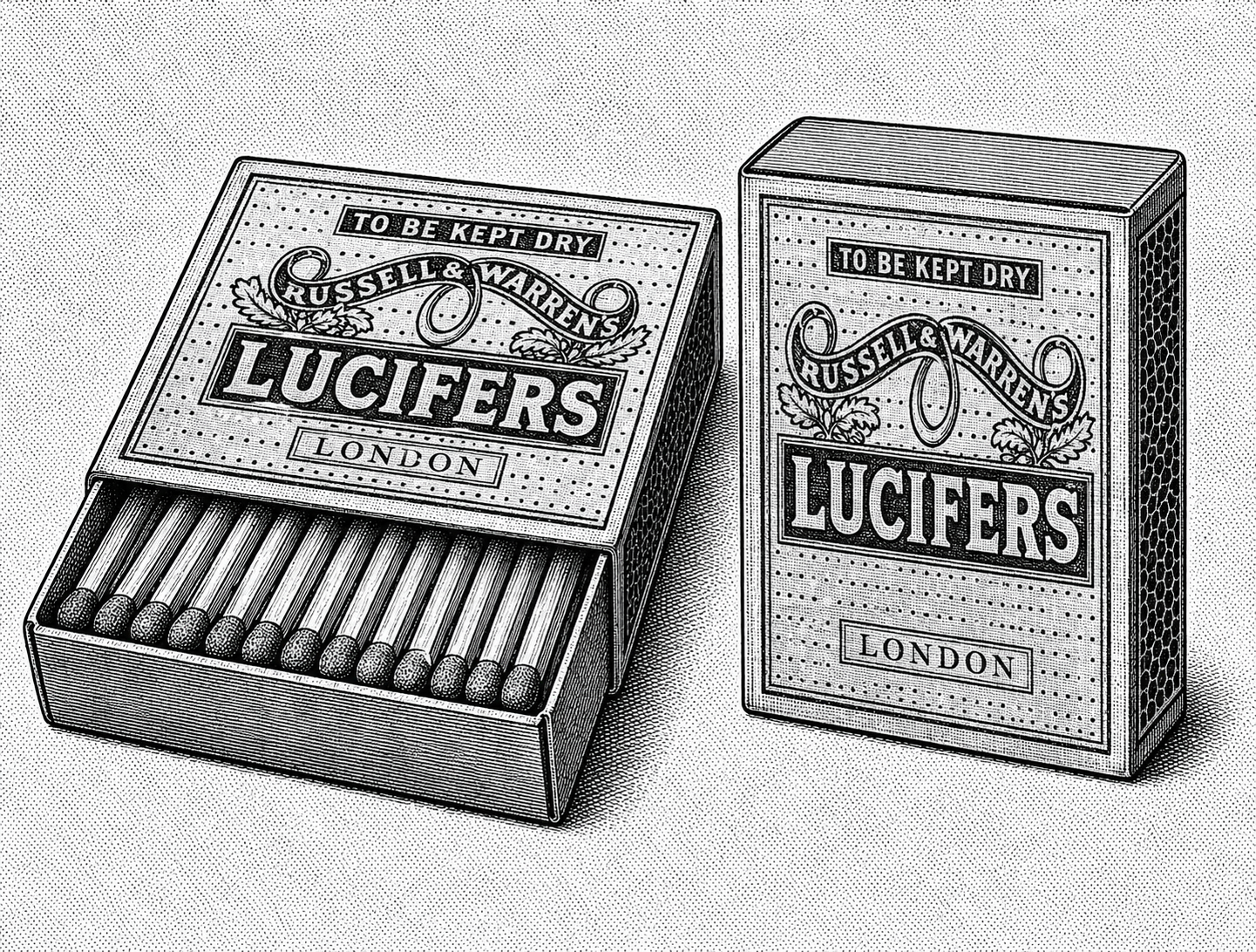
Matches were not yet ubiquitous before the first friction matches appeared in the 1820s. The overwhelming majority of Europeans still relied on traditional tinderboxes containing flint, steel, and tinder to start fires. It was a slow, practiced chore. The technology was in a constant state of evolution as innovators searched for a better way to spark a light. Chemical matches came onto the scene, but they were far too complex for everyday household use. Friction matches bridged the gap between mechanical force and chemical reaction; they were more convenient than any version that had come before because they didn’t need to be held against a heat source or dipped into a separate solution to ignite.
The aptly-named Lucifers quickly became the dominant brand on the market. A lucifer match head contained a combination of potassium chlorate and antimony sulfide, bound together by glue; the included scrap of sandpaper provided the ignition for the match. Through its popularity, the lucifer name became synonymous with any type of friction match that was convenient to light.
Still, lucifers came with disadvantages. The match had to be aggressively yanked through the folded sandpaper to spark. The ignition chemicals were unstable and volatile, sending a shower of sparks across the room with a loud bang, and the ensuing odor was noxious and could cause severe irritation to the lungs. A less volatile version was to come in 1830 when a French chemist by the name of Dr. Charles Sauria replaced the antimony sulphide with white phosphorus, and with this change the strike-anywhere match was born. The new matches could ignite smoothly with minimal friction on almost any rough surface.
But the white phosphorus variant came with its own risks. It was common for a match to spontaneously ignite by unintended friction or exposure to heat. Incidents of fires caused by two loose match heads rubbing together in a careless gentleman’s pocket, accidentally dropping a match, or stepping on a match were making newspaper copy all across the modern world. Even rodents chewing into matchboxes, attracted by the sweet taste of the glue in the match heads, were thought to be the cause of many house fires that often ended fatally for their occupants.
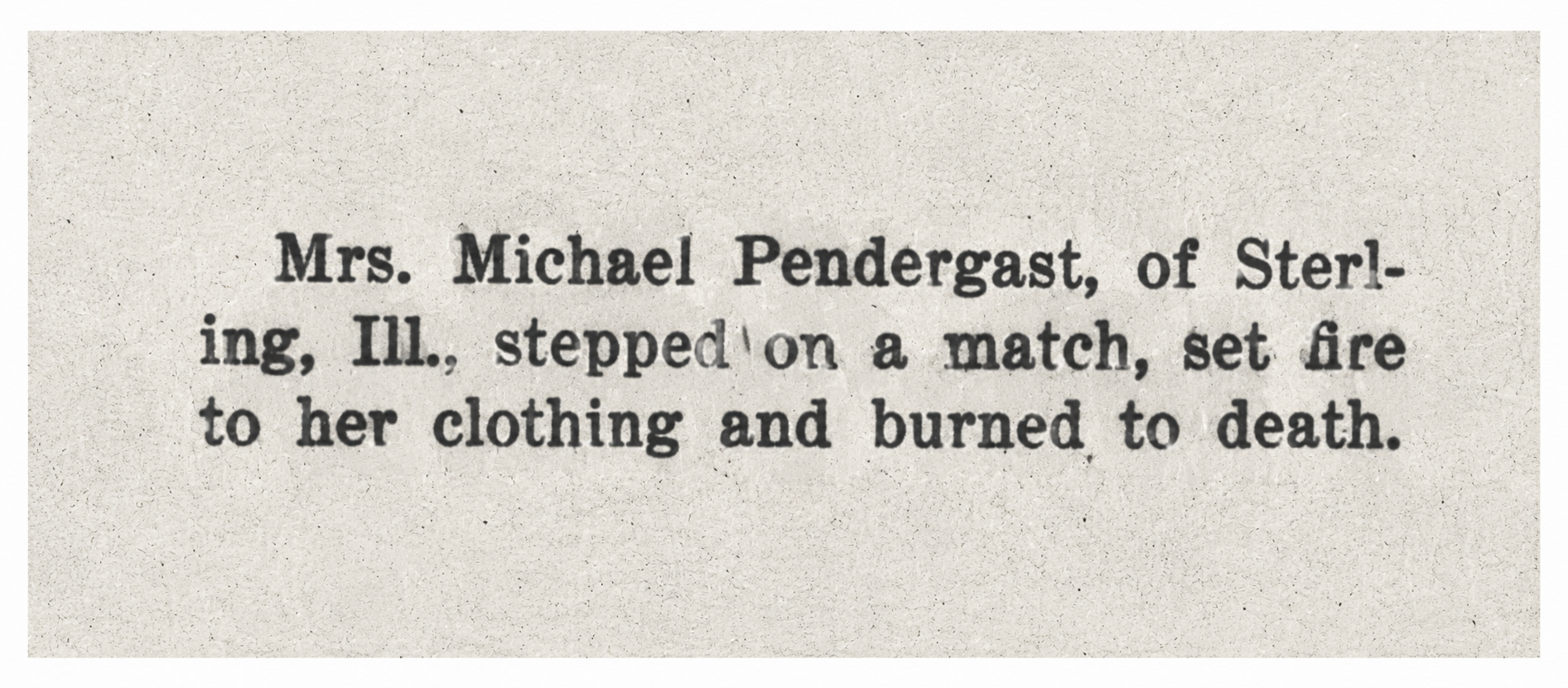
Despite the terrible risks, strike-anywhere matches gained a popularity that refused to be extinguished, even after decades of effort to convince consumers to switch to a safer alternative.
The industry of matchmaking
The convenience of the new strike-anywhere match created a demand that only mass production could meet, spawning at first small workshops and then large-scale factories that employed hundreds of workers. An efficient production line in a large factory could turn out as many as ten million matches every day.
The process of match manufacture involved heating a composition paste of white phosphorus, potassium chlorate, sulphur, and glue. Powdered glass added the necessary abrasion to generate heat for ignition. The molten composition was stirred until thoroughly combined and kept on heated tables to maintain the right consistency for dipping. Bundles of long splints cut from a straight-grained wood were inserted into wooden frames and dipped into the heated composition at both ends, then scored and cut, essentially doubling the number of matches that could be produced in one step. After cutting, the loose matches passed to the women and children who boxed them for distribution, where they would eventually be sold in shops and on street corners.
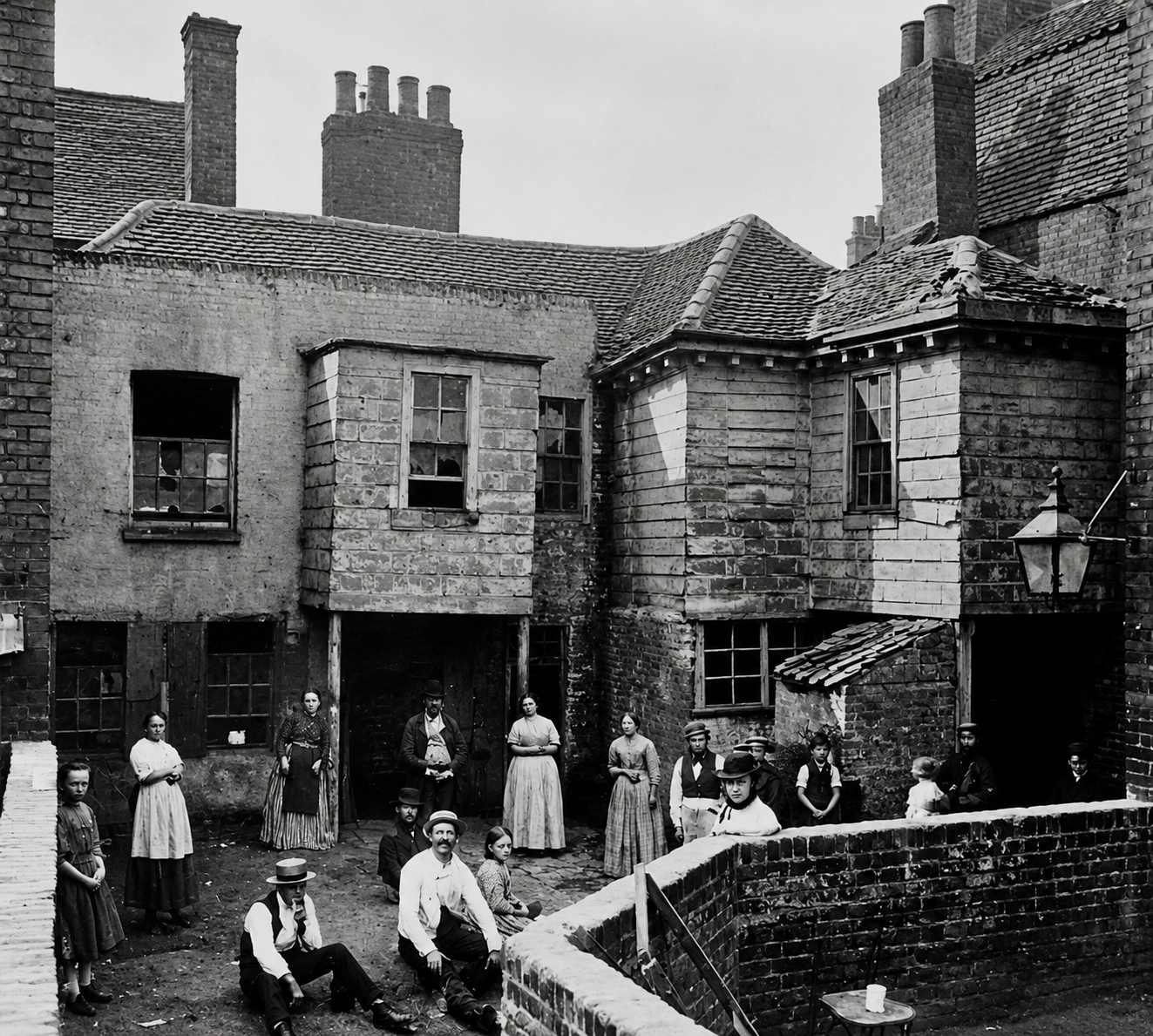
The majority of the work took place in crowded, unventilated factories. In Britain’s largest matchmaking factory, Bryant & May, the working conditions were deplorable—the hours were long and the pay was low; workers were expected to purchase supplies out of their own pockets; minor infractions were met with harsh fines. Despite this, there was no shortage of available workers to exploit, pulled from the desperate and overpopulated, poverty-stricken tenements of London’s East End.
An agonizing malady
Within a decade of the birth of the white phosphorus match, a strange malady began to emerge from the darkened production rooms of match factories and phosphorus manufacturers across Europe, manifesting in the decaying faces of workers. What began as a seemingly innocuous toothache accompanied by flu-like symptoms soon appeared visibly as it spread to the jaw and surrounding face.
A lucifer matchmaker from a Viennese match factory was the first person recorded to fall victim to the disease in 1838, only a handful of years after the first match factories opened for production in the country. Britain’s first case would shortly follow. The symptoms were gruesome: gaping holes in the gums that oozed a putrid-smelling pus, loose teeth that fell out or could be easily pulled out with the fingers, and necrosis of the jawbone, which crumbled away as if eaten by acid. The condition caused indescribable agony to the sufferer.
Andrea Rabagliati, physician and surgeon at the Bradford Infirmary in London, described the symptoms: “More abscesses now form on the gums, which … suggest sometimes the appearance of a sieve, through the holes of which an offensive discharge wells up. In some cases the whole gum, the bone, the tissue composing the cheek, and even the throat, have been attacked and eaten away by this terrible malady.”
In the well-publicized case of a woman named Mrs. Fleet in London’s East End, the disease had progressed to the point that her decaying jawbone was visible directly through a hole in her cheek. The rotting bone and accompanying pus produced such a horrific smell that her own family struggled to remain in the same room with her.
The count of victims with rotting faces climbed steadily in the decades that followed the first recorded case in Vienna. Doctors strived to learn what was at the root of this grisly disease, and soon were able to point the finger at the culprit: phosphorus. Because of its cause, the condition earned the name Phosphorus Necrosis of the Jaw, or simply phossy jaw. It was left to speculation as to why phosphorus caused the jaw to decay, but it was evident who were most at risk: first the mixers and dippers who worked directly with the composition, breathing the fumes for up to ten hours a day; second, those handling the matches during the boxing process.
The conditions of London’s factories mirrored those seen throughout the broader industry across Europe. On his visits to several lucifer match factories in 1863, Mr. White of the Children’s Employment Commission would note that “the smell on entering … is quite suffocating, and one would think unendurable for any length of time. … A white vapour may be seen constantly rising from the matches.”
Rabagliati reported that eleven or twelve percent of the employed would, as a rule, be affected by the disease, “although this proportion varies with the amount of ventilation of the work-rooms and other preventive measures.” Proper ventilation seemed to be the key to minimize exposure; fewer cases of phossy jaw were found in factories that encouraged air flow or used electric fans to create a draft across the worktables.
Despite the high risk, a state of perpetual poverty left desperate workers with little option but to continue working. Some may have also felt a false sense of security since the symptoms were slow to appear—several years after chronic exposure to phosphorus vapors. But the chemical pervasiveness of phosphorus evidenced itself in the glowing skin and clothing of lucifer match makers. In their homes at night, with lamps extinguished, their faces and hands still glowed with a phosphoric light.
As in the case of Mrs. Fleet, workers who suffered phosphorus necrosis found themselves marginalized when the factories refused to re-employ them, stating that their disfigured faces would frighten the other workers. Suffering was compounded even more by campaigns of terror, blacklisting, gaslighting, and refusal to pay for medical costs. Some companies attempted to hide cases of phossy jaw to minimize its severity, and ultimately to protect their profit margins. Without government intervention, the endemic problem would not be addressed any time soon.
A grim outlook
If left untreated, death by phosphorus could take multiple forms: seizure, hemorrhage, sepsis, organ failure, asphyxiation. Some victims died as a direct result of the disease. Others found suicide to be the only option to escape their misery.
The thirty-five-year-old lucifer maker who was admitted to St. Bartholomew’s Hospital in 1865 represented a typical case of phosphorus necrosis. His jaw had become so diseased that he was unable to chew solid food, and as a result had become severely malnourished. Under the care of the surgeons at St. Bart’s, his entire lower jawbone was removed with astounding success. “The dead bone came away completely denuded of soft parts,” preserving intact the blood vessel-lined membrane that surrounded the bone. Remarkably, as his recovery progressed, a new jawbone began to form.
The standard treatment for phossy jaw was excruciatingly painful and sometimes endured with little or no anesthetic. The tools were primitive: chain saws (flexible wire saws to cut through bone) and heavy forceps to pull, often with great effort, the diseased jawbone from its seat. Following the removal of teeth and decayed jawbone, a patient would sometimes have an artificial jaw and false teeth inserted, and then left to heal.
These severe surgical interventions invariably left sufferers permanently disfigured and unable to chew or swallow solid food. With the basic function of the jaw permanently altered, patients faced the sobering reality of needing to be fed liquified food through a funnel—mainly soaked bread and sugar, or meat that was pre-chewed by a caregiver. If the patient couldn’t swallow, it was left up to gravity to do the work, which came with the serious hazard of choking.
In the case of the St. Bart’s patient, he is most remembered, not for the success of his surgery, but for the tragedy of what happened after. Freshly discharged from the hospital, the man commenced to celebrate out of pure joy, and later that night died by inhaling his own vomit while in a drunken stupor. It was a death ultimately caused by phosphorus, but in a way that can scarcely be imagined.
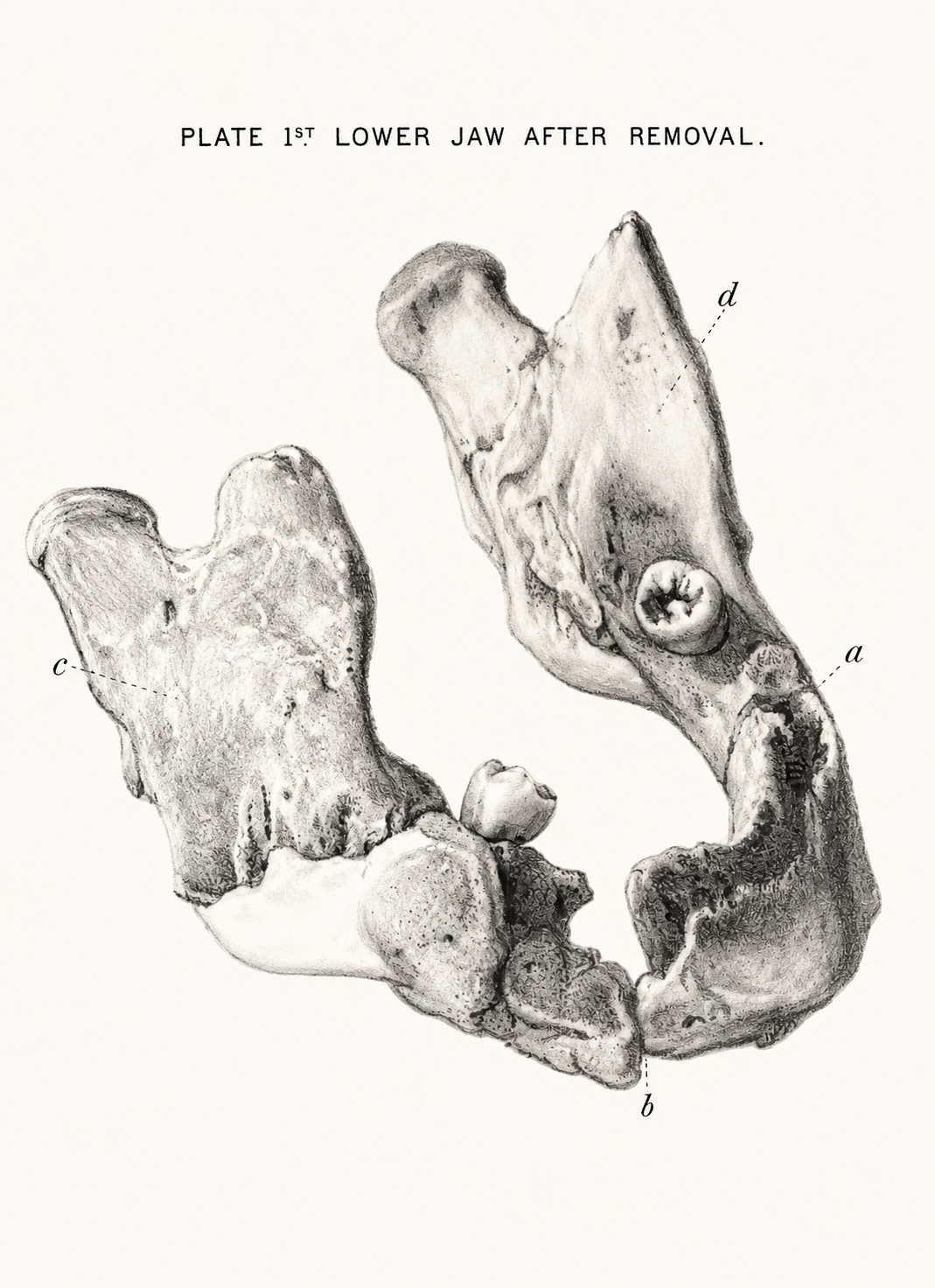
One young woman named Cornelia had the fortitude to endure a terrible operation to remove her jawbone without the use of anesthetic. The surgeon described, in grisly detail, how the chain saw broke while trying to cut through the bone. The jaw was discovered to be so necrosed that it had to be extracted with forceps, using some “considerable effort.” Cornelia survived the procedure and several more afterward—her recovery was considered an unmatched success—but her permanently disfigured face would become a poster example for the effects of the disease.
A safer alternative
But something was already there, a possible solution to solve this horrific problem that was at the root of so much suffering. It had been hiding in plain sight since the 1600s—almost from the very moment that white phosphorus was first discovered.
Early chemists making phosphorus in their laboratories noted something curious happening under specific conditions. A red crust could be found forming at the edge of jars containing liquid solutions of white phosphorus that had been left for too long in the sun. This substance seemed very ordinary and had none of the luminous qualities of the phosphorus they knew. Assumed to be an impurity of the phosphorus-making process, it was quickly discarded without any second thought. The chemist Boyle’s laboratory apprentice lingered longer on the discovery, scribbling down notes on what he observed, but eventually left it aside as the others did.
It would not be recognized for one hundred sixty more years that this unassuming red material was, in fact, a pure, elemental allotrope of phosphorus: red phosphorus. Red phosphorus behaved very differently than its white counterpart, most notably it didn’t react when exposed to oxygen, and was completely non-toxic.
From the moment of its rediscovery in the 1840s, red phosphorus was recognized as a safer alternative to replace the white phosphorus used in match manufacture. A new kind of match was put onto production lines using the new ingredient, coined “safety matches” for their obvious health advantages to society. As an added safety measure, the phosphorus from the match head was relocated to the side of the box along with the abrasive. This segregation of materials would keep matches from being ignited by accidental friction.
They were safer for match factory workers, who, by the mid-nineteenth century, were routinely contracting phossy jaw, disfigured and dying in trade for a few shillings a week. They were safer for match users who could keep them loose in their pockets without accidentally sparking a pocket fire. And they were safer for children, who were attracted to the sweet tasting, brightly colored match heads and liked to put them in their mouths (a single lucifer match head contained enough white phosphorus to be fatal to a small child).
The growing count of phossy jaw victims would find a champion in the methodist preacher, William Booth. In 1890, Booth, under the banner of the Salvation Army of which he was the founder, launched a crusade against the use of white phosphorus in lucifer matches. In his book Darkest England and the Way Out, he published an actionable plan for building an ideal work environment for employees—one that offered safe conditions and reasonable pay. For employers, Booth was convinced that they could still turn a profit without sacrificing these basic human rights, and was determined to prove it by doing it himself. In 1891, Booth opened the doors to his own match factory, nestled right in the heart of the impoverished East End of London, and committed to the manufacture of only safety matches under the brand “Lights in Darkest England.”
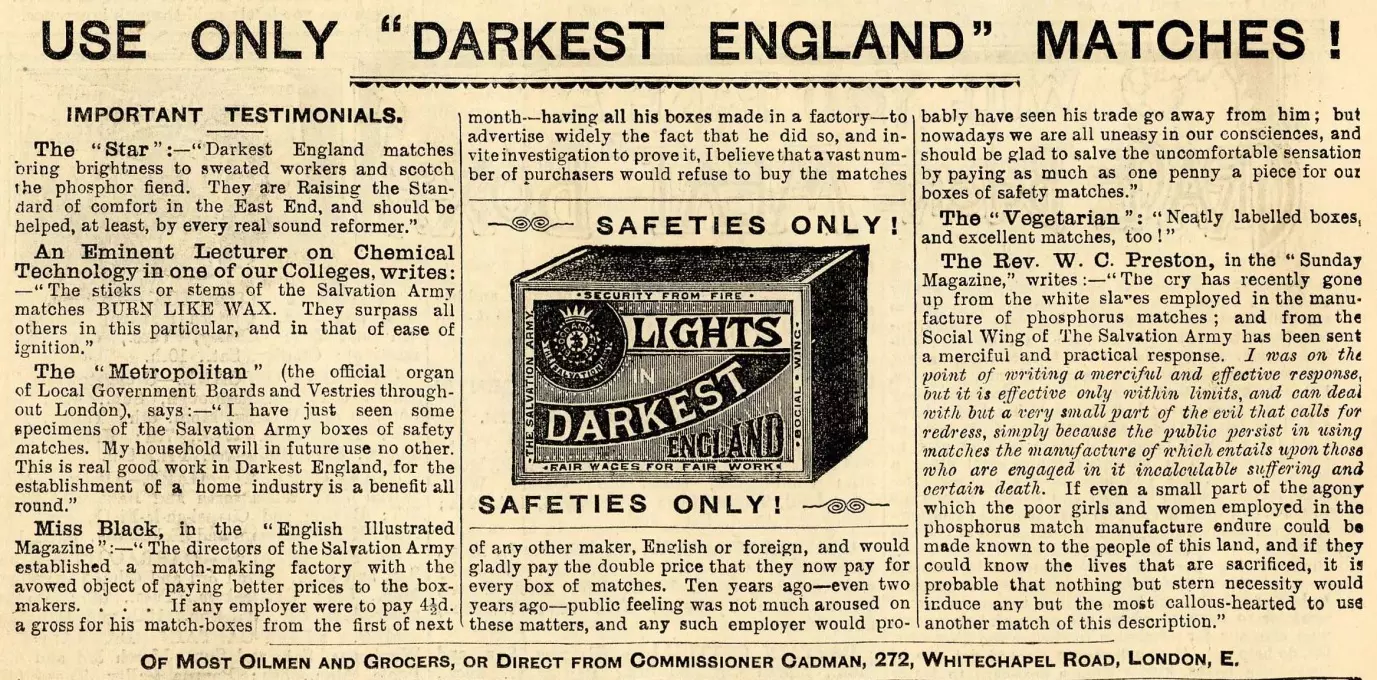
“Lights in Darkest England—The Salvation Army Social Matches!! Are now ready and orders can be executed forthwith. Everybody should use the ‘Darkest England Safeties’, which are manufactured under healthy conditions and are entirely free from the phosphorous which causes ‘Matchmaker’s Leprosy.’”
The path away from the horrors of white phosphorus was clear: convince the consumer to make the switch to safety matches, and manufacturers would follow suit. But it turns out that convincing the consumer would be a surprisingly difficult task.
The new safety matches had a few major drawbacks. Red phosphorus cost more to produce. The added costs transferred to the sale of safety matches, which were as much as three times more expensive than their white phosphorus predecessor. The matches could no longer be lit on any nearby rough surface; instead, they required striking against the chemical stripe on the side of the box. On top of this, safety matches had a short shelf life because of their tendency to soften in damp air.
The clear case for their benefit to society could not stand up against the affordability and convenience that made lucifers so beloved.
Ultimately, Booth’s campaign failed to meet its main objective. Safety matches continued to be an unpopular choice over the familiar brand. Even Salvationist acolytes themselves were found to still be using lucifers. Booth held out for as long as he could, but failing to prove the success of his factory model, he eventually conceded defeat after a decade of unrealized profits. The factory was shuttered in 1901.
The final solution
Little did anyone know, but sitting idle in a lab report for decades was the answer to the phosphorus problem. The French chemist, Georges Lemoine, while exploring new chemical compounds for his doctoral thesis in 1864, was the first to prepare a new form of phosphorus: phosphorus sequisulphide. The mix of red phosphorus and sulphur, carefully heated in an oxygen-free container, bonded to form a flammable compound that proved stable in air and was non-toxic. It behaved much like its predecessor, red phosphorus, except that this compound was highly sensitive to friction.
But Lemoine was not looking for a new chemical to use in matchmaking. His results were published and shelved, overlooked for decades. The secret stayed hidden until the late 1890s when it was resurfaced by a pair of French chemists in the employ of the government who had been tasked with a very important mission: to find a better recipe for safety matches. Upon the discovery, they quickly patented a formula for commercial use.
The new safety matches bore all the benefits of red phosphorus, but with a couple key advantages. The new formula didn’t degrade or absorb moisture from the air, which gave the matches an exceptional shelf life. Most importantly, with a considerably lower flashpoint, the matches could again be struck on any rough surface to ignite. It was the convenience that consumers wanted. Once a viable alternative existed on the match market, there was no reason left to continue manufacturing matches in the old way that had caused so much suffering and death.
Yet still, the industry stalled.
William Booth’s matchmaking utopia may not have achieved monetary success, but his campaigns were successful in one big way: they increased public awareness of the dangers of white phosphorus in the matchmaking industry. By the turn of the new century, there were few left who could claim to be ignorant of the horrors of phossy jaw.
Had there been government intervention early on, the blight of phossy jaw needn’t have plagued the matchmaking industry for so long. But that was not to be the case for most countries across Europe. The British government, after weak claims of being unaware of the true extent of the problem, pointed many fingers at the factories that failed to report known cases of phossy jaw to factory inspectors. Without transparent documentation, the dangers of phosphorus and the harm it caused to vulnerable factory workers had been successfully minimized for years.
To further wipe their hands clean of any blame associated with the blight on the part of the government, a panel was deployed to investigate the conditions rampant in the matchmaking industry. A list of necessary changes for factories were published with the reports. These echoed previous recommendations made years earlier by factory inspectors, including accommodations for improved ventilation, washing facilities for workers, routine health checks by company doctors, and the required reporting of cases of phossy jaw to the Chief Inspector. But even with these regulations in place, there was little enforcement.
Factories had been left to their own designs for decades and had proven their unwillingness to shift on the issue. Without real intervention at a government level—strict enforcement of regulations or, more effectively, an outright ban on the use of white phosphorus—little would change.
It would take a higher intervention—a meeting by an international council dedicated to the prohibition of white phosphorus use in matchmaking. The Berne Convention, held in Switzerland in 1906, obliged participants to enact laws within their own countries that would ban “the manufacture, importation and sale of matches which contain white (yellow) phosphorus.” With the signing of the pact by all European nations, lucifers’ days were numbered. Finally—and as the last country to do so—the British Parliament made white phosphorus illegal in the UK matchmaking industry in 1910.
It took three-quarters of a century after the first appearance of phossy jaw to effectively eliminate the substance that had caused such unimaginable horrors across the entire continent. This dark time in history—allowed to fester for reasons of price, convenience, and ultimately a blatant disregard for human life and well-being—finally came to a close.
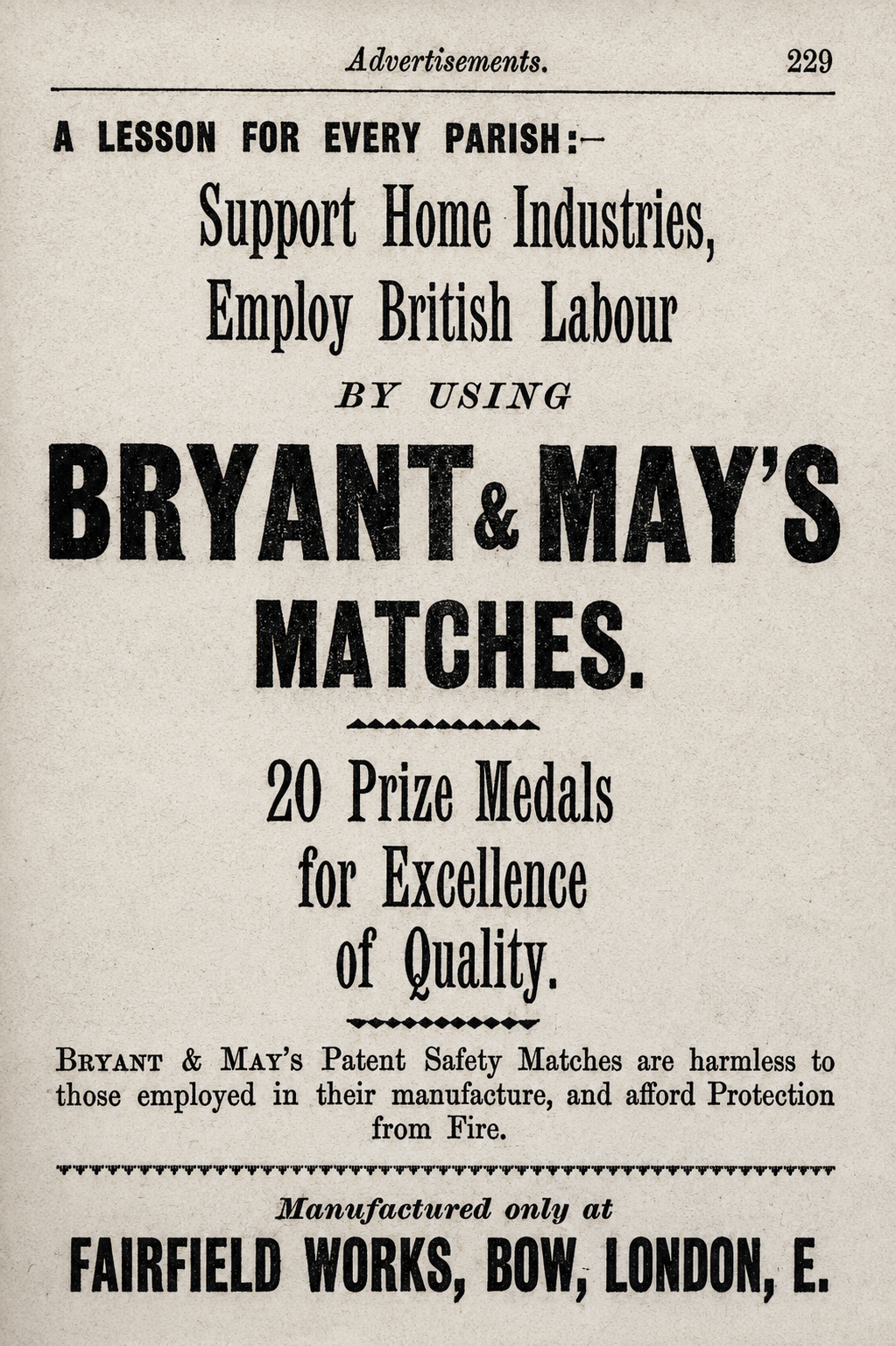
From darkness to light
The unlucky number thirteen.
It remains a striking irony that the thirteenth element discovered by man would so thoroughly live up to its unlucky number. For three-quarters of a century, it extracted a gruesome toll in bone, blood, and agonizing suffering from the most vulnerable members of society. It was a force that did not discriminate by gender or age. Yet, the modern world as we know it simply could not exist without it.
Since the nineteenth century, phosphorus has been harnessed into one of humanity’s greatest assets. The poisonous, jaw-rotting element in its pure form has been banished from modern commercial manufacturing, replaced by stable compounds that are widely used today. In the form of phosphate fertilizers, it is the literal backbone of the global food supply, nourishing the crops that feed billions of people every day. It plays a crucial role in the manufacturing of batteries, semiconductors, and fiber optic cables that we rely on for mobility and connection to the world. And while we may fail to marvel at the humble glowing lights on the dashboard of a car, a red traffic light, or the tiny blinking indicator lights on an old stereo, they are not dissimilar to the first light that once delighted spectators in parlors and courts across seventeenth-century Europe, radiating from jars with its cold, eternal fire.
When Hennig Brand peered into his glowing glass retort in that stale Hamburg cellar in 1669, he believed he had touched the divine. But he did not discover the philosophers stone; the pale glowing substance would not grant him immortal life or bring him his fortune. He faded into obscurity, likely died in poverty, and would be unknown to history but for the discovery that would exact such a gruesome toll in the Industrial Age. However, the element did hold the power to transform the world. Had Brand not been the man to reveal phosphorus to the world, the thirteenth element certainly would have made itself known in a matter of time. It was an element woven too deeply into the fabric of existence to remain hidden forever.

The 13th Element: The Sordid Tale of Murder, Fire, and Phosphorus
Discovered by alchemists, prescribed by apothecaries, exploited by ninth-century industrialists, and abused by twentieth-century combatants, the chemical element phosphorus has fascinated us for more than three centuries. It may even be the cause of will-o'-the wisps and spontaneous human combustion!