

The Christmas Carp Tradition of Central Europe
Enduring through centuries of change, the tradition of carp for Christmas Eve dinner continues to play a meaningful role in Central Europe.
It’s the week before Christmas. A family has been washing from a basin for days because the bathtub has been taken over for a different purpose. Its new aquatic occupant: a carp.
The fish may have been tended to lovingly by the children of the household, hand fed crumbs of bread stolen from the kitchen, and even acquired a pet name. But it’s almost Christmas Eve, and when the day arrives, this temporary “pet” will be taken from the bathtub (to the outcry of the children), slaughtered and cooked, where it will meet its final fate on the dinner table.
Historically, this scenario has not been an unusual one in households across Central Europe during the Christmas season. Yet, as bottom-feeders that dwell in the murky depths of lakes and ponds, carp do not boast a popular flavor, often described as being distinctly “earthy” or “muddy.” For a fish that few love the taste of, why go to all of this trouble?
The Ideal Food Fish
Native to the Danube River winding its way through the heart of the European continent, wild common carp gained popularity as a food fish by the Romans who were camped in forts and settlements along the river’s banks. The one-hundred-and-fifty-mile stretch of river between modern-day Vienna and Budapest was home to hundreds of thousands of troops and tradespeople. Feeding those numbers was a constant challenge, and carp presented as the answer: an abundant, fast-growing fish that seemingly thrived under even the most unwelcome conditions. They could be captured and kept in holding pools to keep a constant supply ready for consumption.
Following the collapse of the Roman Empire, the traditions of aquaculture passed from the Romans to early Christian monks who became the keepers of this knowledge. The monks cultivated carp in monastery ponds to provide a steady food source during religious fast days, which numbered as much as half the year.
The value of carp as an easy food fish could not be overstated. Carp populations could be matured on a three-year cycle rather than the five or more that other popular table species required, and importantly, they could tolerate the cold, icy conditions of Central European lakes and ponds in the wintertime, making it ideal for winter food provisioning.
The practice of carp cultivation spread across the continent of Europe via the live transport of wild-caught fish and small fry to new waterways and holdings. Noble estates across Bohemia, Moravia, and southern Poland constructed vast carp pond systems to manage the supply of fish that could sustain castle garrisons and households throughout the year. The South Bohemian fishpond networks, constructed in the fifteenth and sixteenth centuries, are still active to this day.
Fasting for Vigil
By the thirteenth century, the widespread expectation for Christians to fast for the vigil was taking hold in Europe. The fasting was a spiritual act of preparation for the coming feast of Christmas—a time of reflection, penance, humility, and purification of body and mind. A meal could be eaten after the first evening star rose in the sky. Under the fasting guidelines, no meat and only simple foods could be consumed. “Meat” for abstinence was classified as being the flesh of warm-blooded, land-based animals, and under this philosophy, fish—not richly flavored or indulgent—was permitted.
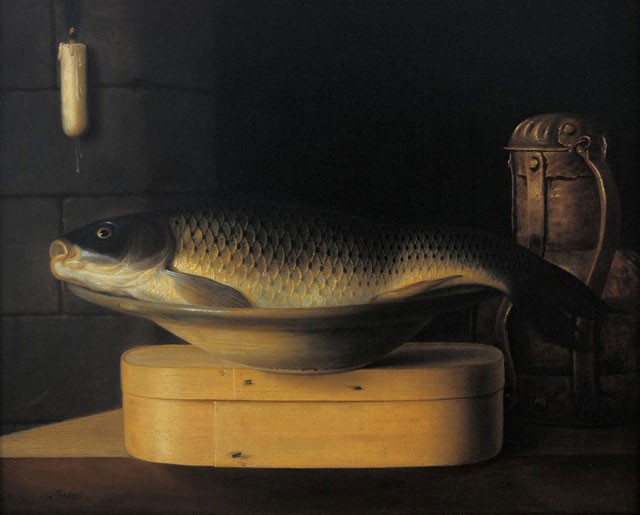
Once afforded only by the wealthy, by the eighteenth century carp production began to be industrialized at scale, yields improved, and urban working and lower-middle classes were increasingly able to access carp. With this spreading availability, carp’s place on the table during the Christmas Eve fast was widely established among ordinary households across much of Catholic Central Europe, especially in Bohemia, Austria, parts of Poland, and Hungary. The practice would solidify firmly into tradition in the centuries that followed.
A Theatrical Affair
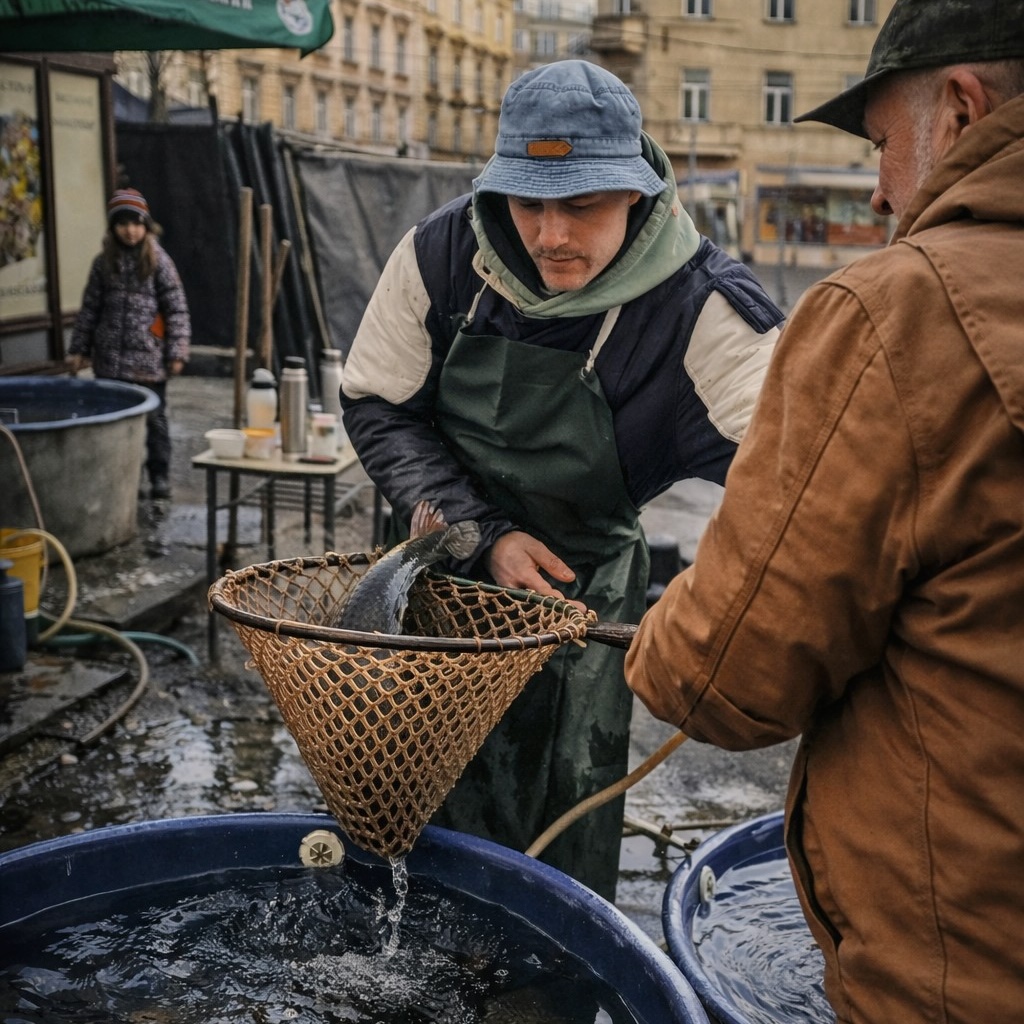
Since the nineteenth century and until today, the sale of live carp in the streets of Prague has transformed into a theatrical affair. Temporary carp pools can be found popping up the week before Christmas near supermarkets, metro stations, and public squares. In urban areas, the fish was traditionally taken home and kept alive in the family bathtub for a few days leading up to Christmas. This was thought to give time to clear out the mud from the digestive tracts to reduce the earthy flavor in the flesh, as carp live in the murky depths of ponds and feed by filtering their food from the mud.1
Household children tended to form bonds with their new temporary pet in the bathtub, often naming and caring for it. When the time came to use the fish for its intended purpose, many families chose to quietly release it back into the river rather than killing it. The release of carp into urban waterways has caused damage to local ecosystems, which eventually led cities to actively discourage this practice. Nowadays, it’s more popular to have the vendor slaughter and clean the fish before taking it home.
Ritual and Superstition
The Czech and Slovak tradition goes beyond the culinary and expands into the realm of the superstitious. Carp scales, which bear a strong resemblance to silver coins, are placed under plates at the dinner table to be retrieved at the end of the meal. The scale is kept in wallets as a token, thought to bring good luck and financial prosperity in the new year. There are many families who don’t eat carp but still carry on this practice.
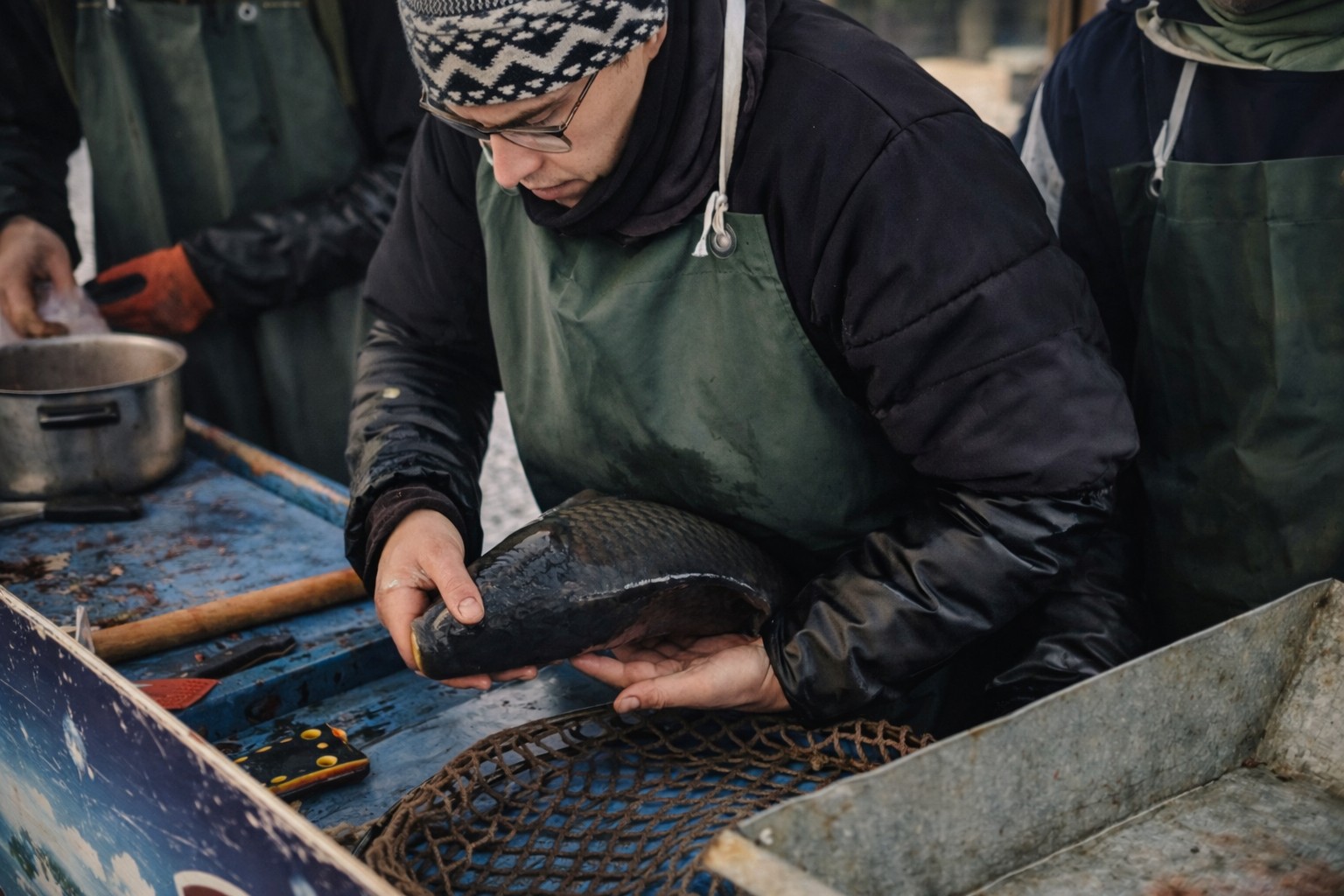
Today, though serving carp on Christmas Eve is seeing a decline because of personal preferences and availability, the practice persists. In South Bohemia, carp ponds are now protected landscapes, and the seasonal harvest is treated as a living cultural heritage. In the late fall, men don waterproof waders and enter the ponds to practice the traditional net-pulling and fish sorting as they have done for generations. Spectators are encouraged to watch as the fishermen beat the water and draw nets to gradually chase the fish into an enclosed catch area, then sort the varieties of fish to be sold at market. Thousands of visitors turn up every year at dawn to watch the theater of the fish harvest from the shorelines and take part in activities and demonstrations.

Climate change may be a factor in carp availability in the years to come. Lack of freezing in 2024 and 2025 meant an increase in predator activity, such as cormorants, that stressed the population of carp and resulted in a smaller harvest. Many supermarket chains across Prague are opting out of the live sale of carp, favoring the sale of pre-portioned fillets in store.
Still, live carp can be found in Prague if you know where to look. Concentrate your search to areas that locals frequent, like the less tourist-centric Christmas and farmer’s markets in town squares. Or, check the Rybářství Třeboň website for a list of live sale locations across the city.
Regional Differences in Preparation
Despite sharing a similar tradition of enjoying carp for Christmas Eve, there are a wide array of meal preparations across the regions of Central Europe. Within these regions, there are as many nuances in recipes as there are grandmothers in families. However, there are some norms:
The classic Czech (and neighboring border areas of Austria and western Slovakia) preparation is carp schnitzel—the fillet is soaked in milk to reduce the muddy flavor, then breaded and pan-fried. Carp schnitzel is traditionally served with a side of cold potato salad.
A popular alternative to the fried version is a brothy soup, stewed from the head and bones of the fish along with winter vegetables to bring out gentle flavors, with the fish meat added at the end. The soup is thickened with roux and cream, with milt or roe added for a delicate silkiness.
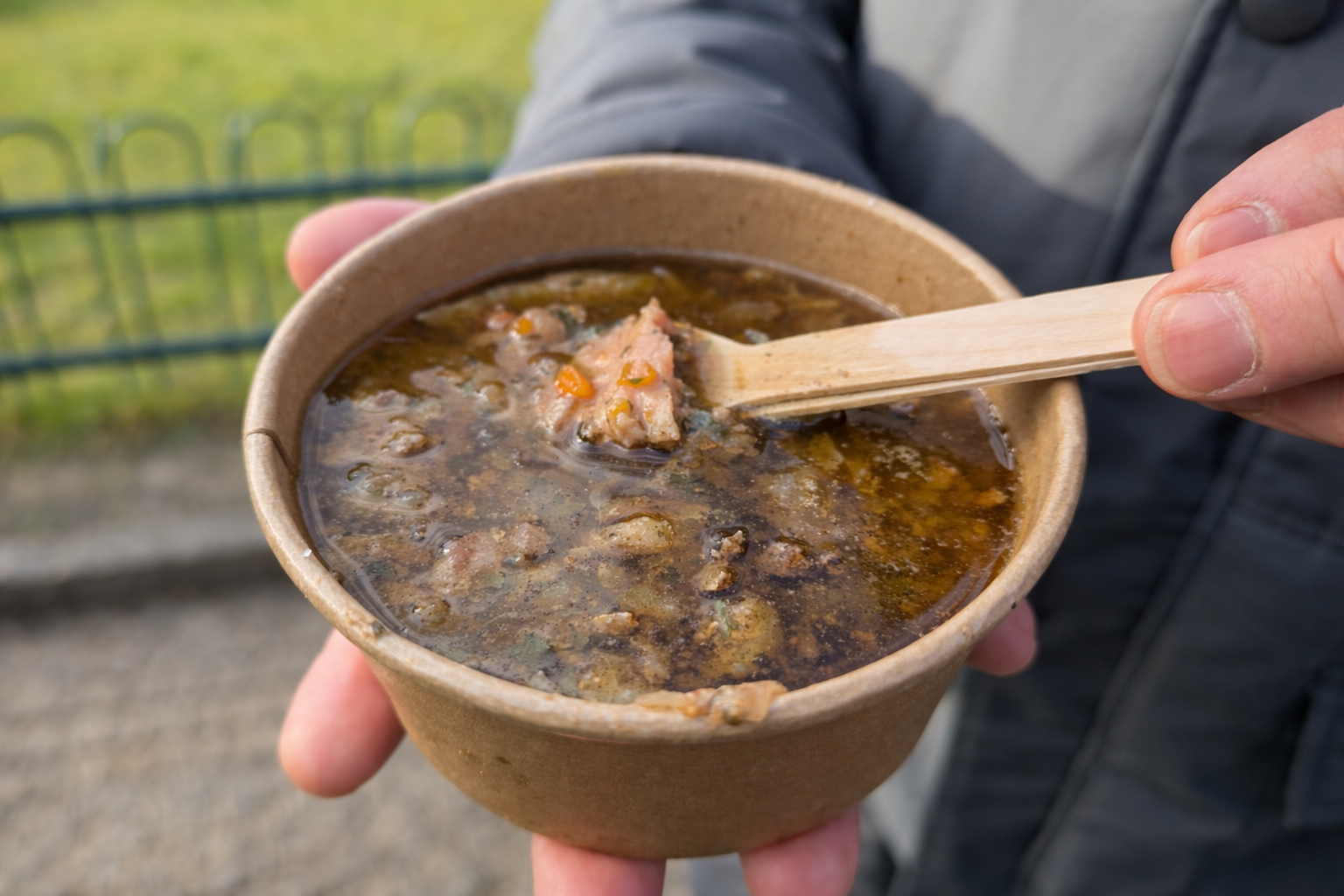
Southern Bohemia favors clear broth carp soup fortified with carrot and onion. The flavor is earthy and herbal from the addition of lovage and marjoram, and offers a rustic taste that lingers in the mouth and warms the belly on a cold winter day.
In Poland, Christmas Eve dinner—called Wigilia (“vigil”)—is a twelve-course event, each course dedicated to the twelve apostles of Christ. Polish families may serve carp fried or baked, in aspic, or as a soup. Influenced by Jewish cuisine, fillets are often stewed in sweet and tangy “grey” sauces, a relic carried forward from pre-WWII Jewish Poland.
Hungary carries its own strong folk tradition of serving fisherman’s stew on Christmas Eve, made from an assortment of river fish, with a preference for carp. Flavors are bolder and spicier than in neighboring countries, with the broth taking on its red color from generous amounts of sweet and hot paprika. The soup is traditionally cooked in a cauldron over an open fire as a communal event, and is thought to bring good luck in the new year.
Christmas Markets
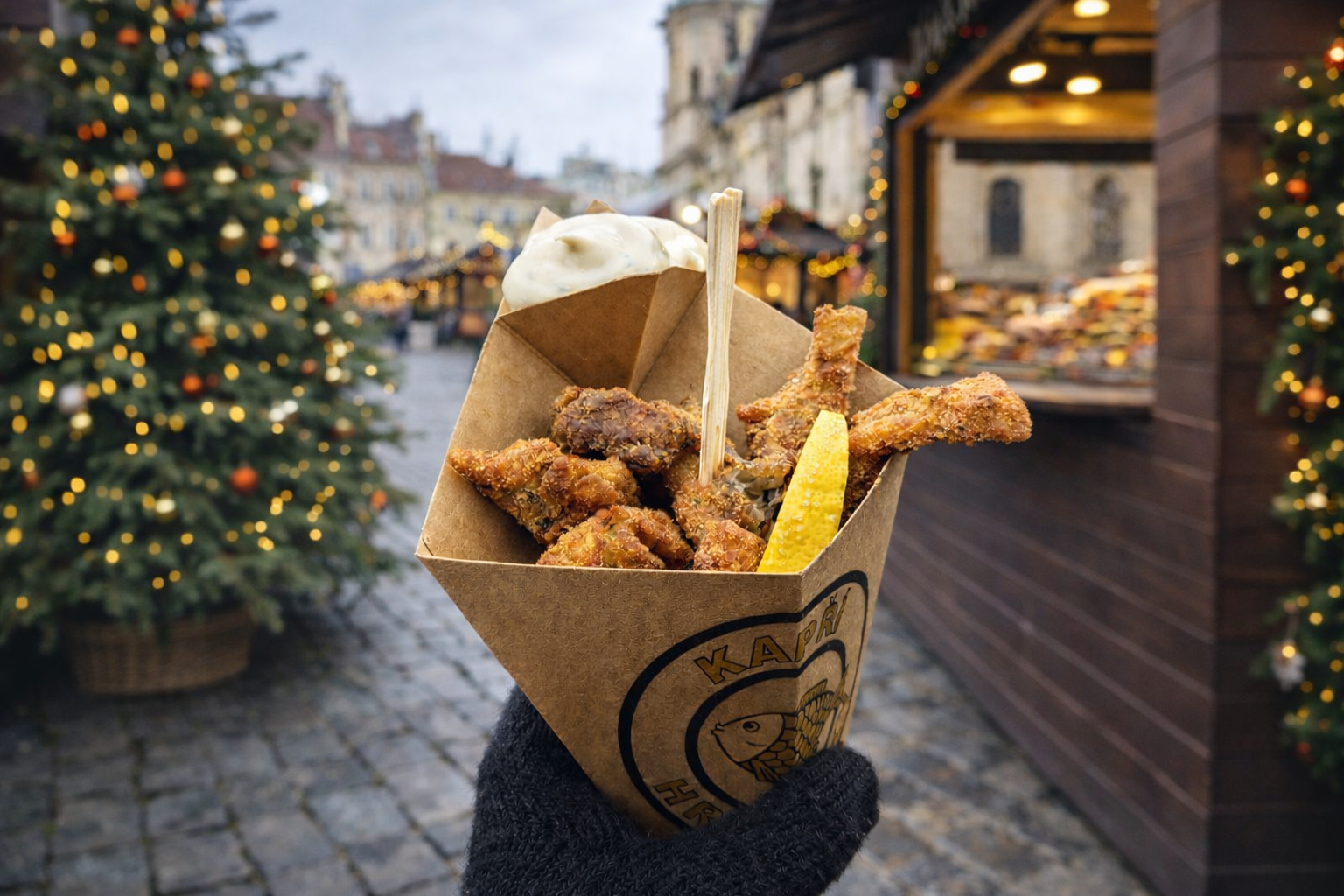
It only takes a moment of wandering through Prague’s Christmas markets to find street vendors selling carp snacks. The fish is breaded and fried—served in a plain paper cone with a side of lime-dill dipping sauce. The flake isn’t as robust as codfish, the flesh is not so white, and the taste is not so pure. To the Western palate, deep-fried cod in beer batter might be preferred. But the tradition is what makes carp special, coming together with the festive charm of the Christmas holiday.
On one special day each year—Christmas Eve only—volunteers set up booths as some of Prague’s most popular Christmas markets and serve thousands of bowls of chef-prepared fish soup to needy people, locals, and visitors alike. The mayor of the city can be spotted taking part in the event, spreading Christmas cheer and dishing out bowls of steaming soup to eager visitors in the Old-Town Square.
In my own wanderings through the streets of Prague in 2025, the hunt to find a vendor offering carp soup finally paid off at a little market in Namesti Miru Square, populated by locals and notably vacant of tourists. Standing in the cold, enjoying the soup—made in the South Bohemian style, humbly served in a little cardboard bowl with a wooden spoon—gave me a satisfaction that was so much more than culinary. I became part of an experience larger than myself, participating in a cultural tradition that has endured through centuries of change—a tradition that is not likely to be abandoned any time soon.
From the kitchen…
Čirá jihočeská rybí polévka
(Clear South Bohemian Christmas Carp Soup)
Southern Bohemia favors clear broth carp soup fortified with carrot and onion. The flavor is earthy and herbal from the addition of lovage and marjoram, and offers a rustic taste that lingers in the mouth and warms the belly on a cold winter day.
Ingredients
Carp head, bones, skin, and fins
150–250 g carp meat, cut into small pieces
1–2 onions, diced
1 carrot, diced
1 parsley root or parsnip, diced
Small piece of celery root, diced
1 bay leaf
6–10 black peppercorns
1 tsp dried marjoram, or to taste
1/4 tsp dried lovage, or to taste
Salt
Cold water
Method
Place the carp head, bones, skin, and fins into a large pot and add enough cold water to just cover them. Add the bay leaf, peppercorns, and a small pinch of salt. Bring the pot slowly to a gentle simmer, taking care not to let it boil. Simmer for 60 to 90 minutes, skimming the surface occasionally.
Once the broth has developed, strain it completely and discard the solids. Return the clear broth to the pot, then add the diced vegetables and the carp meat. Simmer gently for 10 to 15 minutes, until the vegetables are tender and the fish is cooked through.
Remove the pot from the heat and adjust the salt to taste. Stir in the marjoram and lovage, then let the soup rest for about five minutes before serving so the herbs can fully release their aroma.
- The “off” taste that many dislike is caused by an organic compound called geosmin, found in algae in stagnant ponds. Proper purging—holding carp in clean water for weeks—reduces this. ↩︎