Slipping Backward Through Time on a Steam Train to Durango
A hiker takes an unexpected journey on a historic steam train through the rugged mountains of Colorado.

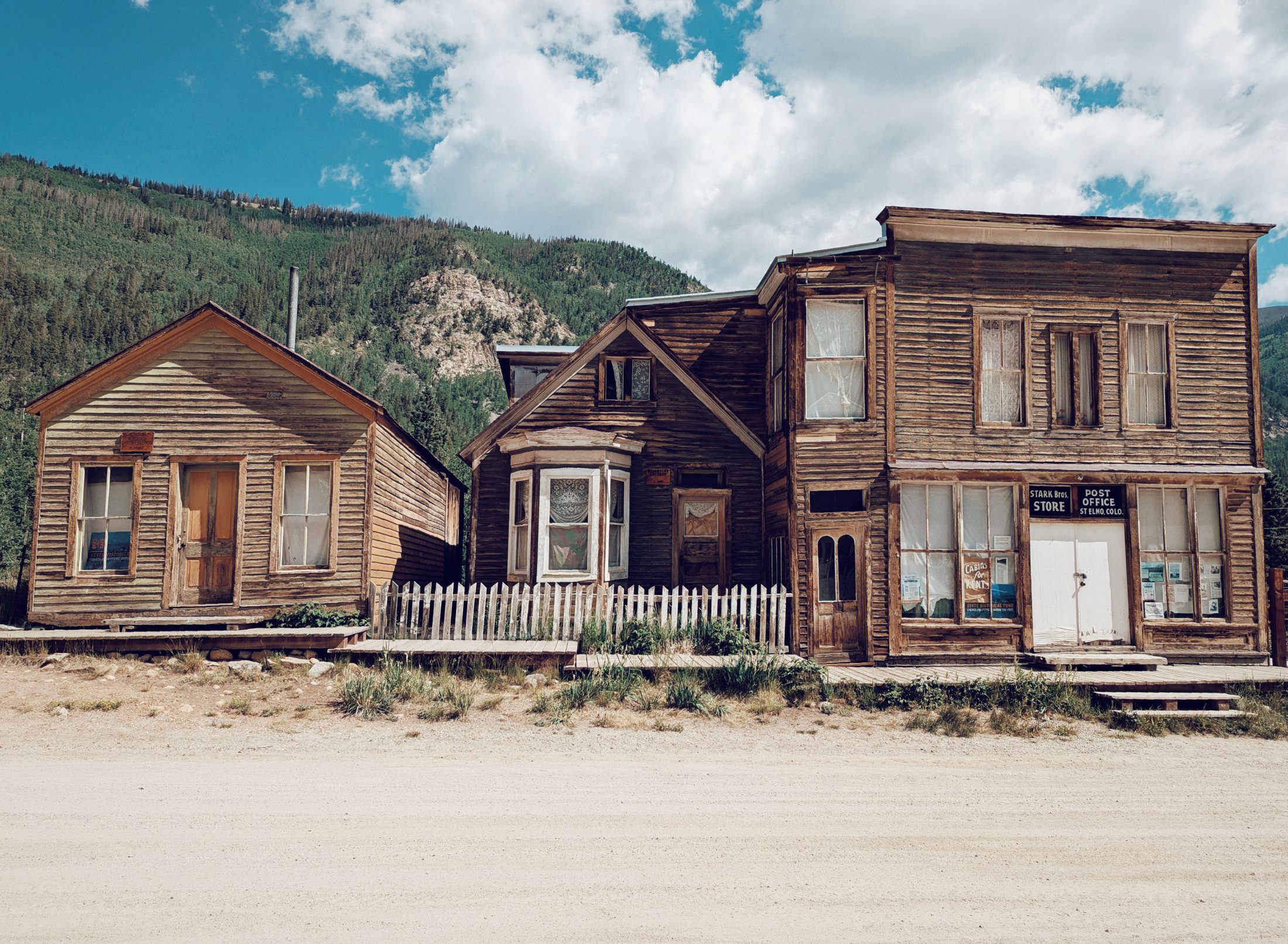
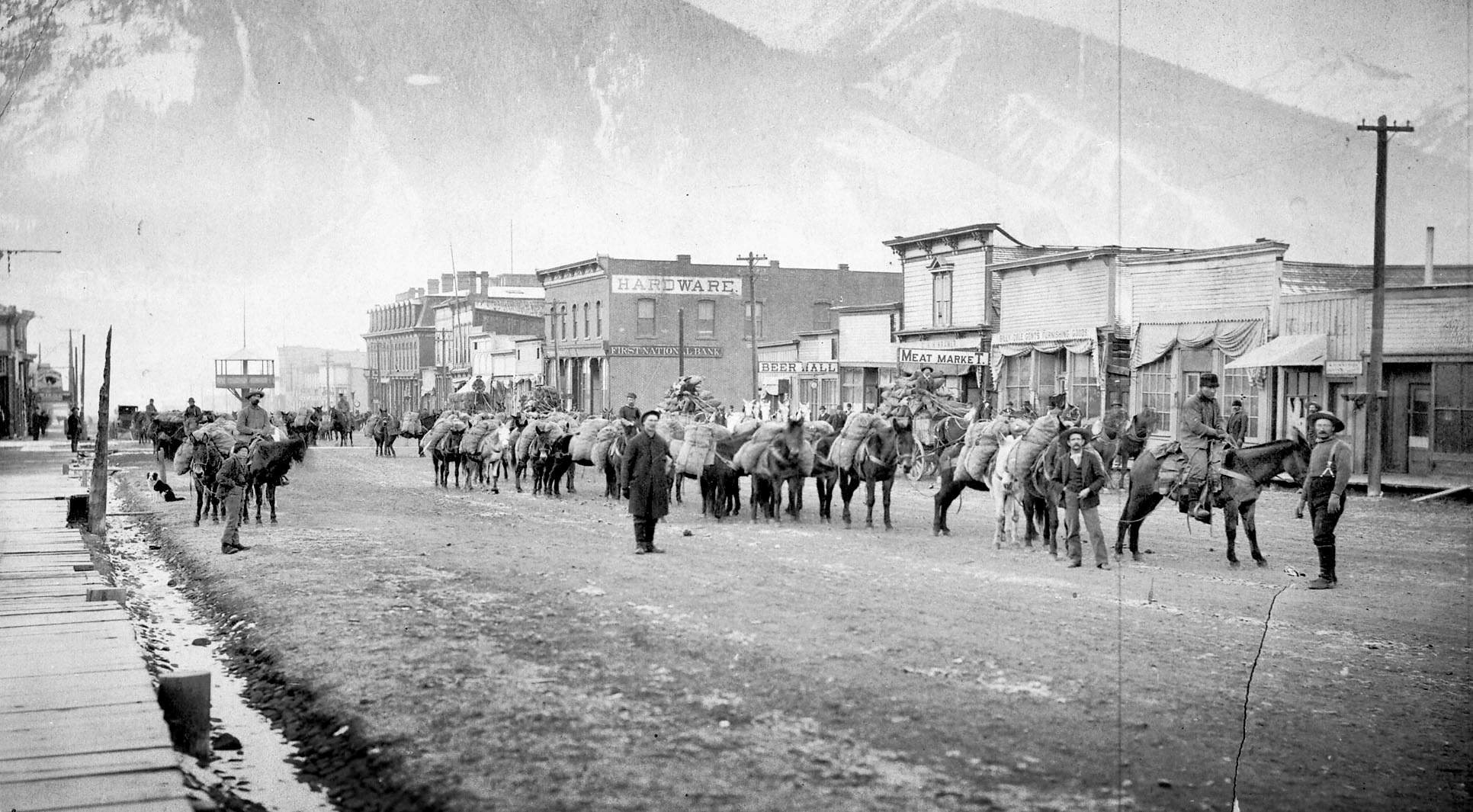
The iconic voices of Dolly Parton and Kenny Rogers rise above the chatter and scraping steps of wanderers through the dusty streets. The streets and boardwalks themselves look exactly as they did more than a hundred years ago. The difference now is that everyone has an ice cream cone in hand and not a care in the world beyond how to stay cool on this hot July day.
I’m sitting in the sun waiting for the train to board, wearing the same clothes I’ve had on all week, my once white sun shirt dingy and stained with the dirt and sweat of the past week’s hard labor crossing the San Juan mountains by foot. My partner and I embarked on a journey to thru-hike the Colorado Trail, setting off the previous week from Durango, Colorado. The full 486 miles of trail take most hikers close to a month to complete. But fate, as fate often does, had other plans. An Achilles injury swelled my ankle to the size of a balloon, and the pain was too severe to keep going. My journey now ends here in the historic mountain mining town of Silverton.
Still, my mind is reeling from the beauty of the changing terrain beyond every mountain ridge, the fields filled with wildflowers in every color, the staggering heights of the snow-capped peaks, and the feeling of being on top of the world in both a physical and metaphorical sense.
But though that journey has ended, another begins. Even while still clouded with the melancholy and disappointment at having to leave my partner behind in the mountains, an excitement is creeping in. On the trail, some hikers that we met told us of a train that connected Silverton back to Durango, running daily through the summer months. The ticket agent in the lobby of the Grand Imperial Hotel confirmed this fact and offered me a choice between the diesel engine or steam. The decision was clear—I must ride the steam train. With my love of trains and all things historical, how can I resist the opportunity to take a ride on a real vintage steam train? Besides, a slow train back through the mountains that I’d just spent a week hiking through seems a fitting way to end my Colorado trail adventure.
With my ticket in hand and transportation back to Durango resolved, I can now sit back and relax with my thoughts while I wait for the train to board.
Silverton is a hot spot for tourist activity. The intercom outside High Noon Hamburgers crackles continually with orders ready to be picked up at the window. A burst of out-of-town visitors from many different cultural backgrounds disembarked from the train when it arrived an hour ago. My eyes are drawn to a visiting group of Mennonites—the women wearing simple cape dresses and bonnets, the men in suspenders and tan hats. They look very much in place in this Old West town, rich with history. I feel as if I’ve been transported back in time.
Beside me on the boardwalk, an elderly couple bickers endlessly over some trivial event that they both remember differently. In time, their attention turns to me, curious about the backpacker sitting alone with a somber look on her sunburnt face. They strike up a conversation, and I tell them tales of my recent adventures through the mountains.
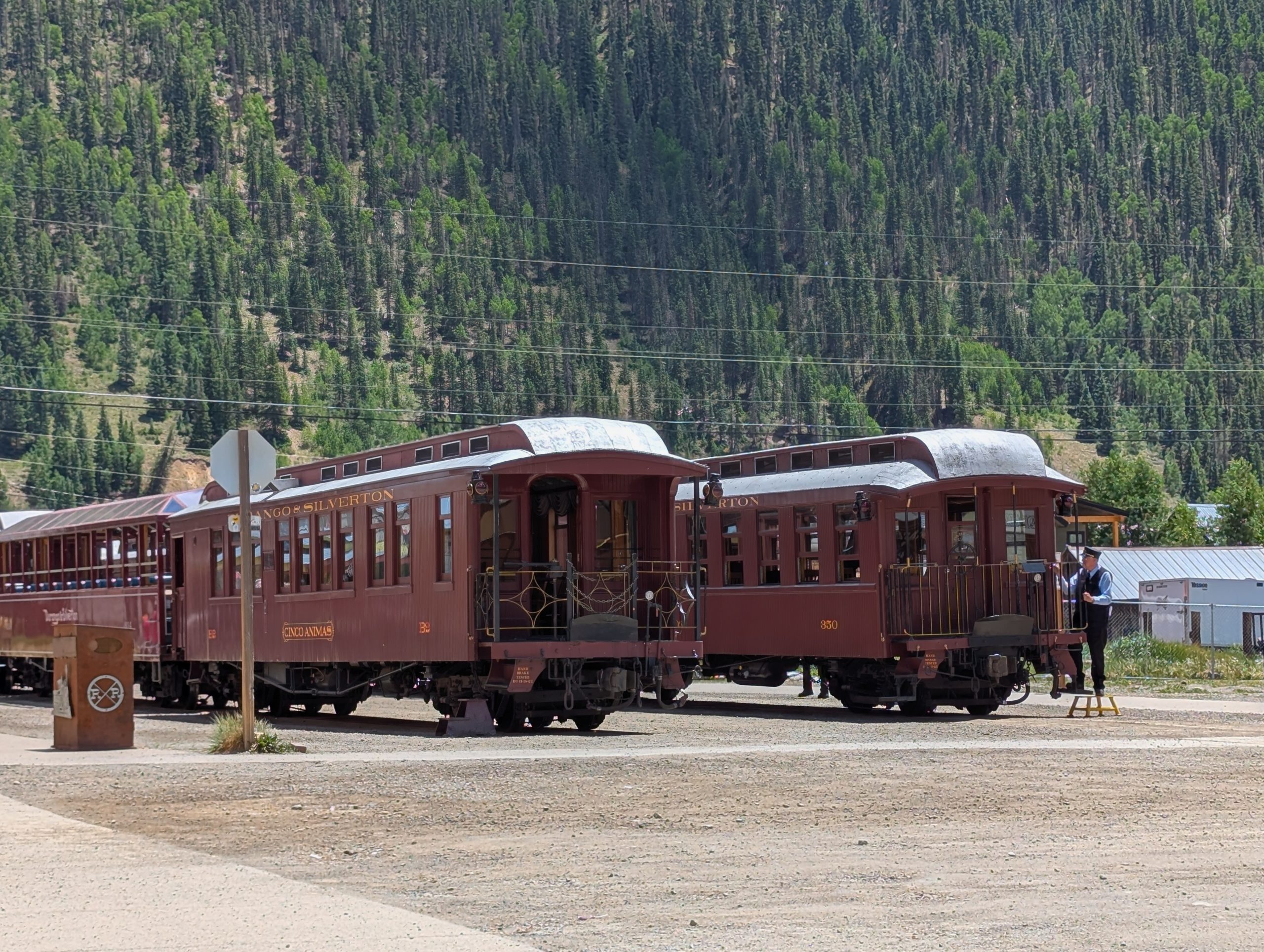
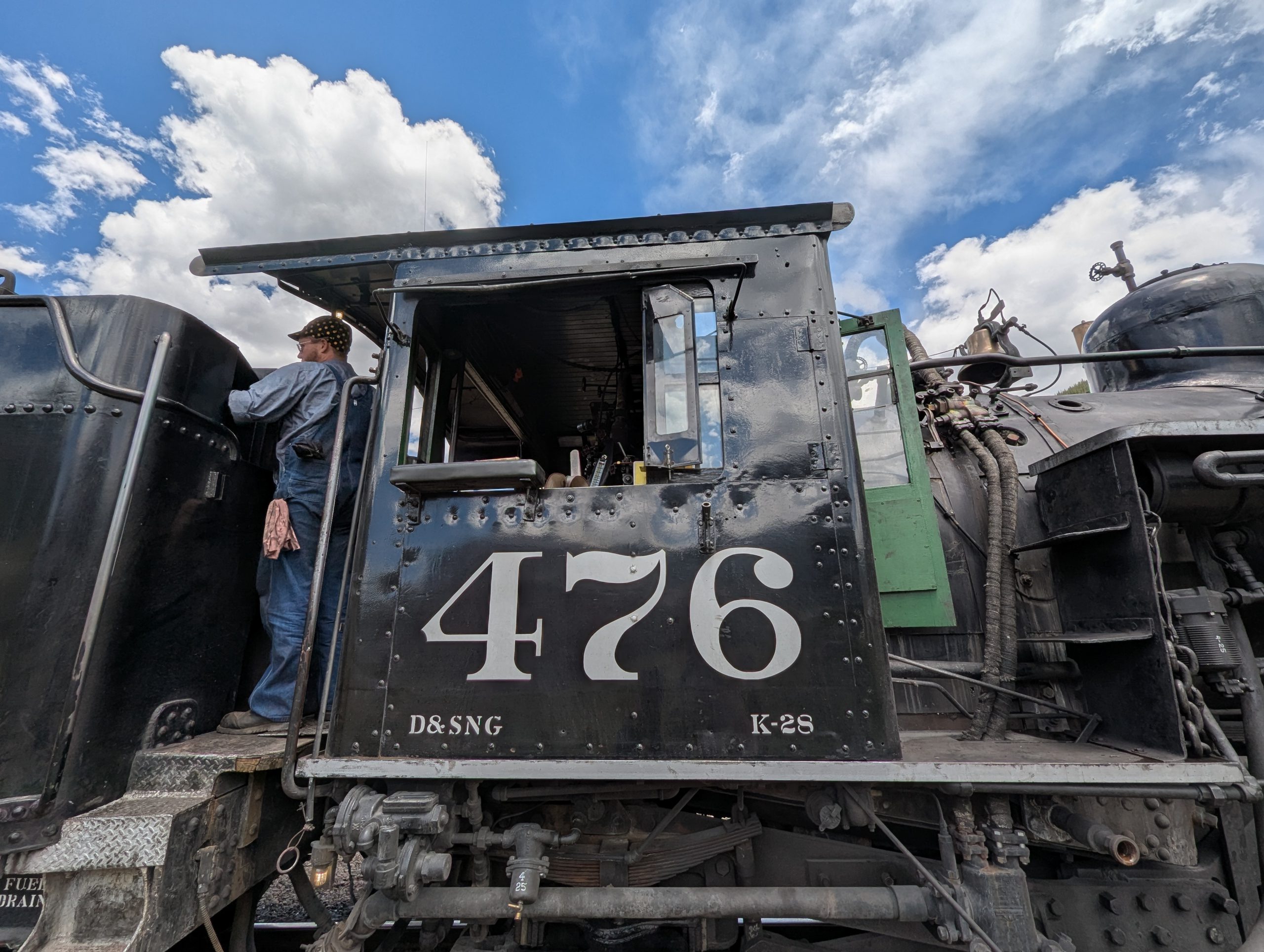
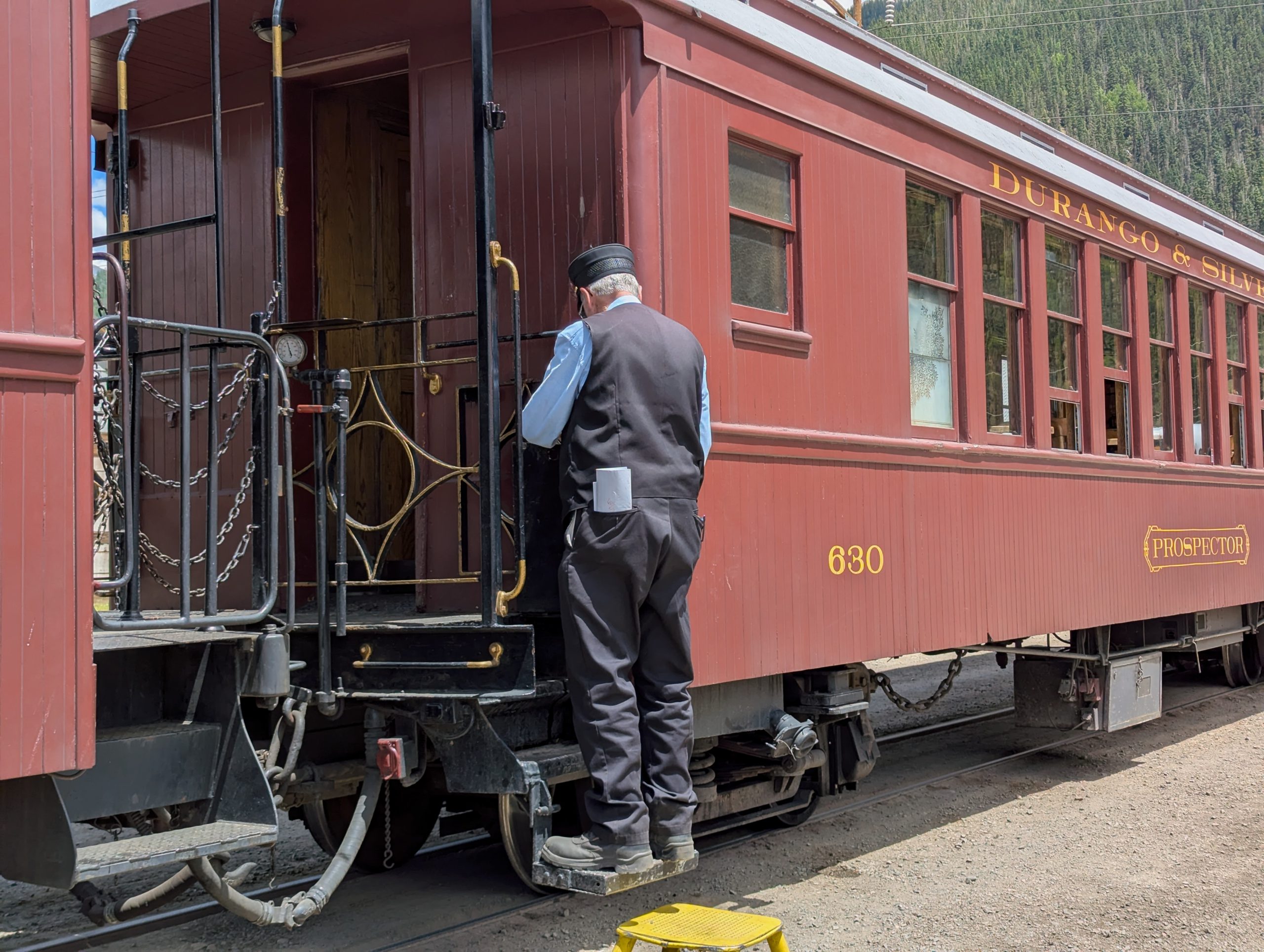
A horn toots twice, and the diesel locomotive pulls away slowly with its cargo of visitors, down and out of sight around the base of the mountain. In three hours, it will complete its daily round trip back to Durango. The steam train remains, and this is the one that I will take. I take this as my queue to find my coach and embark.
The Durango & Silverton Narrow Gauge Railroad (D&SNG) is a rarity as it has been in continuous operation since 1882, first to serve mining and industry, then later tourism—a natural shift as mining ventures began to decline. Tourism has played an important part in keeping Silverton from falling into ruin in the way that so many other Colorado mining towns have. Ghost towns can be found around every corner, a testimony to a way of life that once was but has since vanished. Here, history has been given a chance to live on. The locomotives and coaches that make up the D&SNG have been lovingly restored to their former glory, with a few necessary modifications made for modernism and safety.
My assigned seat is on the Shenandoah #257, a yellow-painted wooden Jackson & Sharp coach. Constructed in 1880, it’s almost 150 years old. I’m greeted by the sight of warm lacquered oak paneling and brass signage polished to a high shine. Oil lamps have been replaced with electric lights, but still look historically accurate in this setting. Narrow overhead luggage racks offer a place to stow away belongings, and tiny windows flanking the length of the coach ceiling tip open to let the air flow through. A pair of compact toilet rooms are tucked away behind the entry door of each carriage. I resist the urge to peek inside.
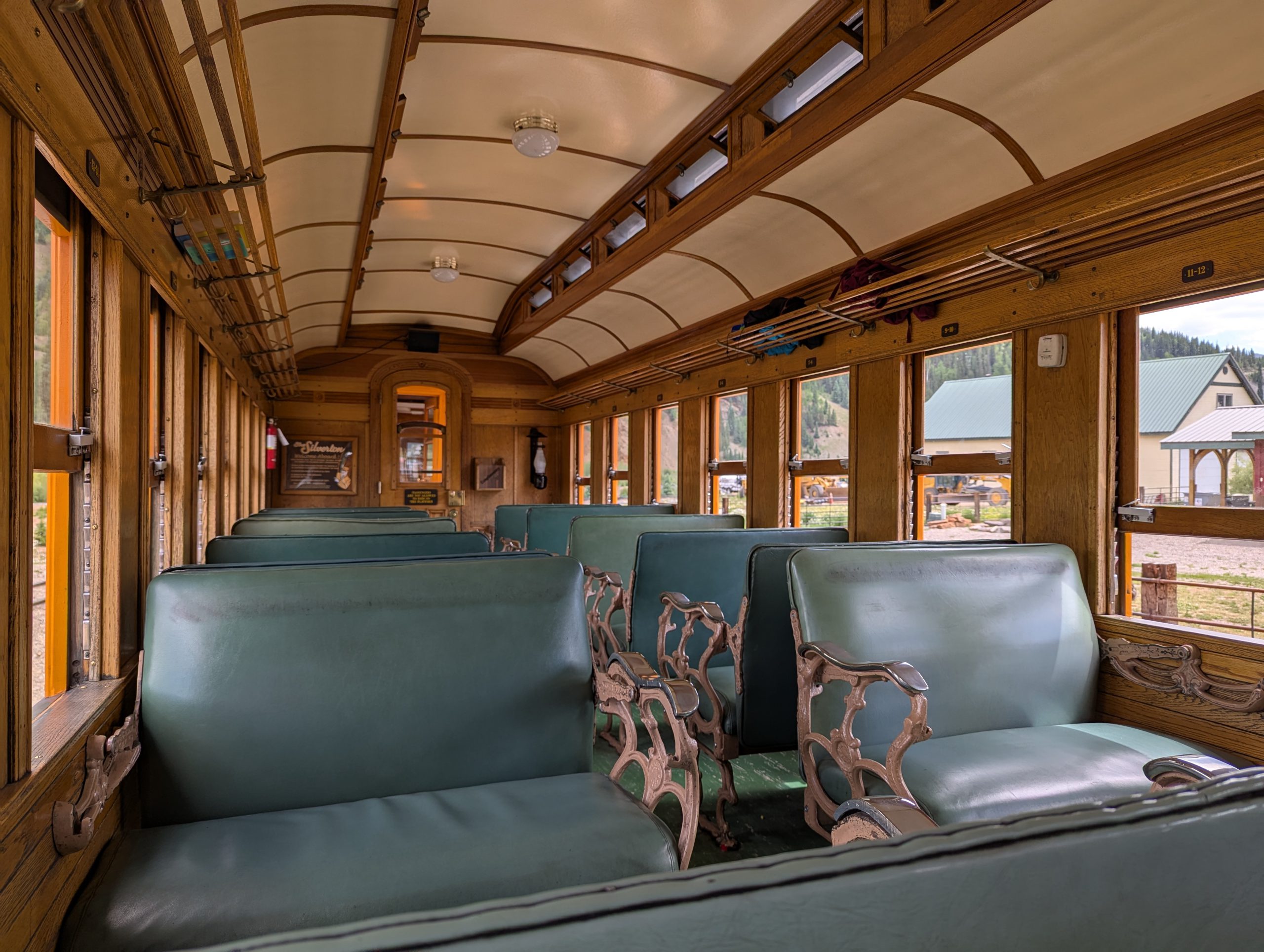
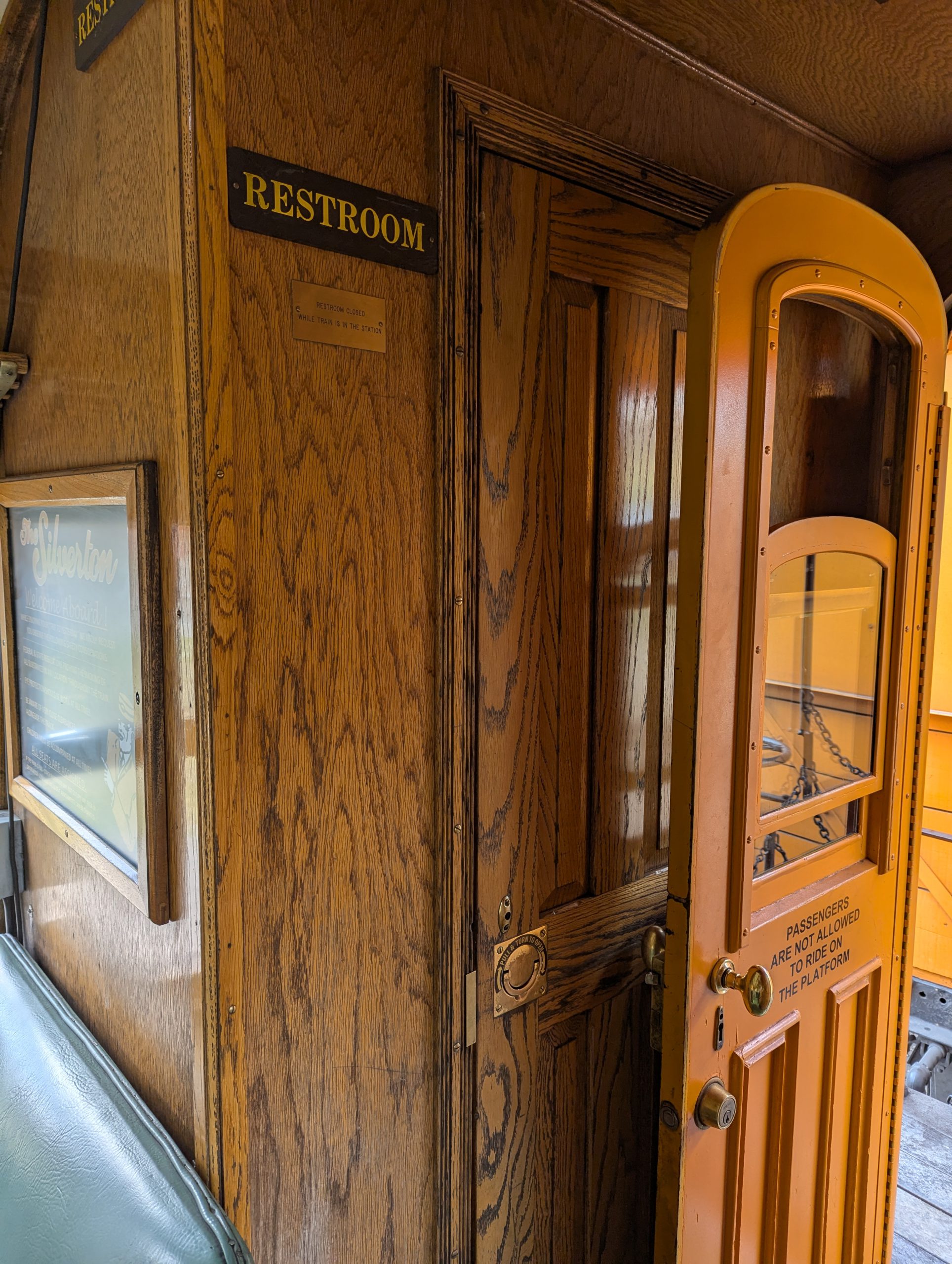
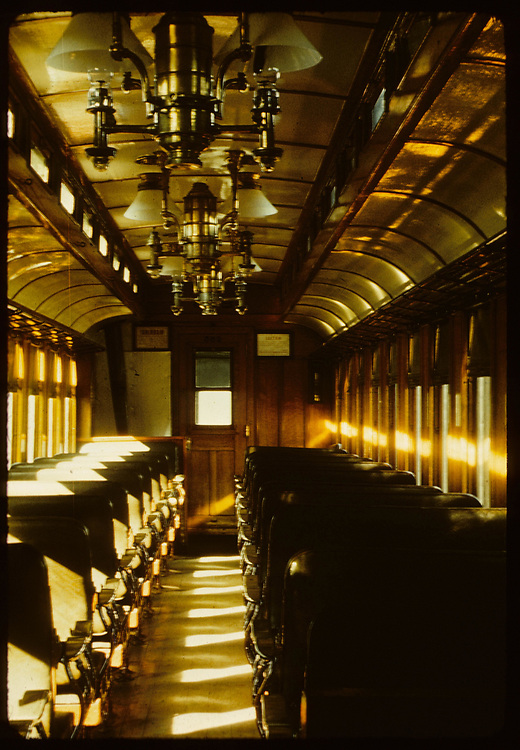
The train whistle signaling departure is startlingly loud and very real. It pulls me right into the moment. Right back to 1882.
After an initial forward lurch, we pick up some momentum and settle into a rhythm. The train sways strongly from side to side, a gentle pendulum that lulls me into a trance as the landscape blurs by, not at great speed, but fast enough to lose the detail on the passing aspen leaves.
No one checks my ticket. The conductor dressed in full historical garb passes through, surprisingly stable on his feet in the rocking cabin, and takes a mental count of passengers while scribbling the figures into a small notebook.
Through my open window, I have a clear view of a rugged Colorado landscape that would only otherwise be accessible by foot. Groves of aspen, which I view as iconic for Colorado, slide past in slow motion. The mountain-fed water of the Animas River is so close that I feel I could almost reach out and dip my fingers into it, the color a crisp blue-green that contrasts with the red rocks that it rushes over. The train slows its pace considerably as we cross the river multiple times over rickety wooden structures. I was told by the ticket agent that the best views were to be had on the right side of the carriage for the trip up to Silverton, and on the left for the return trip to Durango, but I find that the view from either side is just as stunning. I move to an empty seat on the other side just to confirm.
Hikers camped alongside the Colorado trail wave joyfully as the train passes by. A few days ago, I was one of those hikers. I wave back in solidarity. I’d hoped to see my partner and throw him kisses, but I know he is already miles up the mountainside by now.
An hour up the track, the horn whistles again to signal we are slowing down. The train comes to a full stop under a large water tank with a spout, and the crew disembarks. From my vantage point, I can see water splashing over the boiler as it is refilled. The procedure only takes a few moments, and then, with another startling blast of the horn, we are ready to go again.
There is a family of four sitting in front of me. Over the course of the journey, it grows to five, six, seven—as more join them from other cars. They speak joyfully and gesture with animation and laughter, share food procured from containers hidden in bags and purses, dispensing with plastic spoons onto paper plates. For some, riding the train offers a social experience. In contrast, others—like myself—remain glued to the windows and the endlessly fascinating movie passing by in slow motion.
As the train moves up a particularly steep gorge, it begins chuffing in a pattern that genuinely sounds like, “I think I can, I think I can,” first with optimistic hesitance, then speeding up with confidence as it crests the high point. This is the infamous and most spectacular section of track called the “High Line.” The tracks run along a precipice that falls away so sharply you can’t see it below you. Here is where I can sense the narrow gauge1 of the tracks as the train hugs the mountainside closely. Far below rushes the Animas River through the winding canyon, now too far away to touch. Instead of feeling fear at teetering on this very narrow track so high above what would surely be a fatal drop, I feel exhilaration. I lean my head out of the window to be able to take it all in.
The brakeman is also leaning out of his perch a couple of cars ahead, keeping a vigilant eye. I wave.
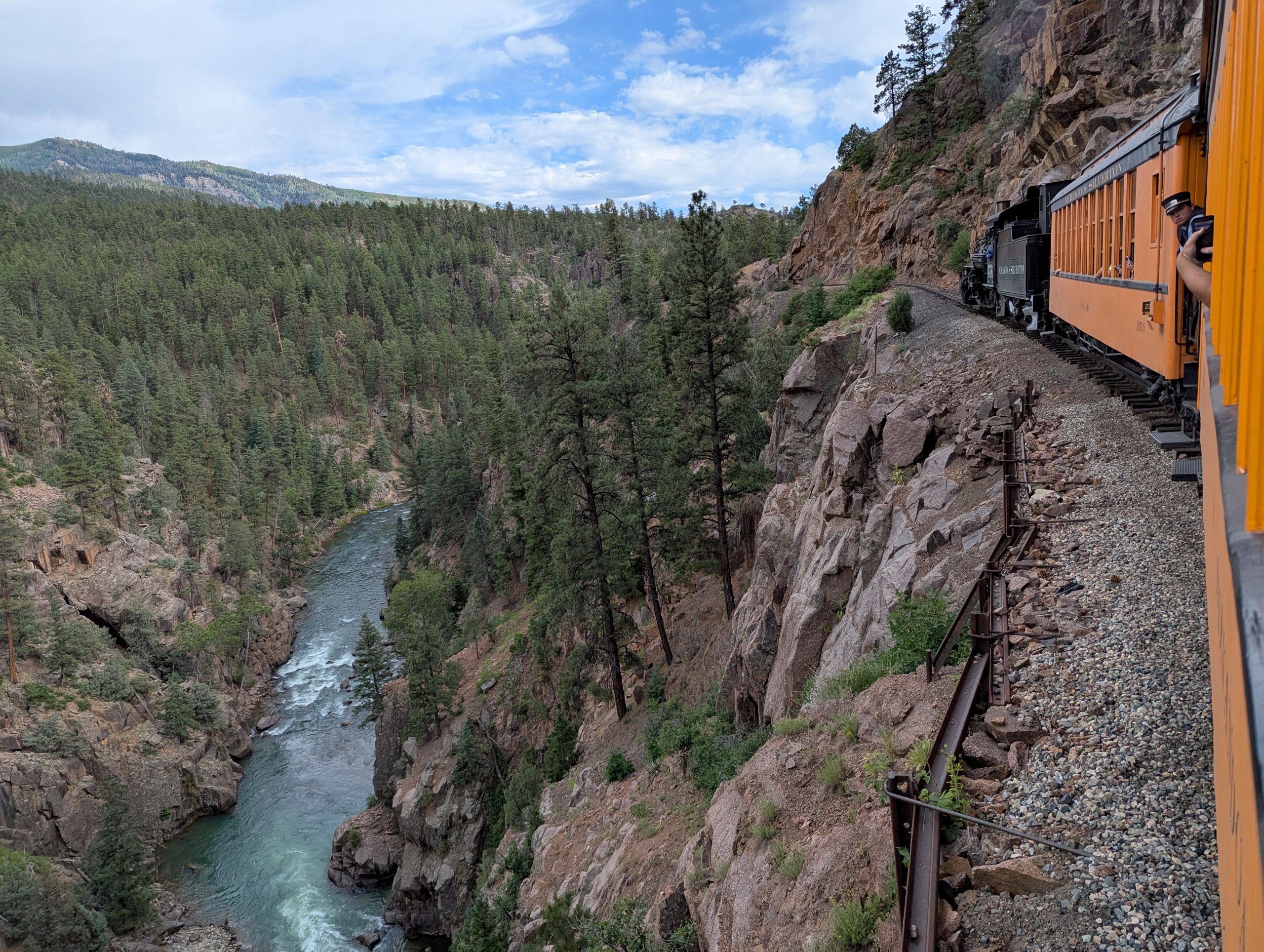
Without much warning, we have left the big mountains behind. Now the mountains are soft and distant, and I start seeing lakes, campgrounds, people, houses, roads…
The brakeman announces that we will be stopping at Pinkerton station briefly to let another train pass. The name Pinkerton evokes images of the old West, gunslingers, lawmen, and little silver stars pinned to chests. Men in stiff vests and bowler hats, sleeves cuffed up to the elbow, a six-gun at the hip. Spies and intrigue, bribery, sabotage.
When a golf course followed by a billboard advertising a giant sizzling steak sail past my window, I know we must be nearing Durango. How fast the three-hour train ride seems compared to the week it took me to cross this same terrain by foot with a pack on my back.
It seems the majority of the population of Durango is swimming or kayaking in the river, keeping cool from the July heat. Everyone stops to look, hands shielding eyes against the glare of the sun. People wave from streets, shop windows, and rooftops as the train passes through, smiling and taking pictures. Their delight at seeing this piece of history passing by is clear. It’s a special thing for both the passengers and the spectators watching from beyond.
The gift shop at the train depot offers a chance to buy a clean shirt and some socks, desperately needed since all of my clothing needs laundering. My hotel is only a block from the station, and with it the promise of a hot shower. Clean and refreshed, my journey ends over a margarita and a plate of nachos from the next-door cantina while I reflect on the past week of immersion into Colorado’s stunning beauty and rich history.
- Narrow gauge railways operate on tracks that are narrower than the standard gauge of four and three-quarter feet. The Durango & Silverton line sits right at three feet wide. The smaller width of the narrow gauge tracks was ideal for efficiently hauling silver and gold ores through the rugged San Juan mountains. ↩︎